The Night Guaracha Found Its Crudeza

On Bogotá's Primera de Mayo, nightlife became the engine of a musical revolution. Through the story of Putivuelta and the DJs who reshaped the scene, Felipe Maia revisits the avenue where guaracha found its defining sound and political edge. Far from the clichés of club culture, the genre appears here as a radically local practice, where queer communities, migrant influences and working-class nightlife forged one of Latin America's most influential electronic scenes.
“It felt like a portal cracked open,” Nina says. She knew this ground: the raw, loose intensity of the sound, the frantic scrambling lights pulling her eyes up off the low ceiling. She had grown up not far from the Oklahoma, a guaracha club. In the late 2010s, that was a rather common word amongst kids in Colombia’s big cities: guaracha, a term once used to describe a traditional paysan musical form in Cuba that had travelled through the Greater Caribbean and eventually became synonymous with this new electronic music genre—a blend of tribal sounds spanning from Mexican queer circuit parties, Colombian cumbia-oriented baselines, and other off-kilter sounds from Latin America.
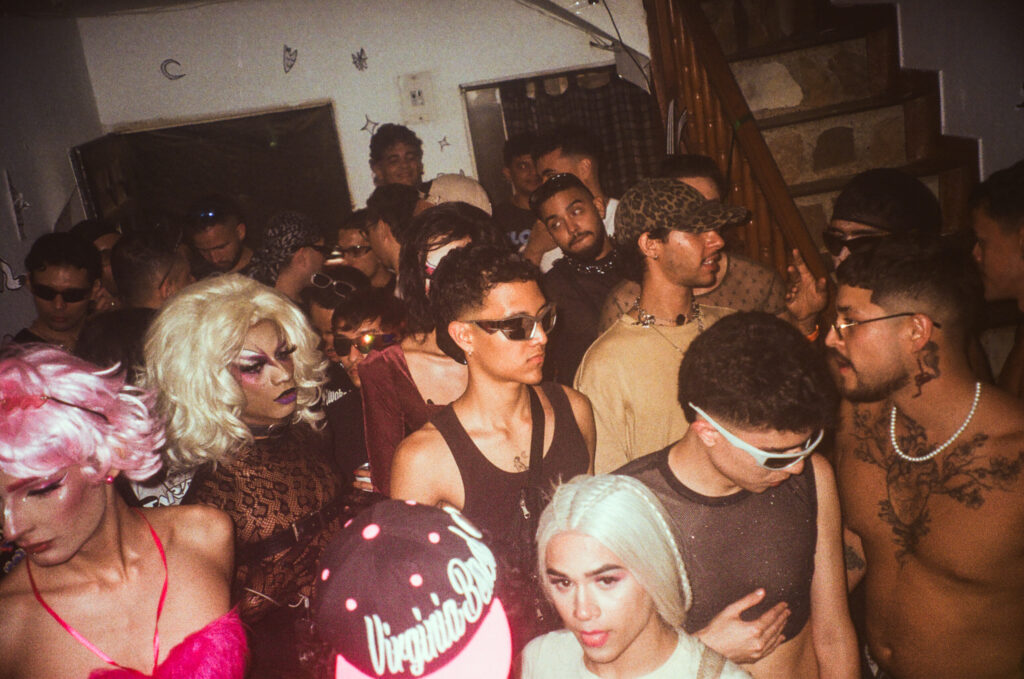
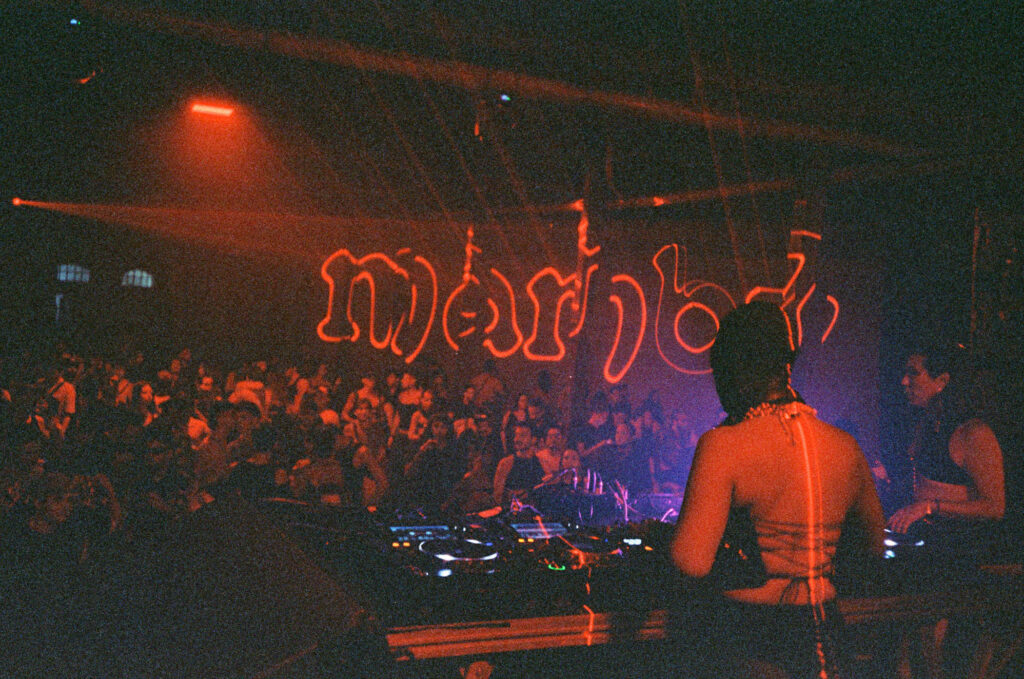
Nina was a guaracha-head, if such a thing exists, from early on—she talks proudly of the MP3 collection she’s been amassing since her teens, along with her extensive knowledge of the city’s main guaracha clubs. That night in September 2022, though, something felt different. Sure, that usual Bogotá highland chill caressed those queuing at the entrance, but once through the doors, a steamy atmosphere embraced the dance floor, freeing up those who danced. “I’d never seen a club so diverse, with so many disidencias,” Nina says. That was Putivuelta; a collective founded four years before that party, an offshoot crew determined to give guaracha a radical club twist. “People from absolutely every part of the city, the south and the centre and the north, gathered in one place.” And this was all happening on the Primera de Mayo, the avenue sneaking across Bogotá’s south side where guaracha spread from Colombia’s capital to the world.
“On the Primera de Mayo I feel there are many walks of life: obviously precarity, destitution, but also the party and everything that comes with it,” says Nina, a producer and DJ under the moniker Nina S. Recital. On September 9, 2022, she and her friends from Putivuelta managed to throw a party on Bogotá’s guaracha corridor. But while that 15-km avenue, lined with clubs, was no stranger to buzzing car horns and guarachero horn attacks, there was a sense of divergence unique to this party. Breaking the mould and melding together a wide range of bodies on the dance floor, that party was a moment in Latin American electronic music that felt long overdue both for guaracha and for that neighbourhood.
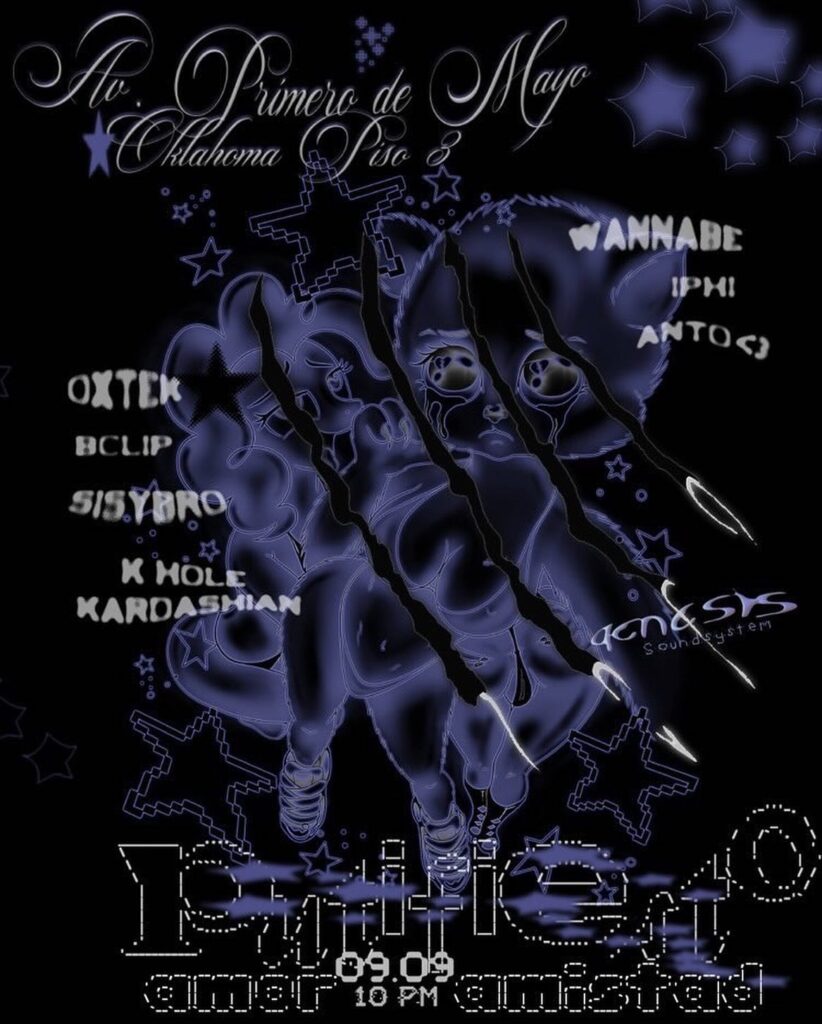
Founded in 1923 as a planned housing project for working-class families, the Primero de Mayo and the avenue that bears its name have always been a refuge for those who move through the city’s grey areas. Alongside the neighbouring Restrepo, the area became home to Bogotá’s punk, hardcore, and metal through the 1970s and 1980s. That same circuit would later bankroll a parallel, party-hard Pride: the Marcha de la Primera de Mayo, running since 2009 as a festive counterpart to Bogotá’s official Pride march. In such a hot spot rose one of the city’s densest strips of pleasure: twenty-six residencias (the local word for motels), fifty-one restaurants and nine rumba (ie, party) spots, what researcher Cristian David Ortiz Daniel calls the “3 R Plan.”
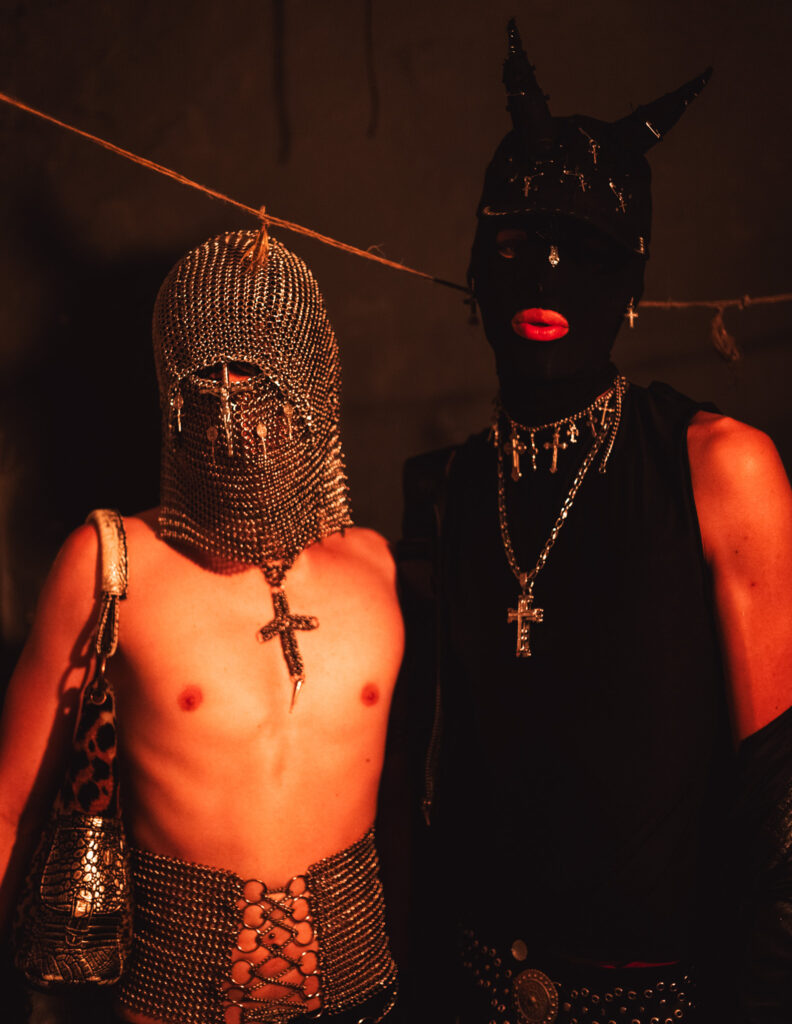

Photos by José Vallejo. Event organized by the Trabesties collective. Medellín, Colombia.
In the early 2000s, this neighbourhood mash of work and play became home to that distinct strain of electronic music that fuses influences from the Andes up to the northern reaches of Central America. “Guaracha is Colombian-Mexican; a shared homeland, a shared sovereignty,” says Bclip, a Colombian-Puerto Rican producer and DJ who grew up around the picó sound systems of North Colombia’s Barranquilla coast and now runs the Paria label. While the sound itself was seeded elsewhere—from Cali to Cartago and from Manizales to Medellín—Bogotá, home for Colombians and different waves of Latin American migrants, is where guaracha found a critical mass. “For me Bogotá is to guaracha a bit what New York was to salsa,” reminisces the artist. “It’s such a big and chaotic city that it can’t really cut off the whole process, because nobody can control it.”
After moving to Bogotá in 2011, Bclip spent years trying to trace and categorise the genre, only to conclude that the task is close to impossible: the music mutates so quickly and is pulled by so many forces—regions, artists, passing trends—that no stable definition holds. “There’s no consensus on what makes a guaracha a guaracha and not tribal house, circuit, or tribal mexicano, because there are just a ton of edges around it,” he says, while pinpointing a few sonic markers to the genre, such as the shakers known as juetes. “And it’s really about syncopation,” he says. “I don’t get how people call something guaracha when it sounds hyper-squared, that flat tum-tum, tum-tum.”
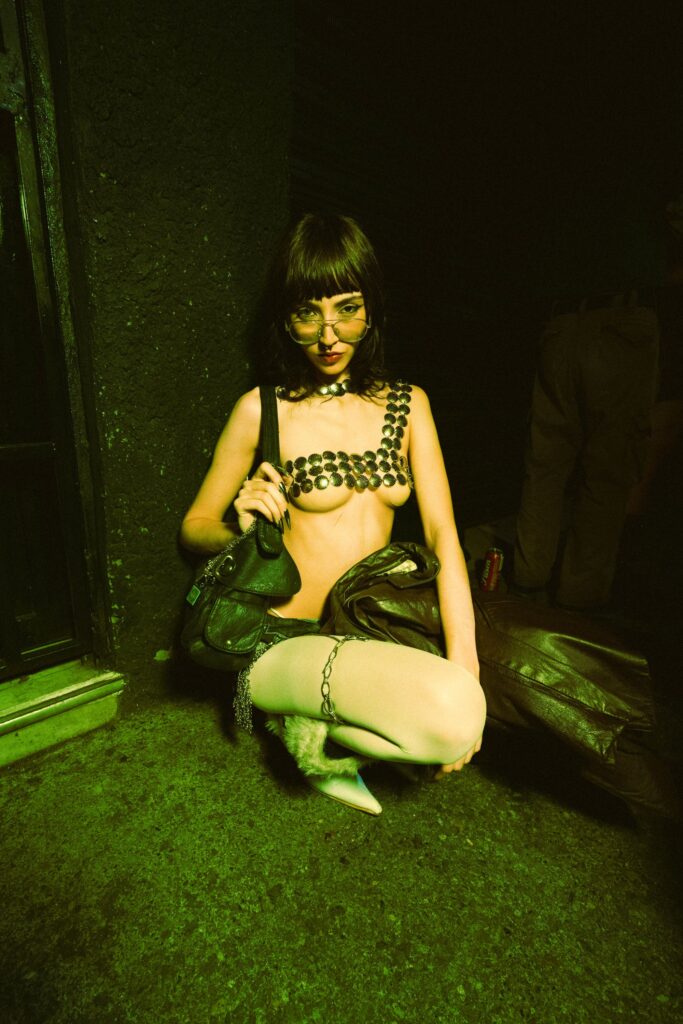
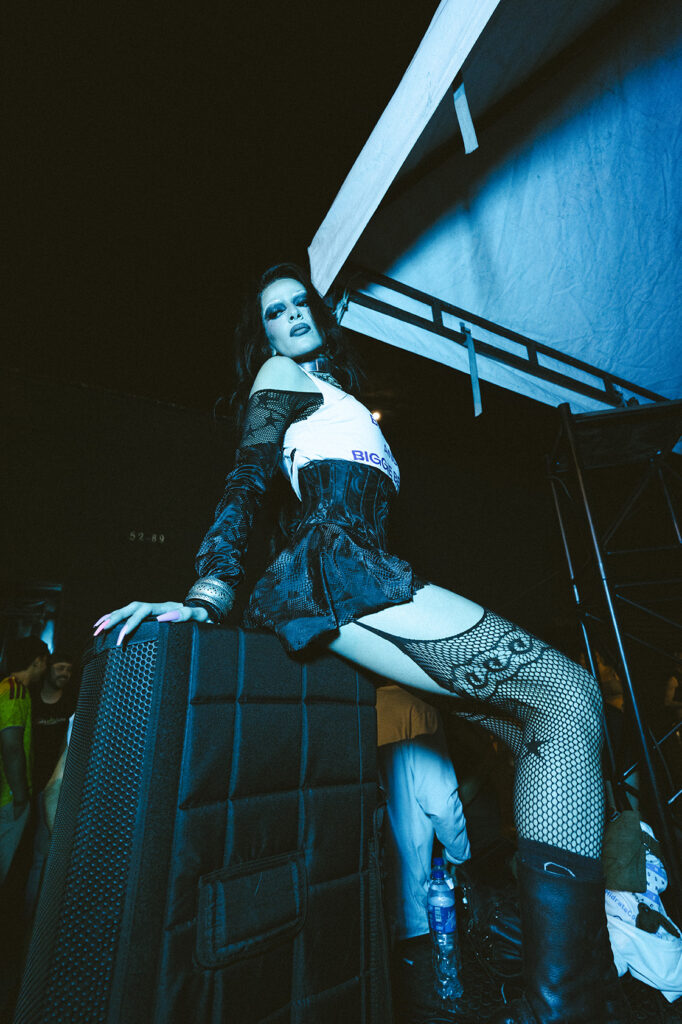
Photos by José Vallejo. Event organized by the Grilleo collective. Medellín, Colombia.
Bclip was lined up to the Putivuelta incursion at the Primera de Mayo in 2022. By then, the producer was already pushing Latin America’s uncanonised sounds (at least in the electronic music realm) onto the dance floor through what he calls la grasa—the grease, a raw verve that flows across the continent, from Caribbean champeta to the harder end of baile funk. Another DJ was arriving at the same conclusion from a different background: DIY raves in the Bay Area. Born in Costa Rica and moving from the US to Colombia, K.hole Kardashian had been living in Bogotá for a couple of years when he decided to give guaracha a raving take of its own. In 2018, together with producers Ynfynyt Scroll and SisteryBrother, he turned that idea into Putivuelta. “I wanted to combine the classic 1990s trance tracks with guaracha,” he recalls. “I kept asking myself, ‘What does hardcore sound like over guaracha?’”
Back in the late 2010s, guaracha parties in Primera de Mayo had grown big in venues like Heaven, Phoenix, and K-Ops. While cities like Medellín and its surroundings could take advantage of sunny days with private parties, the privaditos, and meetups in summer houses, the fincas, Bogotá’s rainy and cold weather fostered a model that still prevails today. Clubs open early, at five or five-thirty, with promoters working the door on two-for-one entries and cubetazos—several bottles of beer packed into an ice bucket. Once you’re in, you can stay all night, because some of them simply never close. Often there is no dance floor at all: you come to see and be seen with your entourage and your bottles, priced ten times over. All of it is barrio fino, a posturing that K.hole and Putivuelta set out to break from. “Everyone knew guaracha in Bogotá by then, you’d hear it in the taxi, walking down the street, everywhere,” he says. “But the guaracha party carried an association with luxury, with money.”
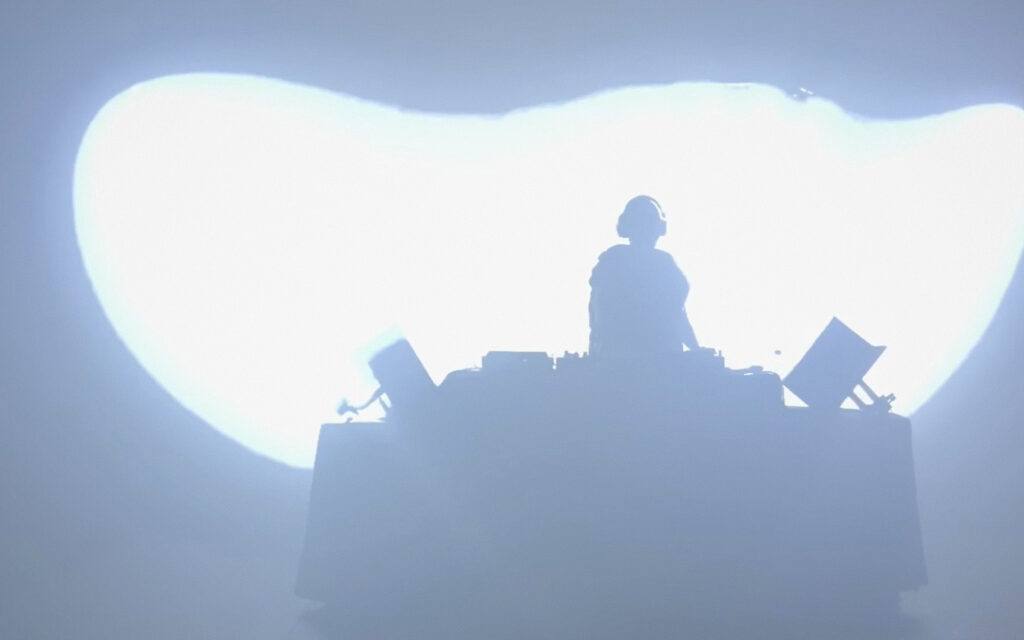
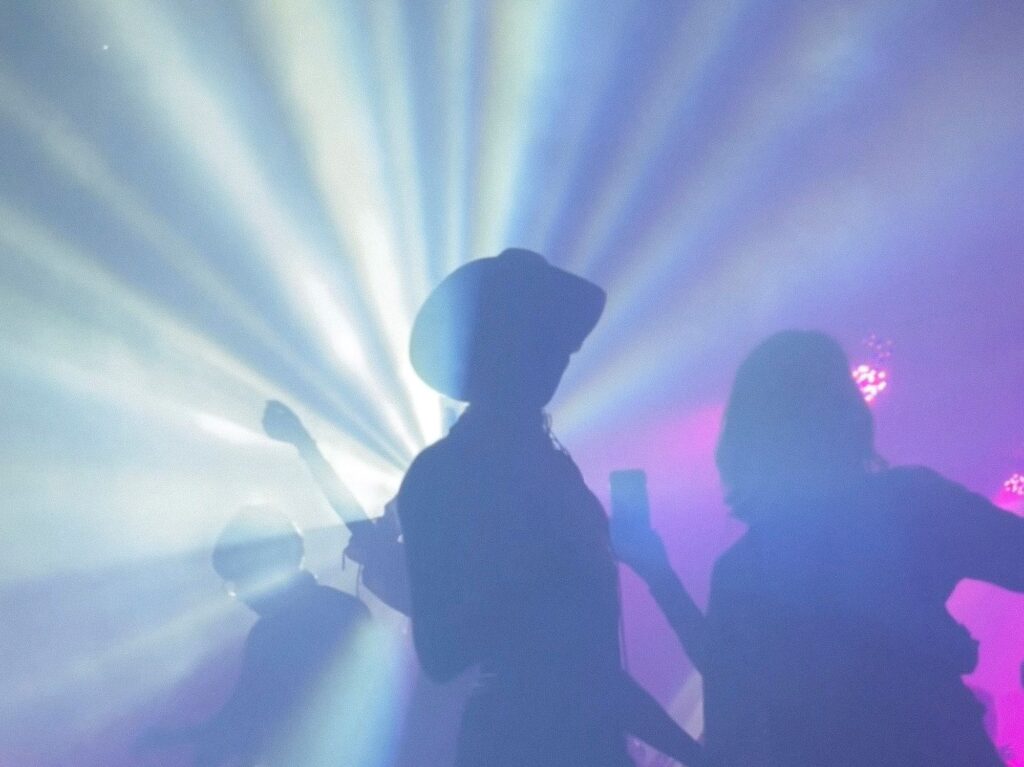
Photos by Putivuelta. Bogotá, Colombia.
This way of making guaracha was shaped by two forces that continue to influence electronic music in Latin America today. The first was a prevailing idea of what club music should be—too often a thin copy of a techno, Euro-oriented template. “It’s only for people who have the money to access that kind of space,” says K.hole Kardashian. The second was an ambiguous gatekeeping on the dance floor: even in Primera de Mayo, where gay clubs have presence in Bogotá, its doors were hard for FLINTA people to navigate. Drawing on the example of the Colombian ballroom collective House of Tupamaras, founded in 2017, and building dialogues with local LGBT+ initiatives such as the trans-led Red Comunitaria Trans, Putivuelta set out to push guaracha to new clubs, fields, and warehouses in Colombia and beyond.
Primera de Mayo gave guaracha its crudeza, that rawness, that freedom to dance aggressively, late into the night and straight through till morning.
“That’s why I say Putivuelta is the one who made it possible for guaracha to reach Europe,” says Puppy Sierna, one of the most prolific producers and DJs in guaracha in Colombia. Born and raised in Bogotá, she got her start playing reggaeton in the city’s gay bars before falling, in early 2010, for a sound blending tribal and Dutch house—the roots of what would become guaracha. As the genre took off in the years that followed and drifted toward a more heteronormative scene, she found herself caught between two worlds. “I was discriminated against just for being gay while trying to cross over into the straight scene,” she says, “and within the gay scene itself, I was discriminated against too, because my guaracha was too flashy, too loud, too noisy.”


Photos by Putivuelta. Bogotá, Colombia.
Feeling the city had closed its doors to her, Puppy Sierna moved to Medellín in 2020. Still, in Bogotá she remains a pioneer, having built her name with tracks like “La Guarachita”—a staple alongside other joints, such as Alex Hart’s “Lo Más Legal” mix series, Goozo’s “My Body” and Elee Bermudez’s “Que Todo”. These artists helped move guaracha into Bogotá’s soundscape, which eventually led a new generation of producers to give rise to more globally-minded tags and hip offshoots. “In neighbourhoods like Chapinero, most artists play Latincore, which is really just techno with a dembow beat,” says Puppy Sierna. “And in Primero de Mayo, people aren’t hitting the club just to listen to music—they’re also going there to get head-fried.”
Putivuelta’s cofounder K.hole Kardashian recalls going mind-blown the first time he saw Puppy Sierna play at Heaven, in Primera de Mayo, back in 2014. “For me, it was a completely new experience,” he reflects on what became the initial sparkle for Putivuelta. “After that party, I became obsessed with guaracha.” Around that same time, Nina S. Recital was just a kid, building her own collection of guaracha MP3 rips while wandering through Primera de Mayo, catching the muffled kicks and horns spilling out of the avenue’s non-stop clubs. “I feel like guaracha might be subject to exoticization today, like everything that comes out of the underground,” says Nina. “But I know Primera de Mayo will always be the same—its clubs, its corners, its chuzos street barbecue carts. Primera de Mayo gave guaracha its crudeza, that rawness, that freedom to dance aggressively, late into the night and straight through till morning. It’s a place where everything appears still, but moves faster than anything around it, a place where everything comes together and becomes one.”