Magazine
Columns

The Rise And Rise Of Nollywood
Nollywood was not born in a studio system, but in the streets, markets and informal networks of Nigerian cities. As cinemas disappeared during the country’s economic crisis, filmmakers and distributors turned cheap video cassettes into a new cultural infrastructure, with places like Surulere, Idumota, Alaba and Onitsha becoming engines of production and circulation. Wale Oloworekende looks at Nollywood through the places that made it possible, tracing how a deeply local ecosystem transformed everyday Nigerian stories into a shared African language and, eventually, one of the continent’s most powerful cultural exports.
Written by Wale Oloworekende

The Night Guaracha Found Its Crudeza
On Bogotá’s Primera de Mayo, nightlife became the engine of a musical revolution. Through the story of Putivuelta and the DJs who reshaped the scene, Felipe Maia revisits the avenue where guaracha found its defining sound and political edge. Far from the clichés of club culture, the genre appears here as a radically local practice, where queer communities, migrant influences and working-class nightlife forged one of Latin America’s most influential electronic scenes.
Written by Felipe Maia

Novel Problems
Literary readings have become one of London’s most unexpected forms of nightlife. But why would anyone spend a Friday night in a packed nightclub listening to strangers read from their novels? Starting from this question, Will Kaye offers a witty portrait of London’s literary scene, where aspiring writers, artists and creative hopefuls gather in clubs, bars and churches to listen to strangers read aloud. Beneath the absurdity of drunken audiences, endless networking and the occasional terrible performance by cultural micro-celebrities, the story examines an unlikely phenomenon in which literature becomes a vehicle for gathering, self-fashioning and participation in a city increasingly hungry for offline forms of cultural life.
Written by Will Kaye
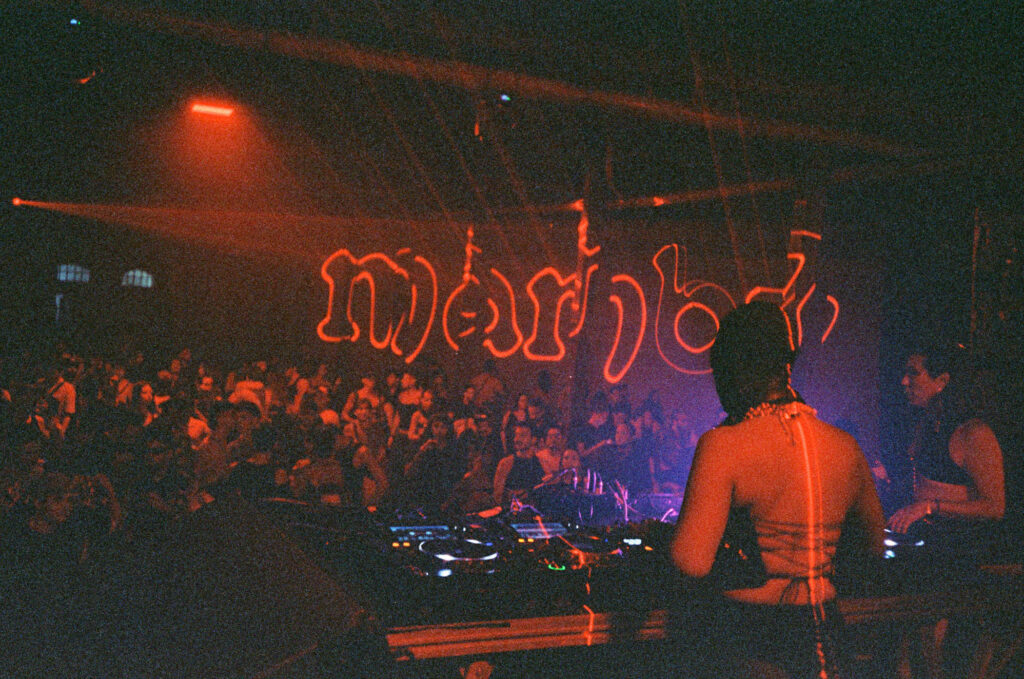
underGRANDE:We Celebrate the End of the World Like Nobody
In São Paulo’s contested centro, the underGRANDE scene transformed nightlife into a form of cultural guerrilla. Through parties like Mamba Negra, abandoned factories and occupied buildings became spaces of queer autonomy, collective survival and political confrontation. Tracing fifteen years of independent electronic culture, Laura Diaz maps a movement where celebration operates as resistance, memory and refusal against gentrification, repression and neoliberal capture.
Written by Laura Diaz aka CARNEOSSO

Making Ice Music is Difficult
In Ilulissat, the third-largest town in Greenland, ice is not a background but a force of light, movement, and sound. The Ice Music Festival is both an event and a situated practice that engages directly with the frozen landscape. Instruments are carved from glacial blocks, and performance depends on shifting temperatures and wind. Between collapse and improvisation, as Emile Holba writes, the festival turns ice into both a creative and symbolic material, holding together art, climate, and community at the edge of the world, where climate change strikes with greater force.
Written by Emile Holba
Too Fast for the World? Singeli and the Paradox of Going Global
From Seoul to San Juan, hyperlocal sounds are rewriting the rules of global pop, proving that the more rooted the music, the wider it can travel. Yet, singeli, Tanzania’s blistering, homegrown electronic rush, remains largely confined to East Africa and niche European dance floors. In an age that supposedly rewards authenticity and locality, why hasn’t one of the continent’s most radical genres crossed over?
Written by Nils Bourdin
Where the Drums Clear the Air
On a full-moon night in Jamaica, Nyabinghi, one of the most ancient Rastafari ceremonial practices, unfolds as a living ritual in which drums, chants, and fire gather bodies into a shared field of clarity. “Tonight we a chant,” a young Rasta tells German Iraki, author of the book ‘Get Nuff Nuff Data’. “We a do the opposite of what the evil man a do. We use the moon for prosperity and to fight evil spells.” Nyabinghi uses rhythm to cleanse; it is a kind of spiritual technology, transforming communal presence into a practice of grounding, healing, and collective awareness.
Written by German Iraki

Nowhere to Hide: Ambient Music Won’t Land You Safely But It Won’t Let You Fall Alone
From the sweat-drenched chill-out rooms of early-90s Brixton to the algorithmic sprawl of contemporary ambient rave: how a music born to hold bodies through altered states became a survival grammar for the dissociative drift of digital capitalism in a world that never quite comes down.
Written by F. P.
When the Night Narrows. Queer Life and Rootless Communities in Chengdu’s Wuhou District
In Chengdu, queer communities navigate tightening control and fading digital openness, reshaping where and how connection can exist in China. Public celebration recedes, nightlife moderates itself, and intimacy slips into coded networks and overlooked daytime spaces. Through Xinke Lee’s returning gaze, nightlife, public encounters, and cruising grounds reveal a fundamental reckoning: an ongoing meditation on adaptation and loss, and a community that survives through floating identities.
Written by Xinke Lee
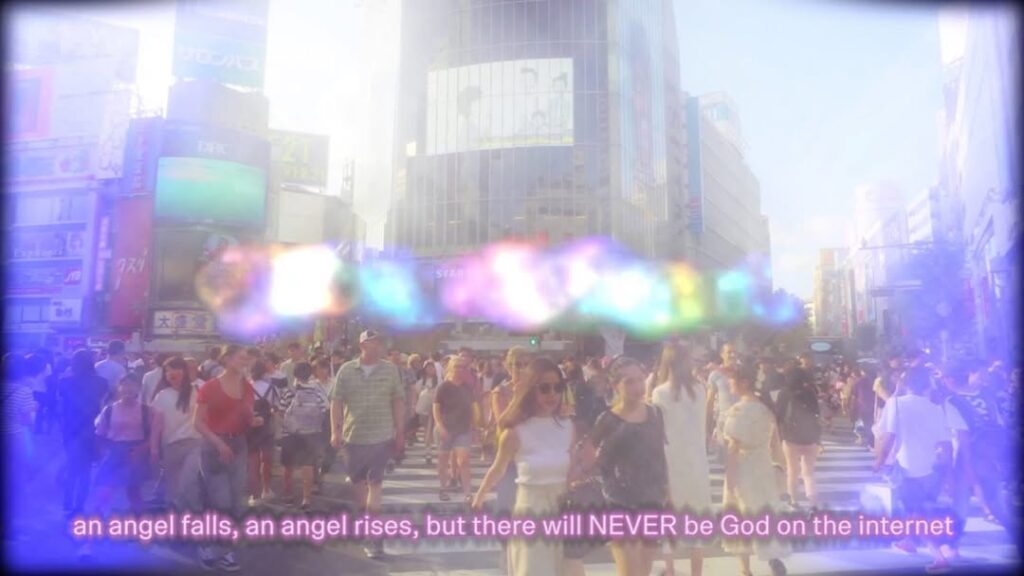
I’m Just a Vessel. Dimes Square and the Horrible Shell of Wisdom
Dimes Square resists definition, operating as a feedback loop of images, discourse and affect. Through Honor Levy’s account, in dialogue with Nell Whittaker, it emerges as a collective rehearsal where irony hardens into structure and the internet becomes lived form, raising questions of authorship, innocence and the desire to exist as a vessel within history.
Written by Nell Whittaker
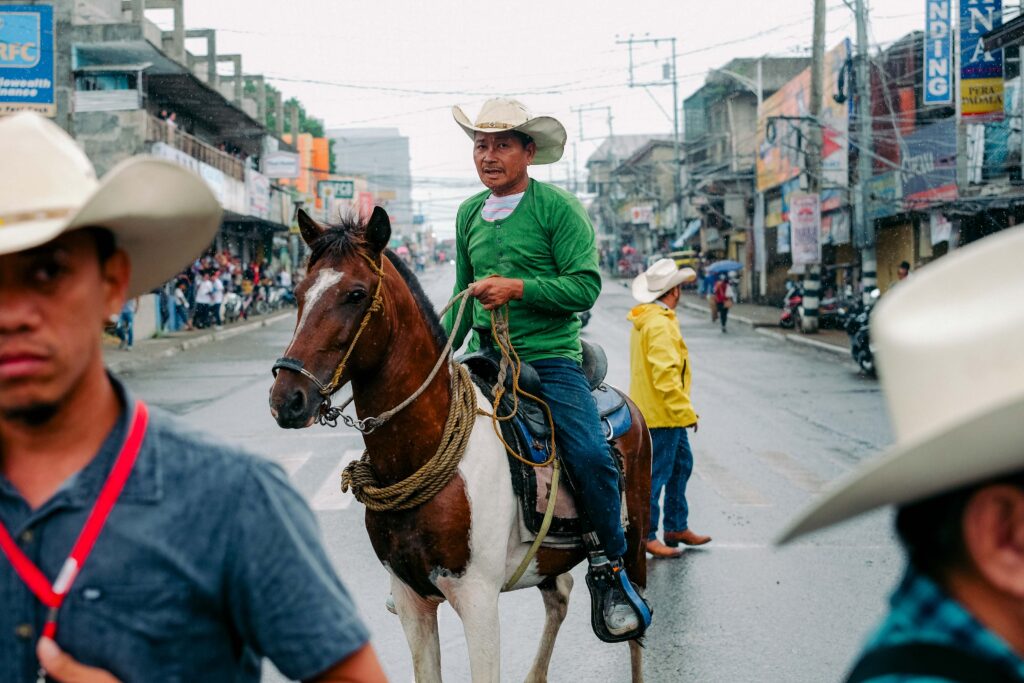
At The Heart of the Herd
Masbate, one of the largest islands in the Philippine archipelago, revolves around cattle. Bulls, cows and pasture define its culture; ranches span the land, and labour has shaped a landscape marked by centuries of hoofprints. Lassoing, cattle wrestling and horse breaking are not just survival skills, but the basis of a singular public ritual: Southeast Asia’s largest rodeo.
Written by Mark Jerome Torres

Most People Already Cosplay: On cosplay,avatars, and the quiet violence of passing as normal
At the intersection of cosplay and concealment, animegao kigurumi reveals how identity shifts through embodiment. By fully erasing the visible self, the practice creates space for behavioral freedom and altered social dynamics. Confidence, gentleness, and play emerge through the mask, showing how identity is shaped in interaction rather than anchored to personal history.
Written by Shayli Harrison
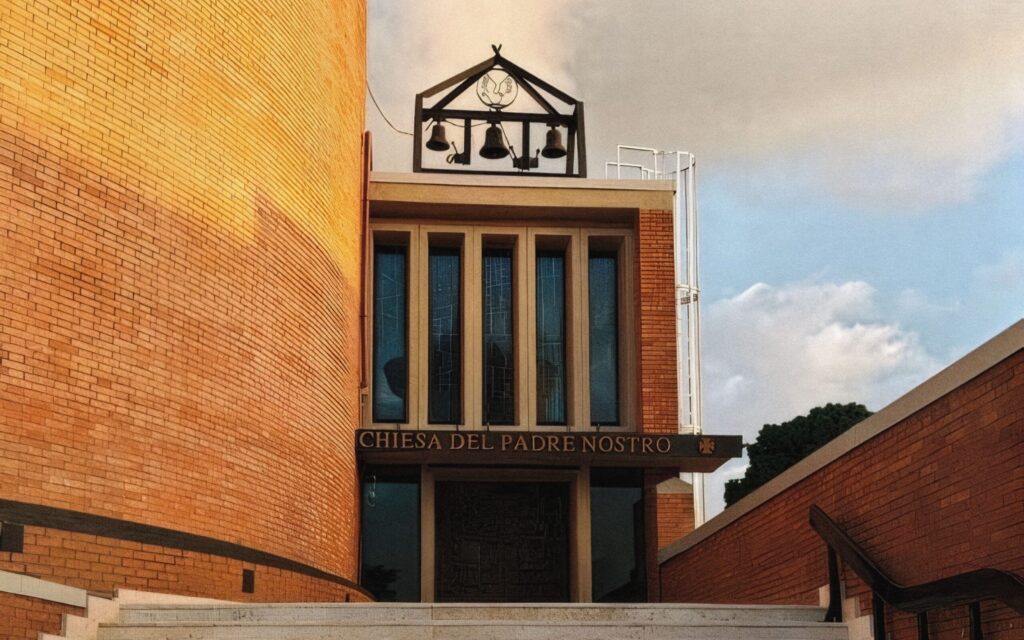
“I wanted the second Holy Door to be here, in a prison.”
Pope Francis died in prison. He entered Rebibbia, fell into a coma, and died. It gave meaning to his mission. For the first time in history, a pontiff opened a Holy Door inside a penitentiary. Francis himself said that on that occasion, for one day, Rebibbia became a basilica: “I opened the first Holy Door at Christmas in St Peter’s, but I wanted the second Holy Door to be here, in a prison. I wanted each of us here, inside and outside, to have the chance to fling open the doors of our hearts and understand that hope does not disappoint.”
Written by Christian Raimo and Giulio Pecci

An Upside-Down World: Inside Rome’s Rebibbia Penitentiary Complex
Rebibbia is a “neighborhood that doesn’t exist”: a prison suspended between maps and walls, visibility and invisibility. Hyperlocal explores the shared ground between the district and its prison, two mirrored worlds that surface only in brief flashes of attention before returning to silence, revealing stories, voices, and reflections on justice, time, and coexistence—told directly by inmates and through original narratives that position Rebibbia Prison itself as a central subject.
Written by Nicola Gerundino

DIY Bandung and the Politics of Place
From street punks on Jalan Sumatera to death metalheads in Ujung Berung, the straight edge youth crew in neighbouring Sumedang, the anarchist crust punks of Rumah Pirata, and the emerging scene in Buahbatu featured in this issue, the history of the underground and its DIY practices reflects the narratives of local neighbourhood scenes, interlinking shifting underground styles, identities, values, and practices with the evolving urban landscapes of Bandung.
Written by Sean Martin-Iverson
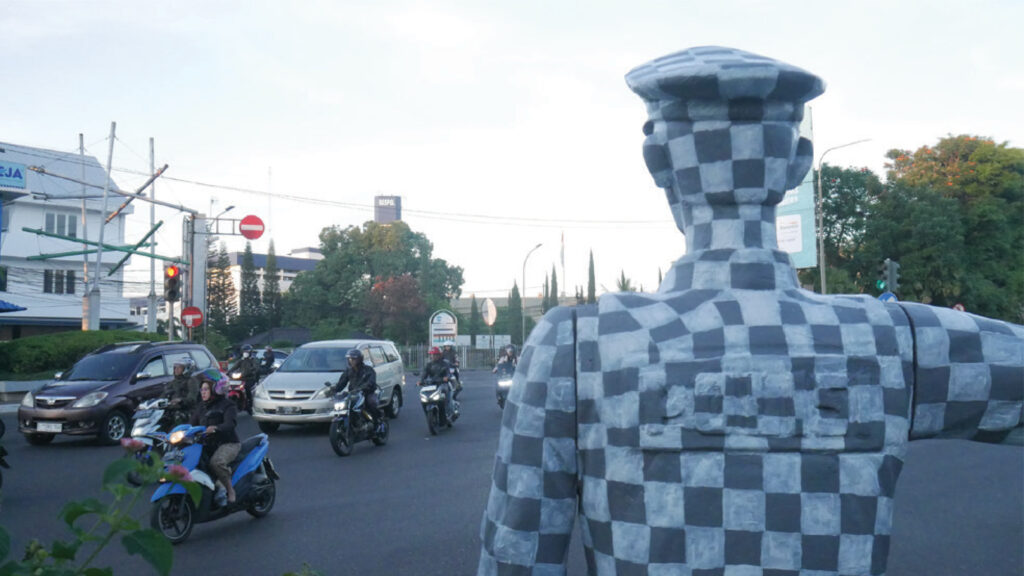
The Biggest Rip-off in Indonesia Police History
Studio Pancaroba turns a national crisis into an absurd monument to corruption.
Written by Studio Pancaroba

Kampungan: Reclaiming Indigeneity and Cosmopolitanism in Bandung’s Underground Scene
From early on, the meanings and effects of indigeneity and cosmopolitanism have been core themes of Indonesia’s underground scene, which has gradually gained strength both locally and globally in artistic and political spheres.
Written by Luigi Monteanni

The Role of Myth: Upholding Metal Identity in Ujung Berung, Bandung
The Ujung Berung metal community has become a case study of a chameleon-like and versatile countercultural space, exemplifying the role of underground music myths in creating environments where education, expression, and dissent intertwine, grow, and evolve.
Written by Hinhin Daryana

A thunder in Java: why Indonesian underground matters
At a time when music censorship is returning, political mobilization is rising, and student protests are spreading, the story of Buahbatu is not only urgent—it is necessary.
Written by Luigi Monteanni

La Comunidad
In the Umberto I neighbourhood, each small group, each corner, each bar, kiosk, and bench has its soundtrack: from the most traditional and rhythmic merengue, with its accordion and drum rhythms, to the melodic, guitar-driven bachata, to the fast-paced dembow, a frenzied beat popular among the younger crowd, featuring percussive beats and alternating rap vocals.
Written by Danilo Manera