Live Arts “chamber-style”. Records, Bodies, and the Performance of Listening
Vinyl records are often understood as containers of sound. Fabio Acca proposes the opposite: they are performative devices that produce experiences. Positioning the record within the field of Live Arts, the text explores listening as an embodied practice through which bodies, desires and identities take shape. Drawing on personal memories, performance theory and the history of artist records in Itlay, Acca argues that a record does not merely document an event, but reactivates it. From domestic turntables to experimental sound art, listening emerges as a live act where sound, imagination and presence continuously unfold.
When the records were brought to school
Since I was a child, my favourite game was handling records and listening to them on an orange Pepito record player. For those who don’t know, the Pepito record player was a kind of portable “talking box” that was in vogue in the 1960s and 1970s, which allowed you to listen exclusively to 45 rpm records, at least until the batteries ran out. An object halfway between a toy and a slightly more respectable device in terms of sound quality. But its forte was, above all, the design, a concentration of space-age style that projected the listener’s imagination toward futuristic, abstract, and sidereal geometries, despite the much more modest technology employed by these adorable devices.
At that time, in the mid-1970s, I had inherited from my parents and relatives a large pile of 45 rpm records, mostly Italian songs from the previous decade: classics by Gianni Morandi, Little Tony, Iva Zanicchi or Mina, but also more unexpected tracks, like the “po-po-po pò po-po-po-po-po pò” by Annarita Spinaci.
The records were without sleeves, organised at random, if not thoroughly chaotic—the sort of thing to horrify even the most careless collector. Stacked one on top of the other in such a way that, when it was good, the hole in the centre became a kind of ergonomic tunnel, into which you could slip your hand, transforming the vinyl records into improvised bracelets; but above all it allowed you to grab them, if not quite all together, at least most of them, and to move them easily from one room to another.
What today would be called “portability” was indeed extremely important. Because in my world back then, there wasn’t much room for other games. The records were like an inseparable Linus blanket. So much so that during primary school, I was so obsessed that I brought them to class with the portable record player, imposing the ordeal of my outdated compilations on my poor classmates during school break. In short, I was a precocious do-it-yourself DJ, armed with Orietta Berti and “tipitipitì.”
As I grew up, things essentially didn’t change much, except for the fact that I started buying them, the records: my records. The school break was replaced by little parties with friends. My tastes became more refined and, in a relatively short time, I moved from the admittedly essential “Tuca Tuca” and “Rumore” della Raffa, national pride, [Raffaella Carrà], extorted from my mother’s budget, to the rousing disco music of Giorgio Moroder and Donna Summer, bought with my first meager pocket money; and then to “investments” in the wonder of 33 rpm albums: Ivan Cattaneo, Gianna Nannini, Matia Bazar, up to Dire Straits. Which, at that point, called for a leap in quality—that is, the transition from the now unpresentable and worn-out Pepito record player to an “adult” turntable.
It took a while to free myself from the torture—for my ears and for the vinyl records themselves—of the Reader's Digest record player, to which my father was unfortunately subscribed. A kind of Iron Maiden with which, thanks to a small mechanical arm, records were launched from above onto the platter, producing a sensation of death similar—I discovered years later—to what you feel when, at Gardaland, you plunge vertically into the void on Space Vertigo. Then finally, at the age of fifteen, my first real turntable arrived, a Pioneer. And the music changed.
First of all, the material relationship with records changed. From the careless nonchalance of the first phase, the same that led you to write your name in pen on every sacred sleeve—thinking that someone might steal your precious 45 rpm by Umberto Balsamo—I moved to a rather intense form of fetishism.
Exactly as Marco recounted, a few years ago, a 46-year-old teacher was called by two researchers to share his experience with vinyl records: “I will never be able to forget the emotions I felt, and of which I still retain the memory today, at the moment when I had a new record in my hands. I brought it home from the store in large bags. I felt as if I were doing something special. I couldn’t wait to get to my room, to unwrap the package, to smell the scent of the sleeve, paying extreme care not to leave fingerprints on the inner part where the lyrics were written, or on the vinyl itself, still immaculate. I remember the moments that preceded listening to the notes of the opening song of the album, perhaps a track not yet played on the radio, therefore unknown: it was like standing before the curtain of a theatre and waiting for it to open to discover the first scene of the performance, the voice of the first actor.”
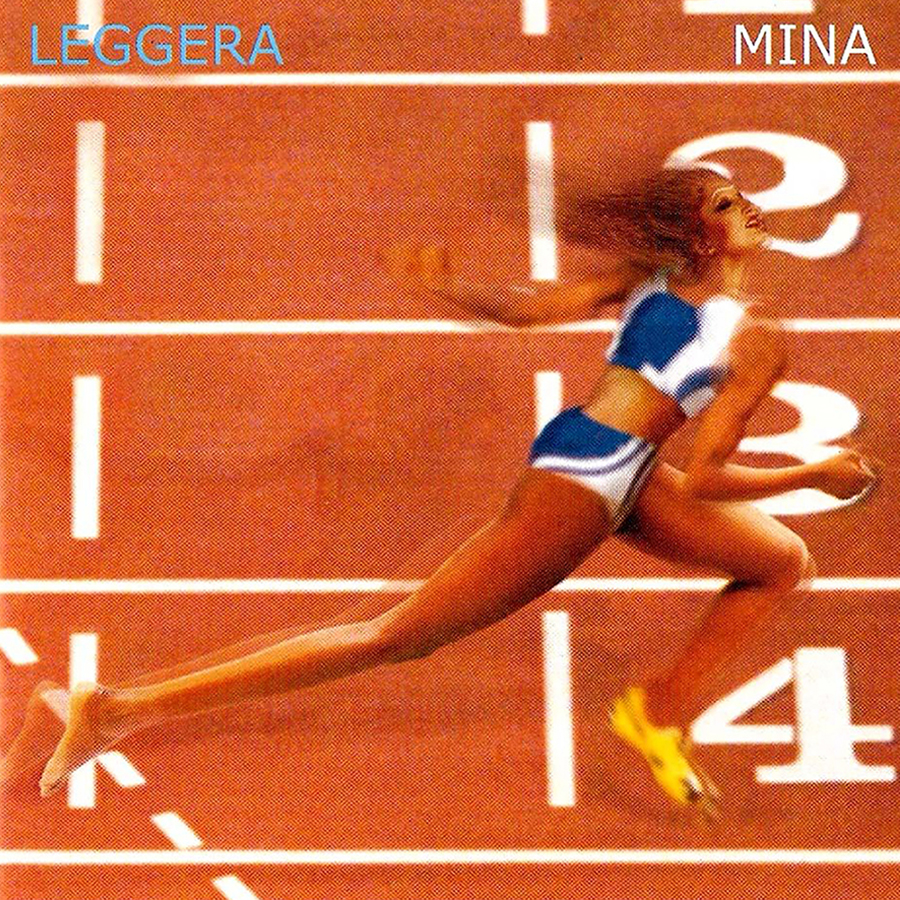
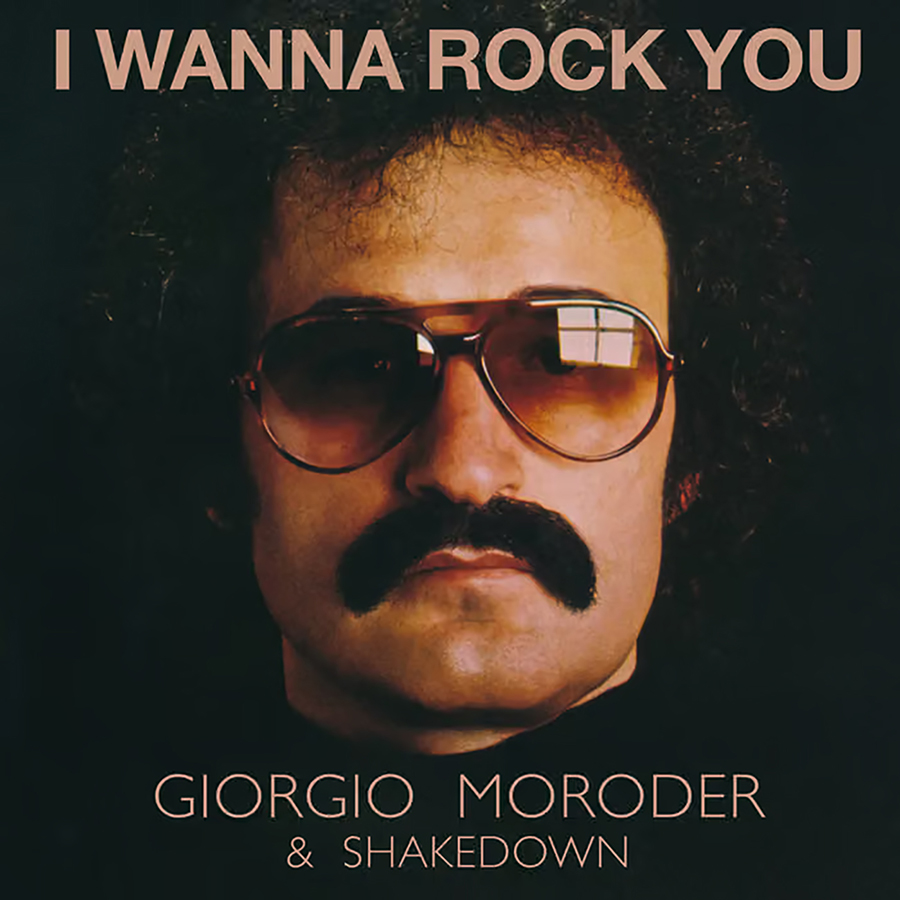
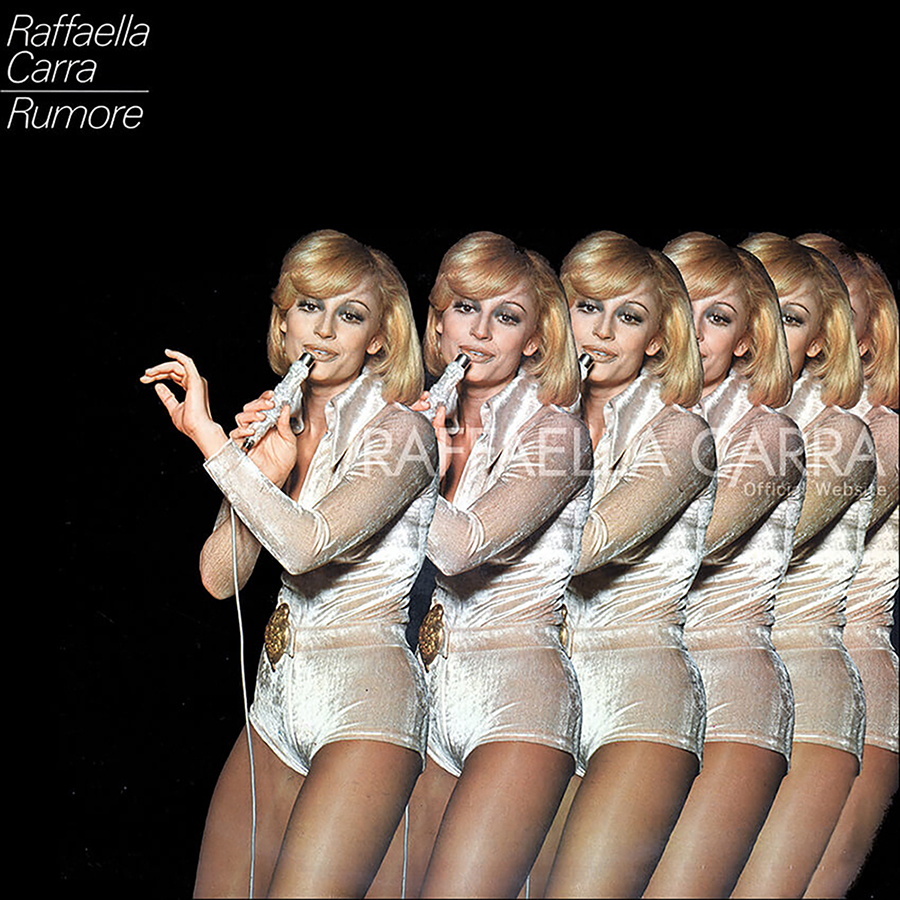
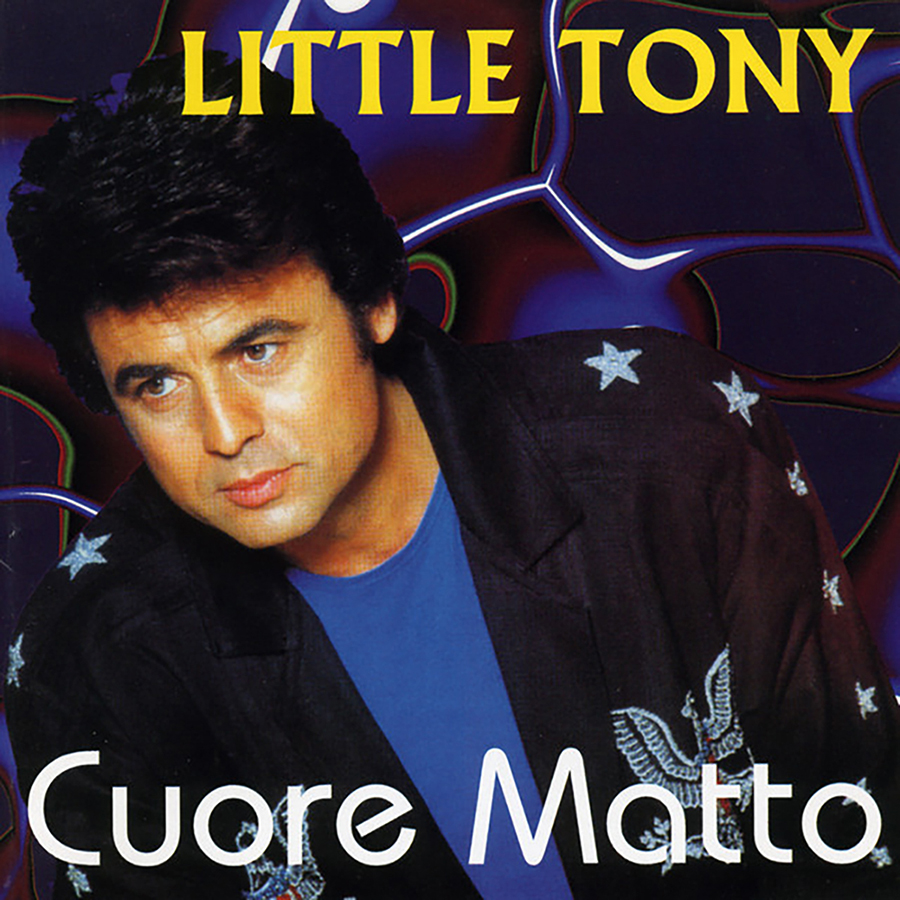
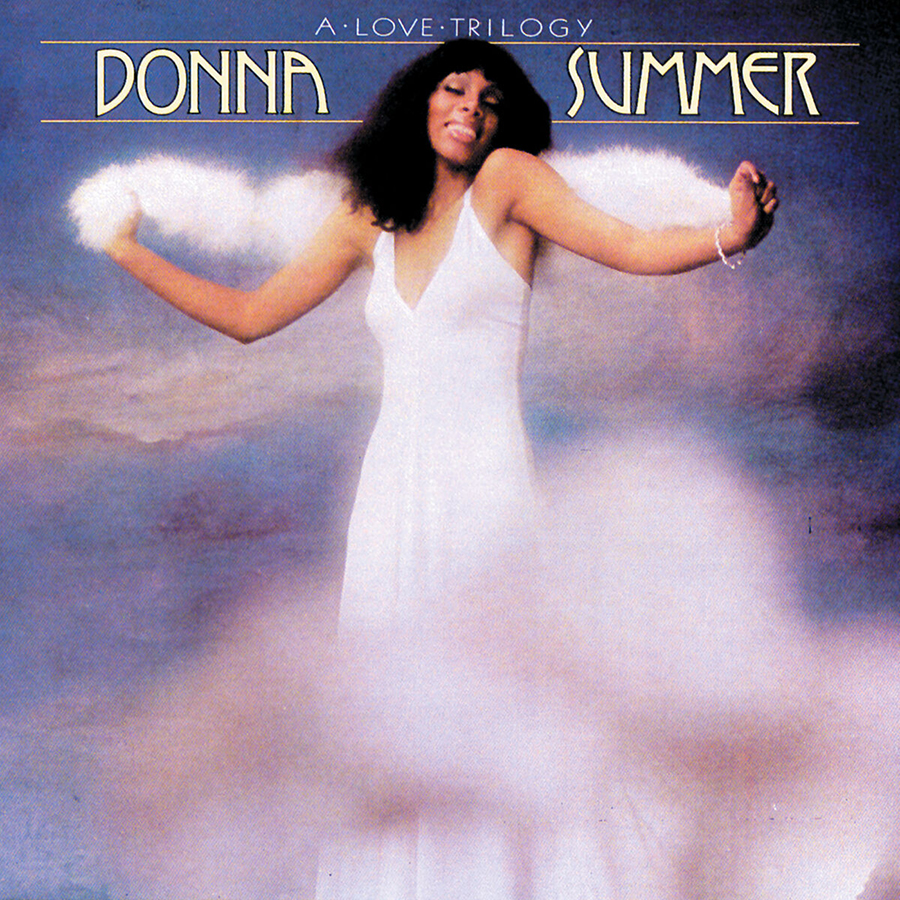
Listening to a record can be considered a form of musicking: not the simple passive reception of a sonic work, but an out-and-out performative and existential practice.
Not to mention, then, the care with which you placed the stylus on the record, aiming at the opening groove like a sniper aiming for Trump’s ear. All of this tells us a lot about what the ritual of home listening was during the âge d’or of records. And perhaps also about what it still is today, considering the exponential growth in interest in vinyl recorded in recent years, especially among younger generations.
To put it in a somewhat complicated word, coined by scholar Christopher Small, listening to a record can be considered a form of musicking: not the simple passive reception of a sonic work, but an out-and-out performative and existential practice, through which one activates the recording medium, organises a listening situation, and participates in the construction of cultural, social, and symbolic relationships that give meaning to music and, more generally, to the sonic experience.
Dealing with records means finding yourself at the centre of a very lively and far from surrogate multiplicity of practices. Records are inherited, as in my case; they are purchased, they are given as gifts: “They become part of family, friendship, and heritage networks – Antonio Fanelli and Jacopo Tomatis remind us – and it is precisely their physical dimension as objects that guarantees their survival over time and preserves their emotional and social value, both individual and collective.”
After all, who hasn’t perceived at least once in their lifetime the effect of authenticity and tactility that emanates from the concrete, manual, imperfect, and obsolete act of a stylus resting on the grooves of a record? Who hasn’t been struck, even if only for a brief season, by the iconic, totemic power of a sleeve or an artwork?
The idea of a domestic theatre, evoked by our Marco and produced by the record experience, coincides with the private and secularly sacralised time that each person chooses to dedicate to the listening ritual and the imaginary that accompanies it. It is a condition typical of those—like all of us, for that matter—who belong to mass society and have found, from the earliest age, in listening cultures a powerful tool for constructing their own identity: to understand who they were and, perhaps, who they wanted to become.
Turntable liveness
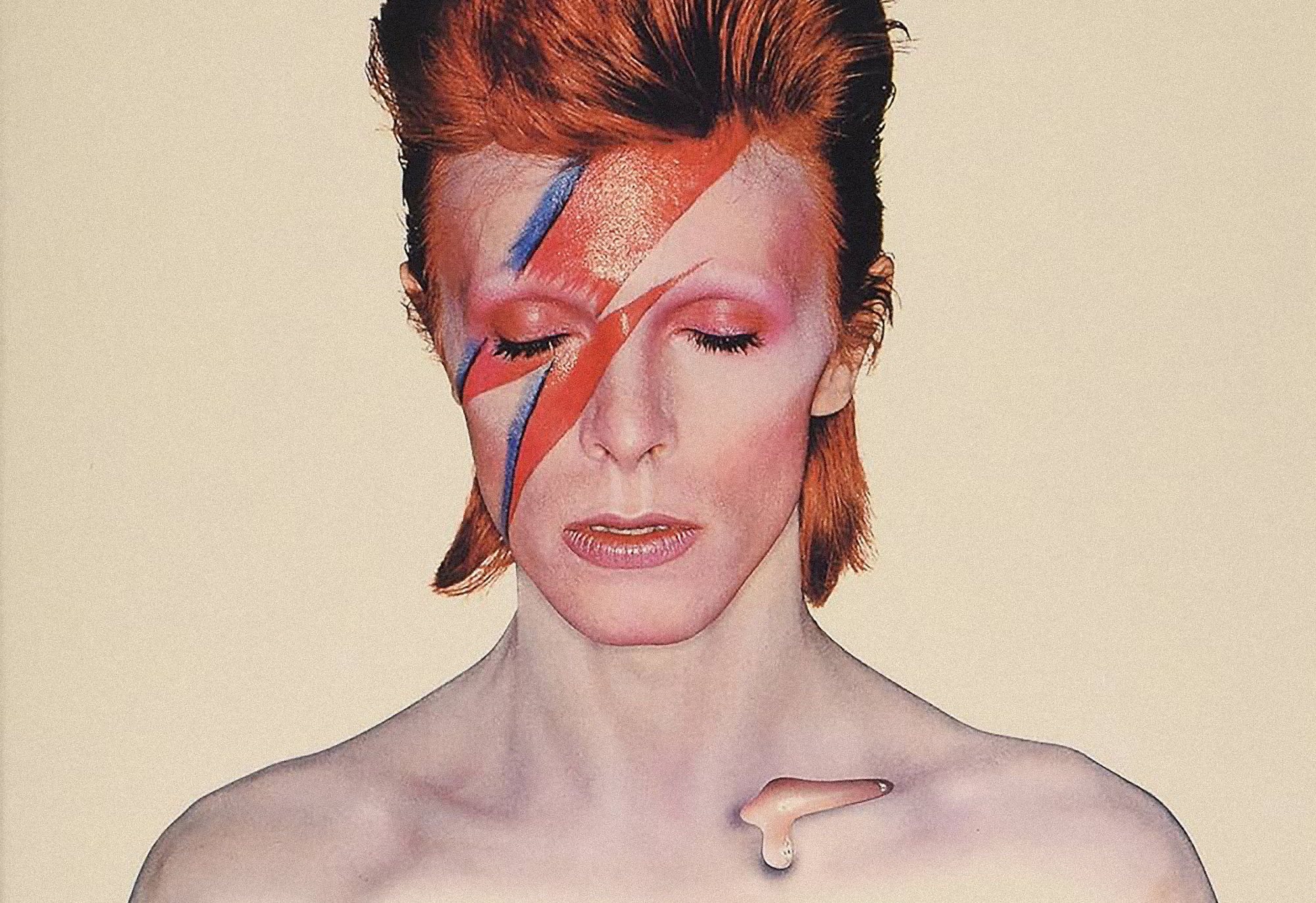
And here we come to the second decisive change of my adolescence, after the material one described above: the music, in the most literal sense of the term. In other words, the epiphany generated by the encounter—sonic and at the same time iconic—with David Bowie and his artistic universe. An encounter that, in many ways, can be compared to the account given by writer and essayist Fabio Cantelli Anibaldi of his own discovery of the White Duke.
With words of genuine involvement, Cantelli Anibaldi recounts when, still an adolescent, between the 1960s and 1970s, he tried to interpret what he perceived as a difference compared to his peers. A difference that was also measured by the fact that virtually nothing that the others liked—whether it was music or cinema—aroused any particular interest in him.
This sensation ended up overlapping with the discovery of a desire not yet in focus, but already fateful, when, around 1975, at the age of thirteen, he saw David Bowie’s face depicted on the celebrated cover of “Aladdin Sane,” the historic 1973 album, often remembered by enthusiasts as “the Mona Lisa of rock.” A Bowie still clinging to the wreckage of the Ziggy Stardust character, fixed in a condition of bloodless theatricality, with uncertain gender coordinates, sporting hair of a chemical red-orange, eyes closed, and a blue and red lightning bolt crossing his face.
The young man spots the record in his older sister’s room, resting on the desk: “I stood mesmerised in front of the face depicted on the record, I couldn’t tear myself away from it, and I wondered what the nature of the attraction I felt toward that face was, which seemed as much that of a man as of a woman. Faced with this dilemma, my thought was not to give a damn and to want to become like him or like her: I wanted to become like David Bowie.”
And further: “Coming across Bowie was discovering that Apollo and Dionysus could coexist in a single person, discovering that one was the completion of the other and that it wasn’t necessary to choose and, consequently, to renounce. Bowie was the squaring of the circle, absolute perfection: the most fascinating being I had ever seen, the music that more than any other touched me and stirred my mind, body, everything.”
Cantelli Anibaldi emphasises a particular season of existence, that in which, during adolescence, we begin to come to terms with our body. Not only with a functional body, made of basic and essential needs, but with the projection of desire that the body produces.
It is the moment when we begin to distance ourselves from the surrounding reality and discover the emergence of an inner world to which we feel we belong, made of finally conscious emotions. A world in which, for the first time, “perceiving is at the same time perceiving oneself”; a universe in which “one is born triumphantly from oneself by discovering oneself as an individual and thereby cultivating the reasonable hope of being destined for absolute happiness, of which the listening to music—a total and sensual listening that involves soul and body—represents a formidable vehicle.”
In the face of the intensity, the truth of what Cantelli Anibaldi recounts, one must recognise that the apparently inert matter of a record, together with the identity-forming, relational, and cultural practices that it sets in motion, produces something that fully belongs to the vibrant sphere of liveness, of live experience.
We must embrace the idea that, in a society like ours, deeply permeated by media, the performing arts must be observed from a long-term perspective.
As American scholar Philip Auslander has shown, indeed, what has been circulating in the media system for at least a century and a half—whether sounds or images—must be interpreted by recognising the necessary coexistence between recorded phenomena and live phenomena. These are not opposing experiences but complementary realities that define and transform each other in reciprocal ways.
In the case of records, what we commonly call performance does not exhaust itself in the instant when the music is played or recorded. It extends along a much broader arc of action, which includes both what the record preserves and archives through its own medium and what happens at the moment when our body directly exposes itself to the experience of listening.
If it is true, as it is true, that “performance does not happen only when and where it happens,” then we must embrace the idea that, in a society like ours, deeply permeated by media, the performing arts must be observed from a long-term perspective. A perspective that also encompasses the material and documentary traces produced during their existence.
Following Auslander, this means that the performance we experience through a form of documentation—records included—is not its tired, dead mechanical reproduction. It is, rather, one of the forms through which that performance continues to happen, to be perceived, and to produce meanings.
Every time we place a record on the turntable, something original happens. Something that takes shape in the present, while evoking an event recorded in the past. Something through which we become live spectators of ourselves, of our imaginary, of our passions, of our personal and collective stories.
Unidentified Sound Object
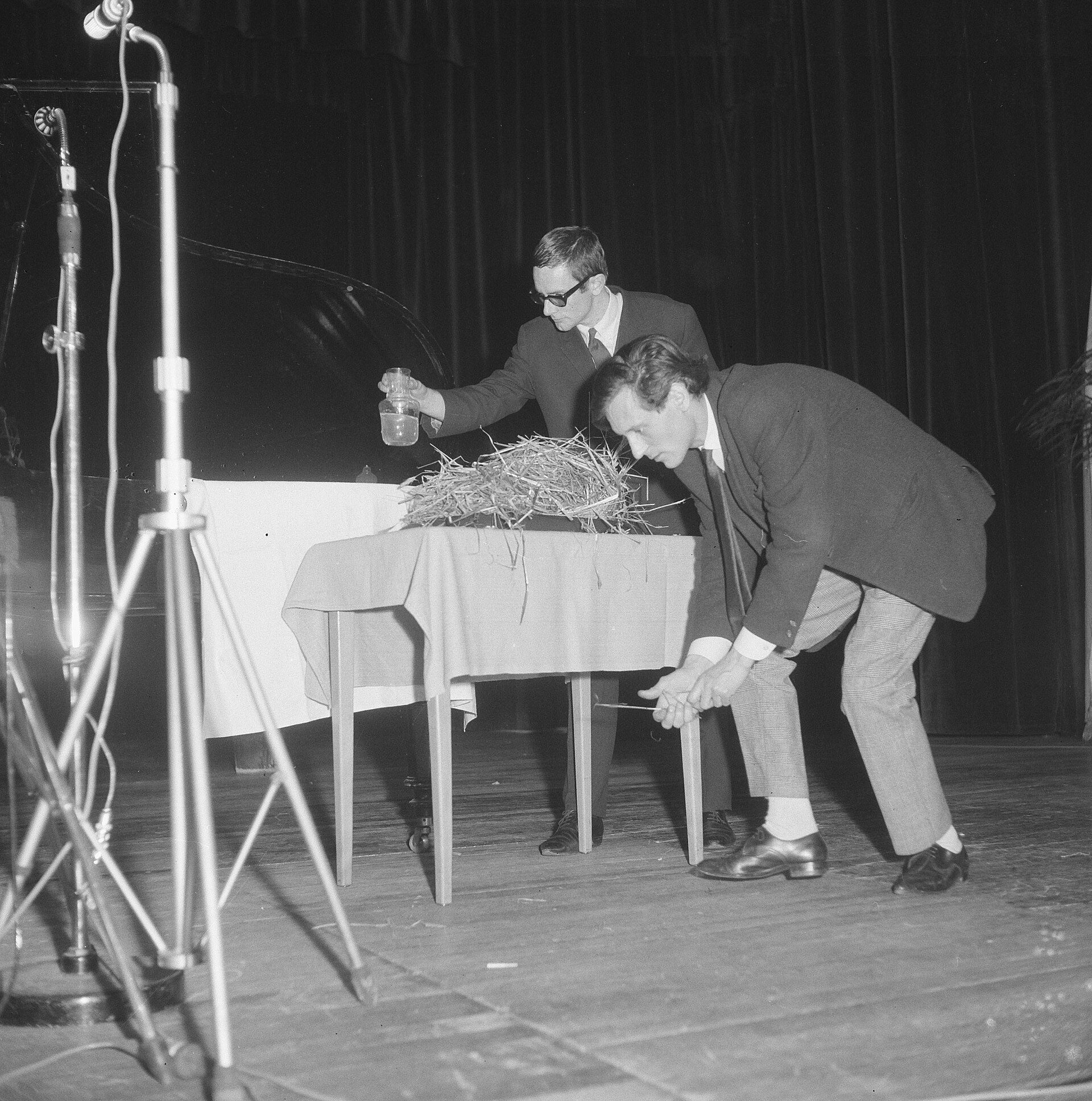
Now that I have passed through much of the available decades, vinyl obsession has reached peaks that only poetry, in its tension toward infinite silences, can represent. The same obsession that has given me the opportunity to access a further level in which the liveness of the record is expressed, and it is the one that connects it to a terrain far from secondary of artistic experimentation, freed from pure sound reproduction. A tradition that runs through much of the 20th century and extends to the present day.
Without thinking too much about the potentially harmful consequences that all this could have for our turntable friend, let’s imagine someone pouring drops of instant glue over a playing record, or someone who passes an open flame over that same record, or who creates records by assembling pieces and fragments of other records. And who, perhaps then, with these records, even makes a nice DJ set. Or let’s think of coloured vinyl—red, blue, green—associated with the sound of a burning forest, a swim in the sea, or falling trees, thus superimposing visual fantasy onto sonic fantasy.
Those who created these oddities have a first and last name, not all of them particularly easy to pronounce: Arthur Köpcke, Milan Knížák, Christian Marclay, Jack Goldstein. Certainly eccentric characters, but also recognised artists. In any case, what interests us here is to consider that these “things” belong to the consolidated field of the so-called artist records: vinyl records that can have engraved in their grooves any sonic resource—music, noise, voice, concrete sound, poetry—and that can therefore document an event, archive an action, or propose sounds recorded in the most diverse forms and contexts.
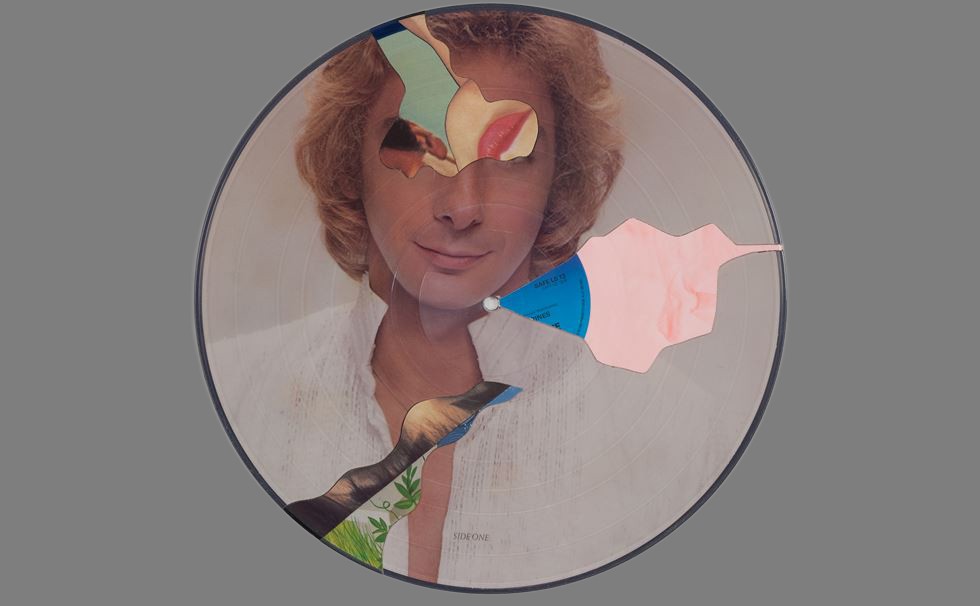
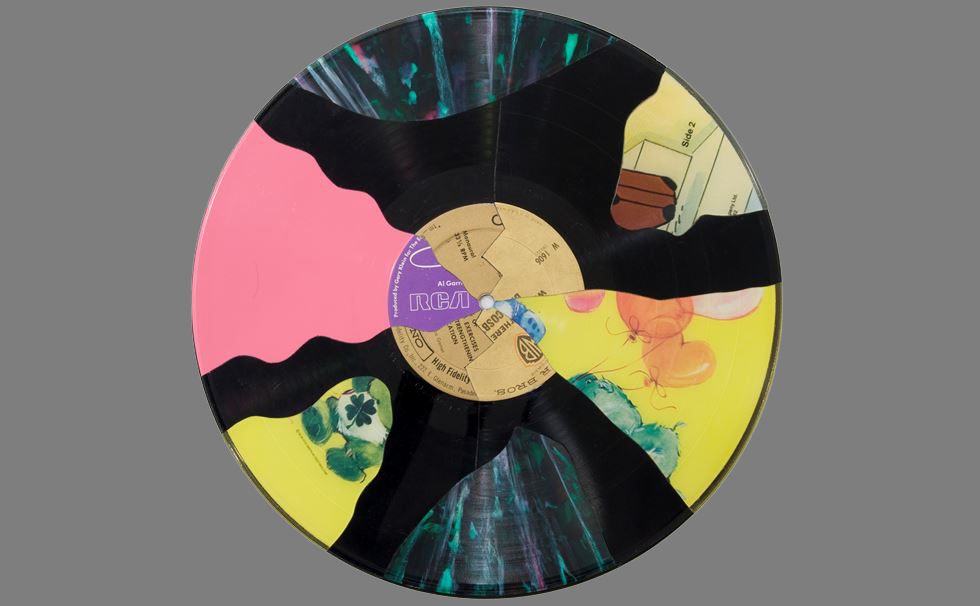
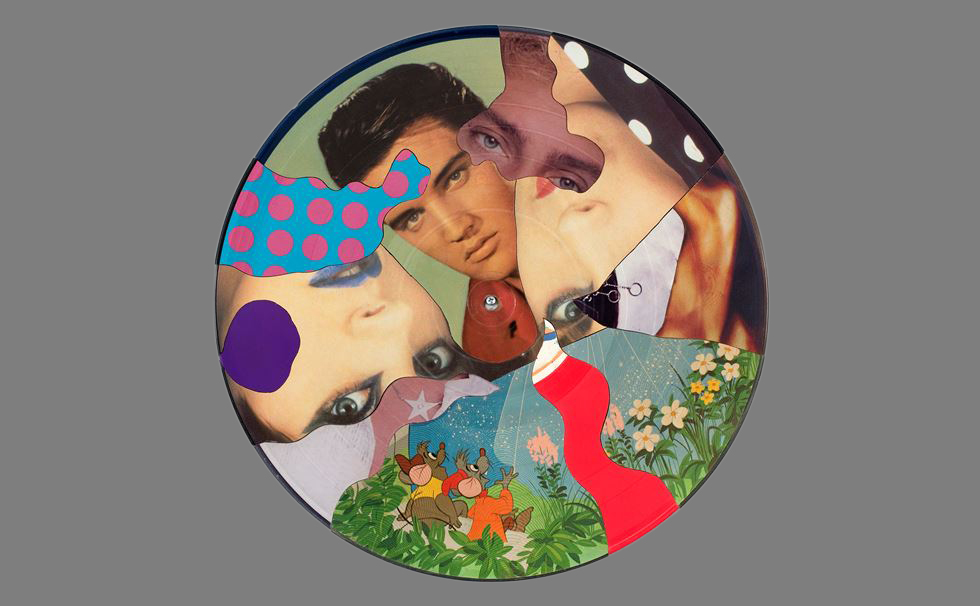
Christian Marclay, Recycled Records,1984.
Ane of Italy’s greatest collectors of artist records, Giorgio Maffei, has rightly pointed out, the record “is not the explanation or documentation of a sonic work of art. The record is the work.”
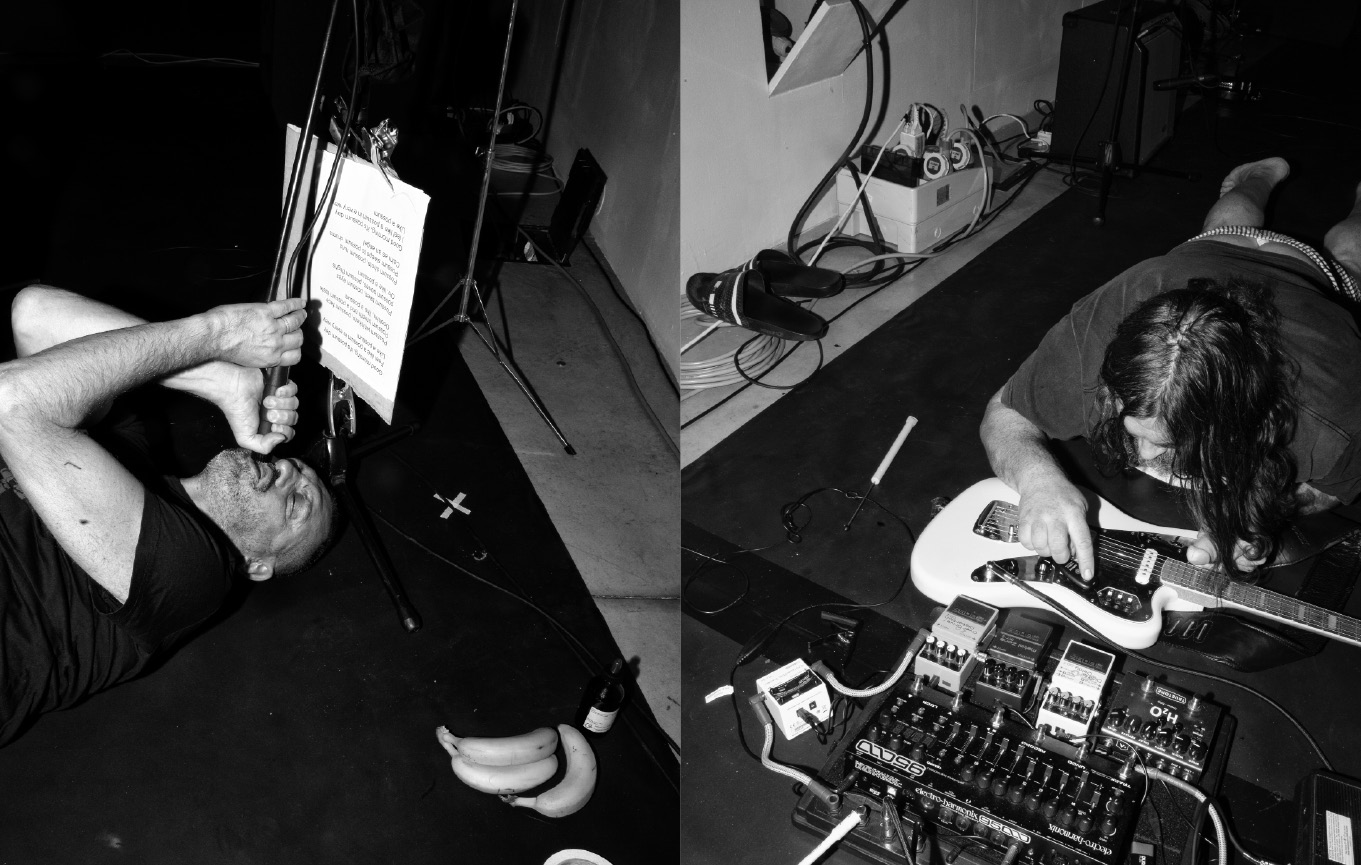
Their belonging to the broad spectrum of art, and in particular to the live arts, reveals itself even more in the moment when the record becomes for artists a true performative field. A dynamic that resolves itself neither in music nor in the centrality of the word, but in the overcoming of both: within a horizon generated by the action of the body in space, which the record captures in its own way, transforming it and returning it as something absolutely original.
In short, as one of Italy’s greatest collectors of artist records, Giorgio Maffei, has rightly pointed out, the record “is not the explanation or documentation of a sonic work of art. The record is the work.” That is, one of the many fields of intervention available to artists, realised with the same logic as a painting, a sculpture, a video, an artist’s book, or an installation. A way to elaborate and express, we might say in a holistic sense, and based on a performative—spatial and relational—sensibility, one’s creative invention.
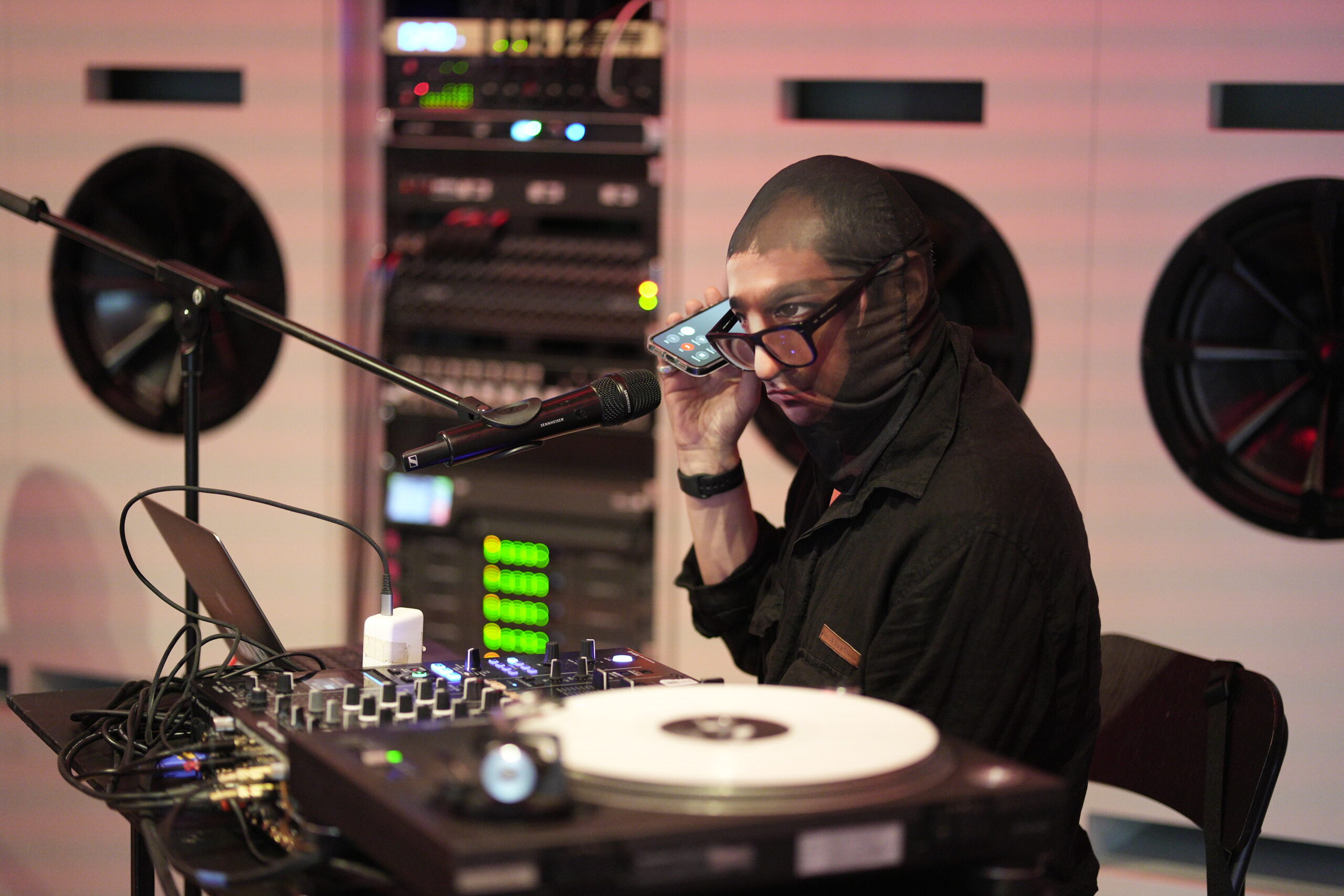
In this sense, the artwork and, more generally, the material dimension of the object are by no means accessories. This is demonstrated to us both by artist records of the past and those of the present, such as the Xong collection produced by Xing between 2021 and 2026: nineteen releases for an incredible array of our contemporary artists, from Jacopo Benassi to Marcello Maloberti together with Lydia Mancinelli, the muse of Carmelo Bene; and also Kinkaleri, Romeo Castellucci and Scott Gibbons, Mette and Iben Edvardsen, Muna Mussie and Massimo Carozzi, Alessandro Bosetti, Cesare Pietroiusti, Michele Di Stefano, just to name a few. All of this has recently been collected in a box set that is calling “unmissable” an understatement.
I won’t dwell on describing the variants that each of these objects represents, both in the sonic part and in the more properly visual one. Those who wish can visit the official website and discover all the peculiarities of these strictly white vinyl records, music-non-music. I only want to say that they share a common metabolism: they discard, precisely, the musical in the strict sense and open themselves to the performative imprint that generates sound, passing through it and relating it to bodies, spaces, gestures, images, and so forth.
Now that we have reached the end, some of you may be wondering what became of my dear old 45-rpm records with songs from the 1960s. Well, at a certain point, they took flight like frisbees, hurled from the window of my room against the wall of the building opposite, with that subtle pleasure that comes from watching a fragile object shatter into a thousand pieces. And if this is not a live performance, what else is?
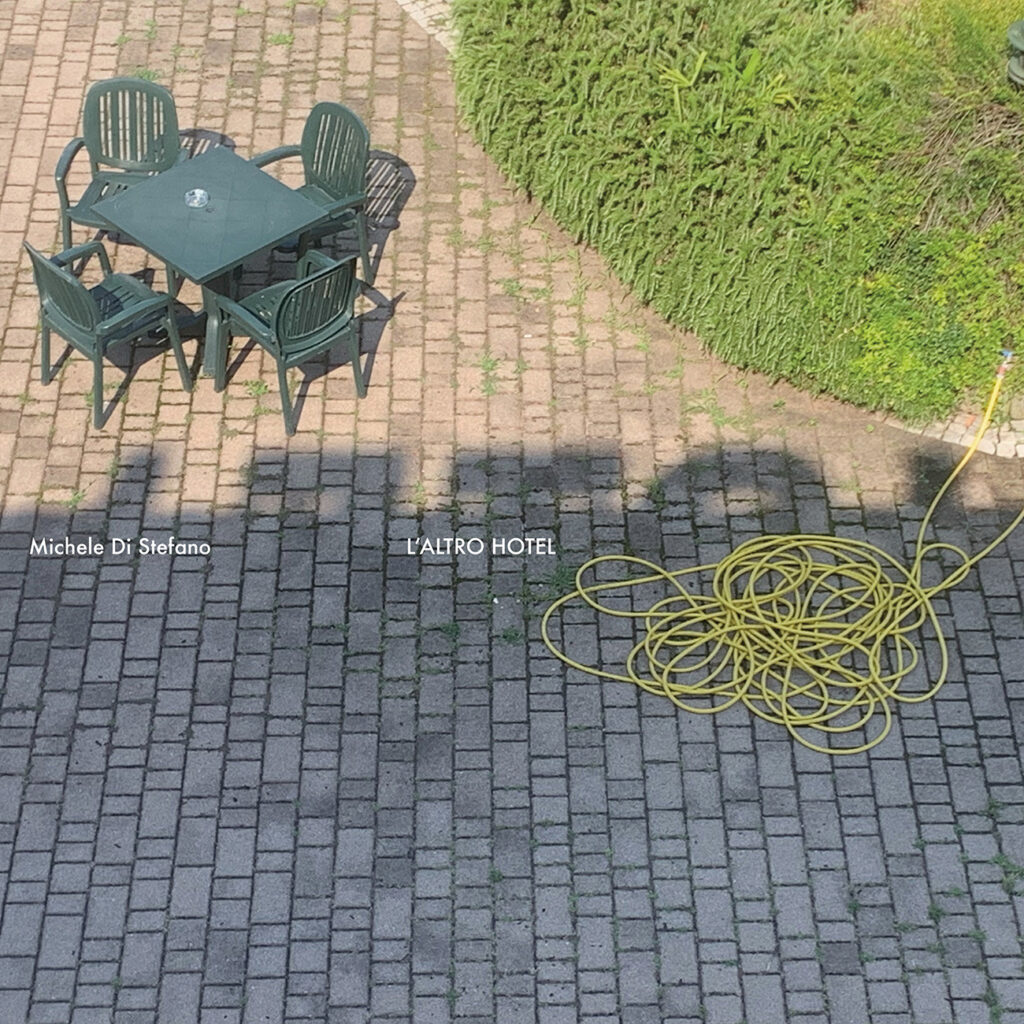
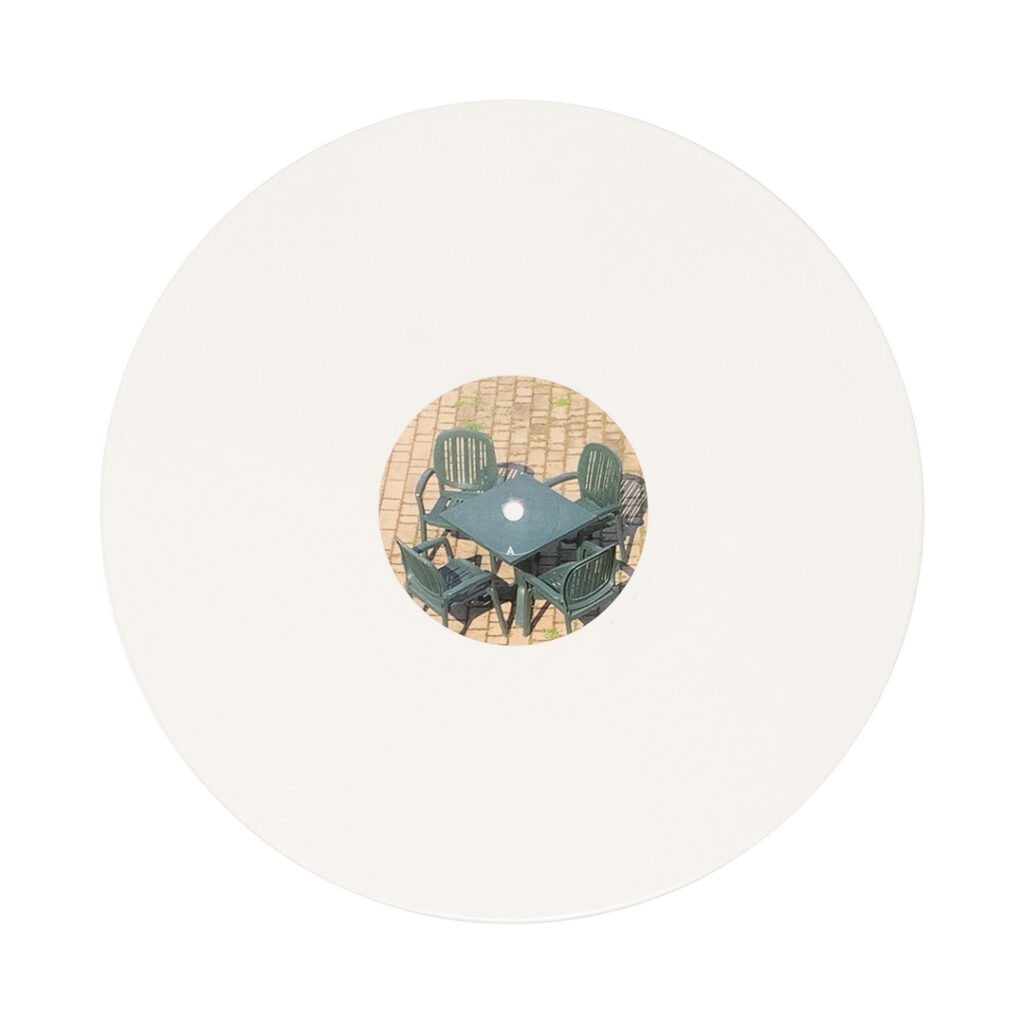
Michele Di Stefano, L'Altro Hotel: front cover and LP (Xong Collection XX19, Xing, 2025). Photo by Soundohm. Courtesy of Xing.