Making Ice Music is Difficult
In Ilulissat, the third-largest town in Greenland, ice is not a background but a force of light, movement, and sound. The Ice Music Festival is both an event and a situated practice that engages directly with the frozen landscape. Instruments are carved from glacial blocks, and performance depends on shifting temperatures and wind. Between collapse and improvisation, as Emile Holba writes, the festival turns ice into both a creative and symbolic material, holding together art, climate, and community at the edge of the world, where climate change strikes with greater force.
Creating the Ice Music Festival in optimal winter conditions is, at best, exigent. So when a Greenlandic Inuit festival crew member declares the weather unsafe due to dangerously high winds and plunging temperatures, creating a mini polar vortex that destroys the festival arena for the third time in four days, it’s understandable to question why a group of musicians, artists, sound engineers, and volunteers would embark on such an arduous endeavour.
For 21 years, the Ice Music Festival has seamlessly blended music, art, and climate science at various locations in Norway. Its ethereal sounds have captivated warmly dressed audiences from around the world. In winter 2024, the festival expanded its reach with its inaugural international edition, Ice Music Greenland, held in Kalaallit Nunaat (Greenland).
Kalaallit Nunaat
As a portrait and long-term documentary photographer, I’m fascinated by creative communities, scientific endeavours, and the complexities of climate change. Ice Music beautifully merges two of these interests by blurring the lines between art’s physical and sonic realms, whilst delivering a powerful message about the fragility of our planet’s most precious resource: water.
Since 2009, I’ve worked closely with Ice Music pioneer and festival Artistic Director, Terje Isungset. This has involved producing principal photography, managing media interest, and co-producing the festival. Consequently, I’m well-versed in the demands of staging a successful Ice Music concert series and thought I had witnessed every conceivable weather challenge. However, last month, a series of unfortunate weather events during the construction of Ice Music Greenland 2026 pushed the crew to their limits. Ultimately, the weather forced the opening night performance indoors and necessitated a fundamental rethink of stage design and audience expectations.
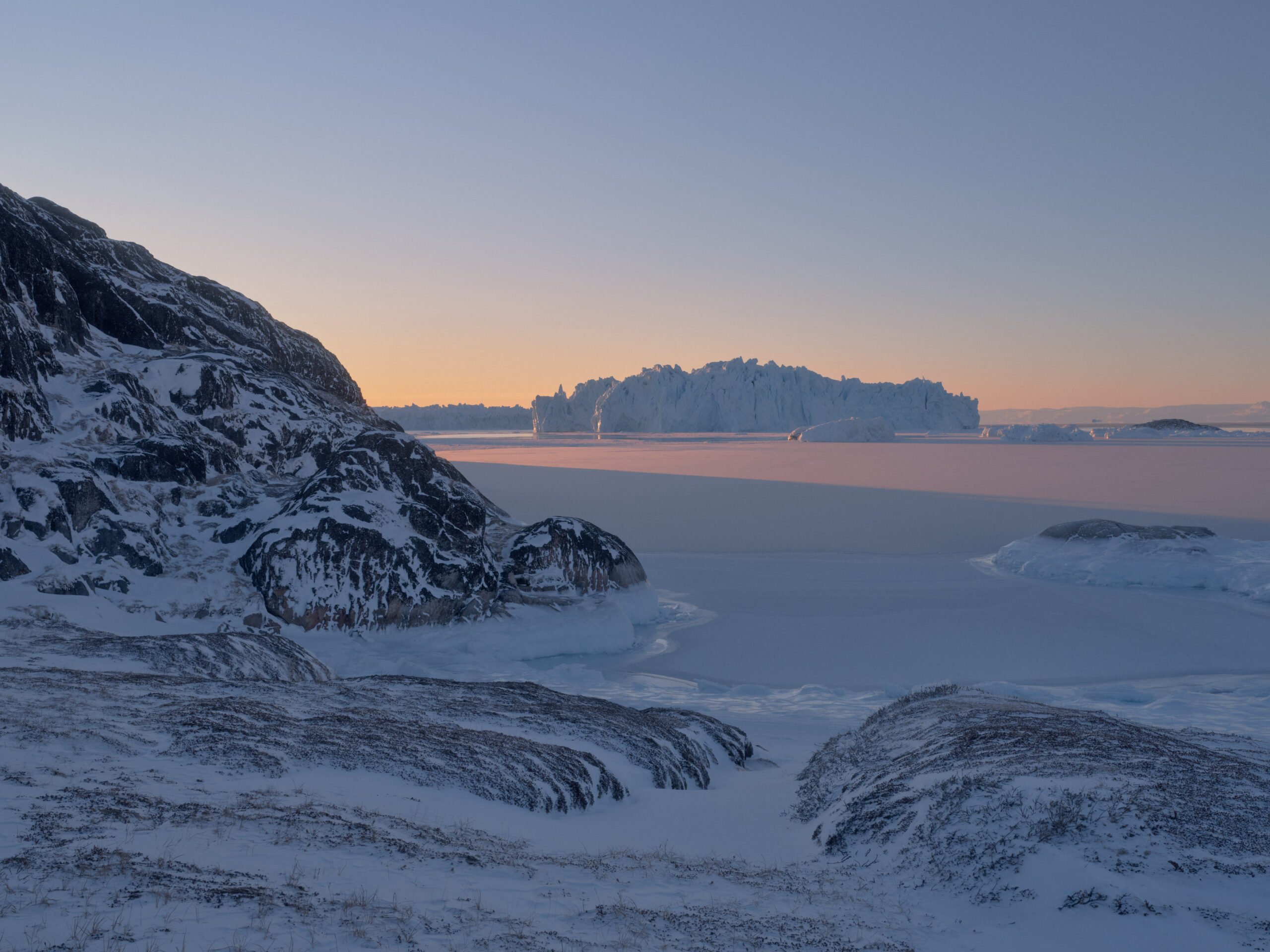
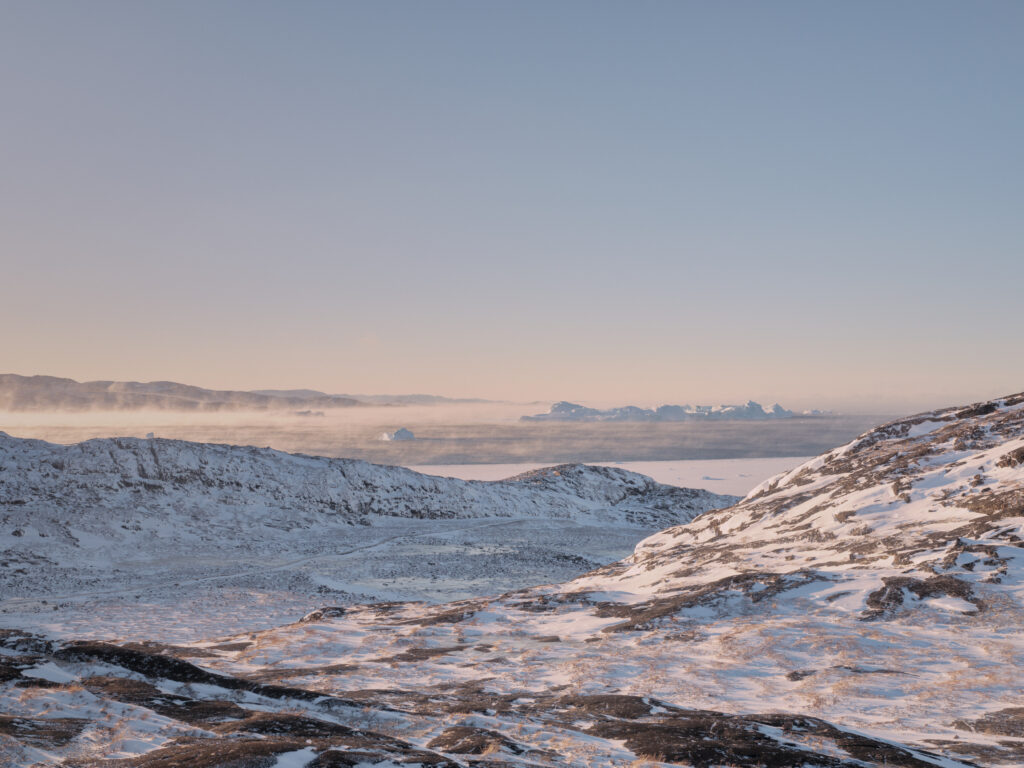
Located in Ilulissat, a coastal town 330km north of the Arctic Circle alongside Baffin Bay, Ice Music Greenland’s frozen setting provides a breathtaking backdrop of city-block-sized icebergs, frigid solar hours, and a glacial wilderness bordering the formidable Greenland Ice Sheet. Visitors are in awe of the sea ice, clear air, and wonderfully soft, analogous light that falls across the Arctic landscape.
One of the key decisions in making Ice Music in Ilulissat is the ‘guarantee’ of a reliable and consistent winter climate. By staging the festival at 69° 13′ 11″ N in Kalaallit Nunaat during February, it would be safe to assume that three of winter’s natural ingredients required to make an Ice Music concert are plentiful:
- (1) Naturally formed ice for ice instrument construction.
- (2) Sub-zero temperatures to ensure both ice instruments and the venue do not melt.
- (3) Lots of snow to construct the stage area and protective rear wall.
Be careful what you wish for…
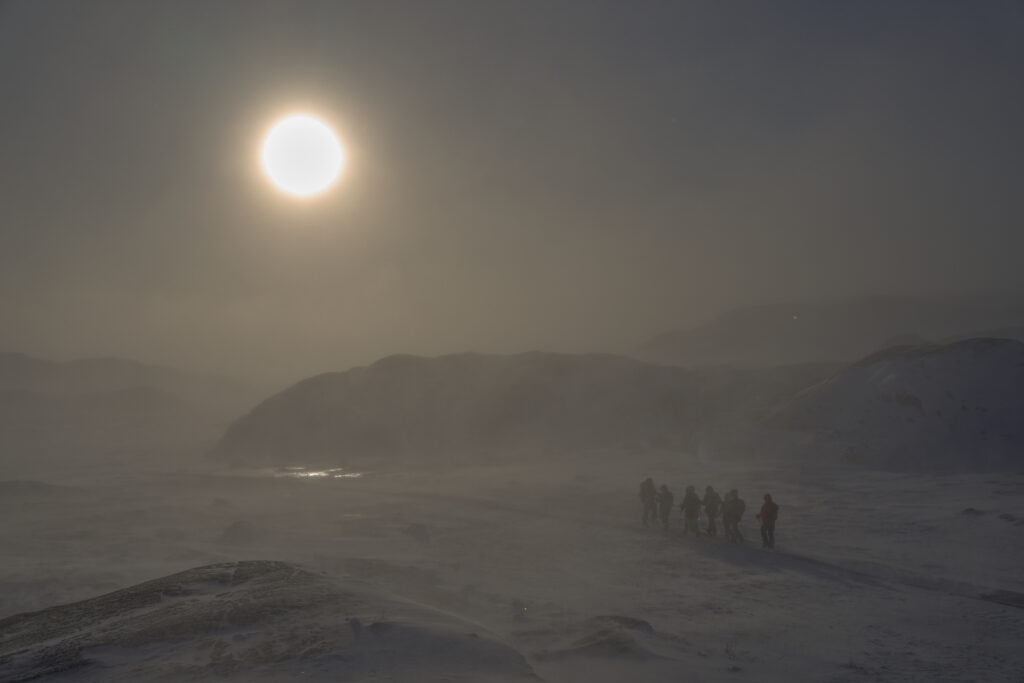
In our new Anthropocene age, climate change is turning these geophysical ‘norms’ on their head. I arrived early for our third Ice Music Greenland in mid-February, and the town greeted me with a complete absence of snow and a daytime temperature hovering around 0ºC. These truly alarming atmospheric conditions began with rain during Christmas, leaving townsfolk very concerned about the dramatic shift in climate during the first six weeks of 2026.
This was my third winter visit to Kalaallit Nunaat, and although my observations were purely anecdotal, I could sense that something was greatly amiss with the conditions (I later learnt that the last year without snow in Ilulissat in February was a ‘one-off’ in 1974). I urgently set about checking if there was enough ice and took part in a team Zoom call because, without those three key winter ingredients, we had to radically rethink how we could design the festival to allow musicians to perform, climate scientists to conduct workshops, and for artists to leave their frozen imprint on the proceedings.
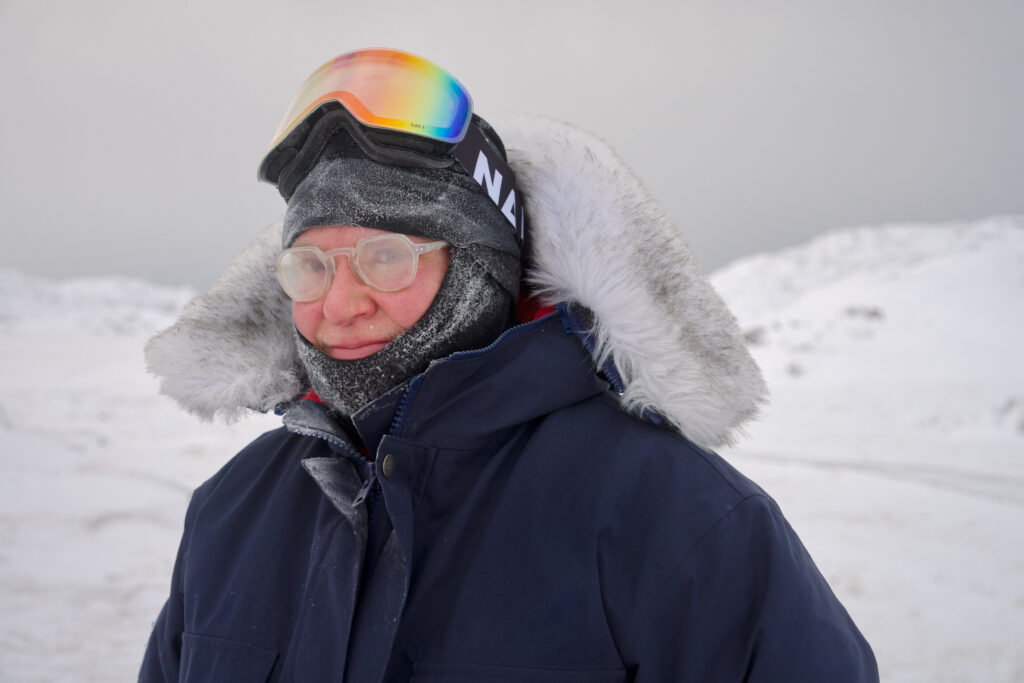
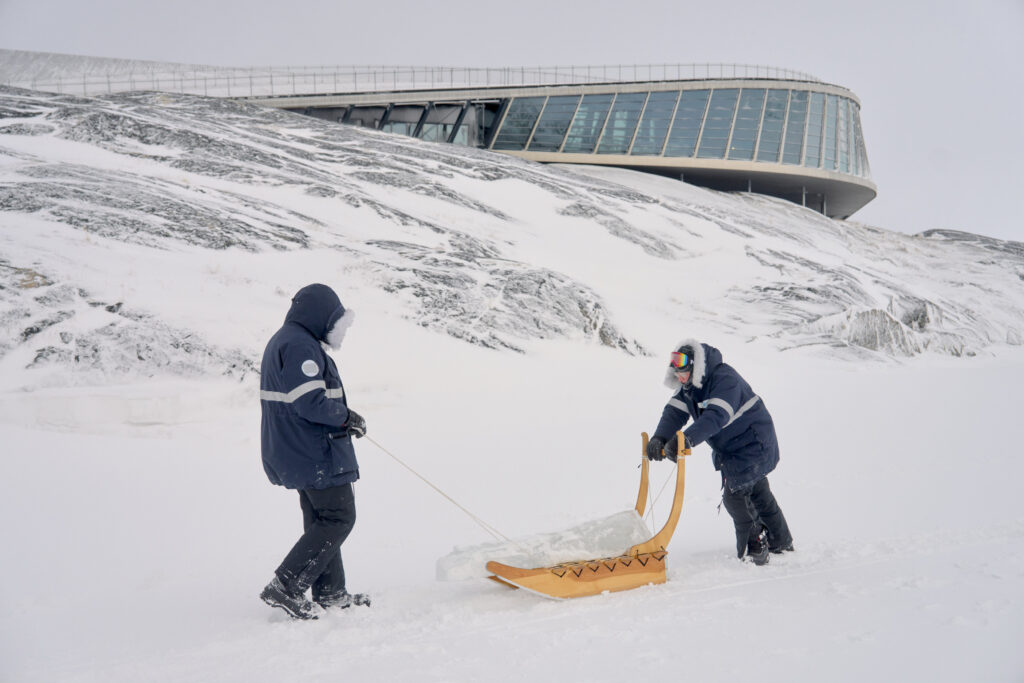
Ice Music Greenland’s key partner is Kangiata Illorsuani (Icefjord Centre). The centre’s architectural beauty and national prominence as a hub for Kalaallit Nunaat’s cultural heritage and for exhibiting glacial climate science make it an ideal location to stage the festival. At the helm of the centre is the Director, Karl Sandgreen, who is resourceful, passionate about the festival’s success, and was crucial in helping with ice extraction at a pivotal moment.
Hard Ice Music fact: without ice, there are no ice instruments. Surely one can freeze water in a freezer unit and sculpt ice instruments with that? The simple answer: no.
Hard Ice Music fact: without ice, there are no ice instruments. Surely one can freeze water in a freezer unit and sculpt ice instruments with that? The simple answer: no.
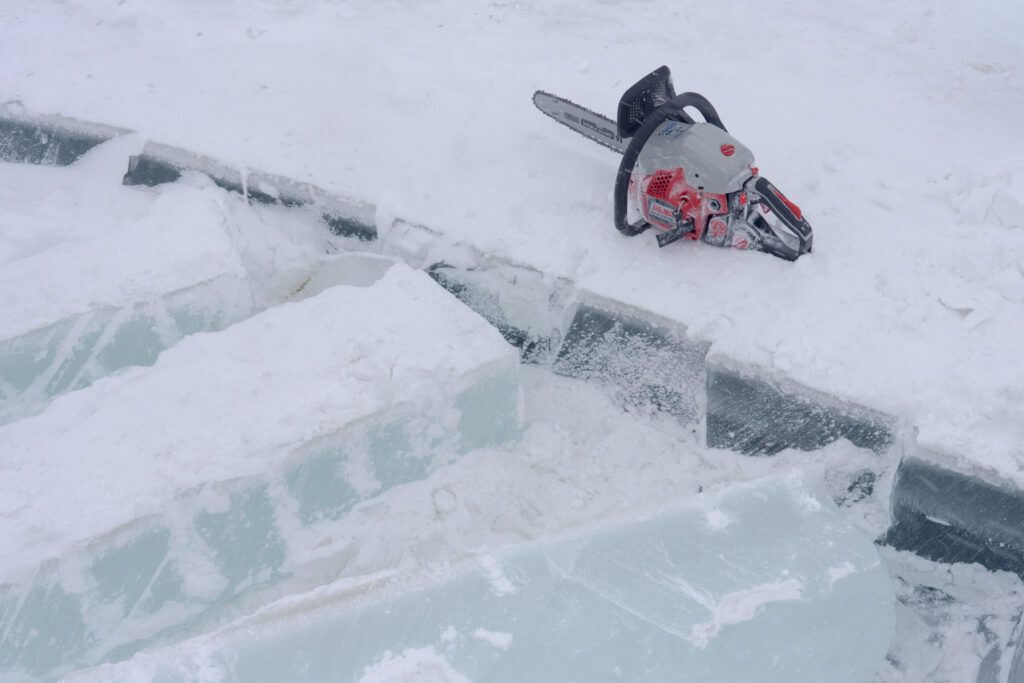
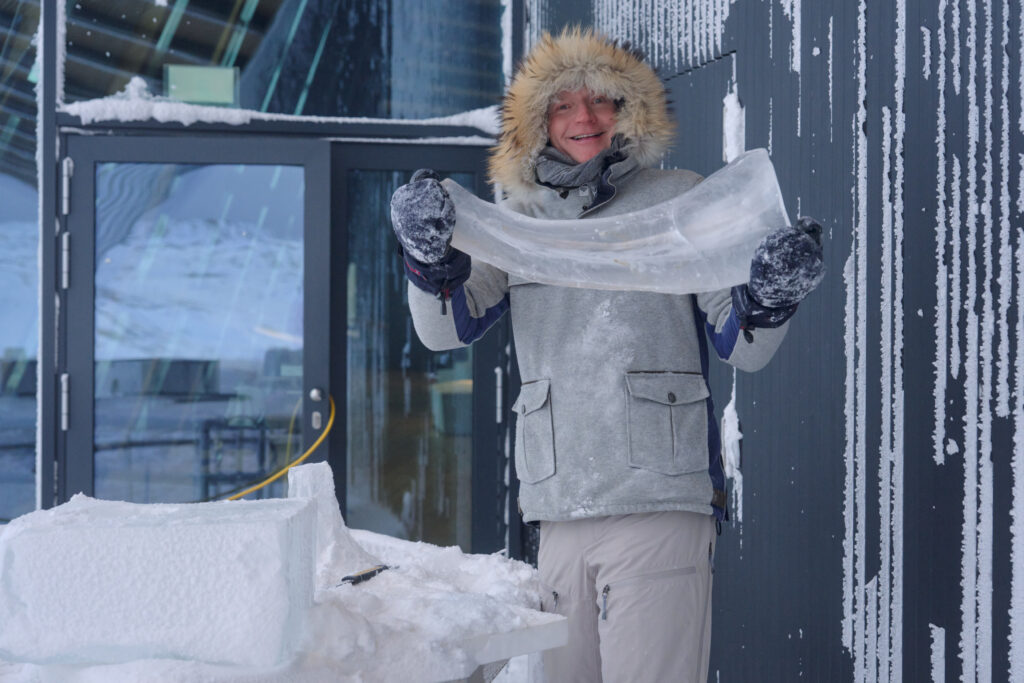
Naturally occurring ice boasts a surprisingly wide range of sound frequencies. Harnessing this, its intonation creates incredibly melodic and ethereal music. Artificial ice, like that used for ice cubes and hotel buffet swans, is sonically dead. Therefore, labour-intensive ice extraction from frozen lakes is the only way to begin creating ice music.
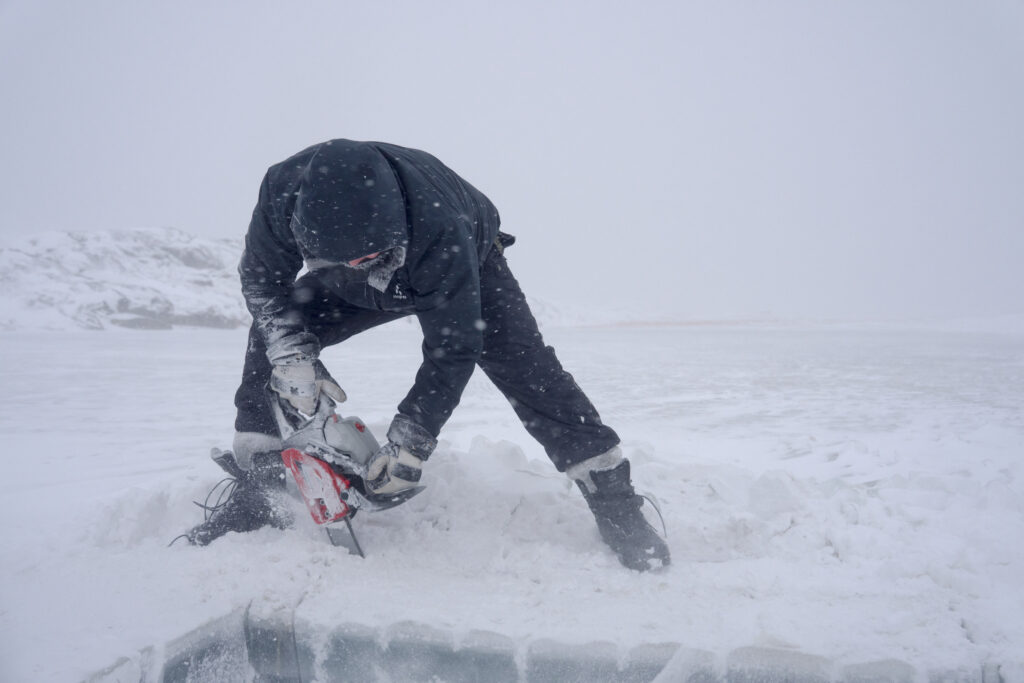
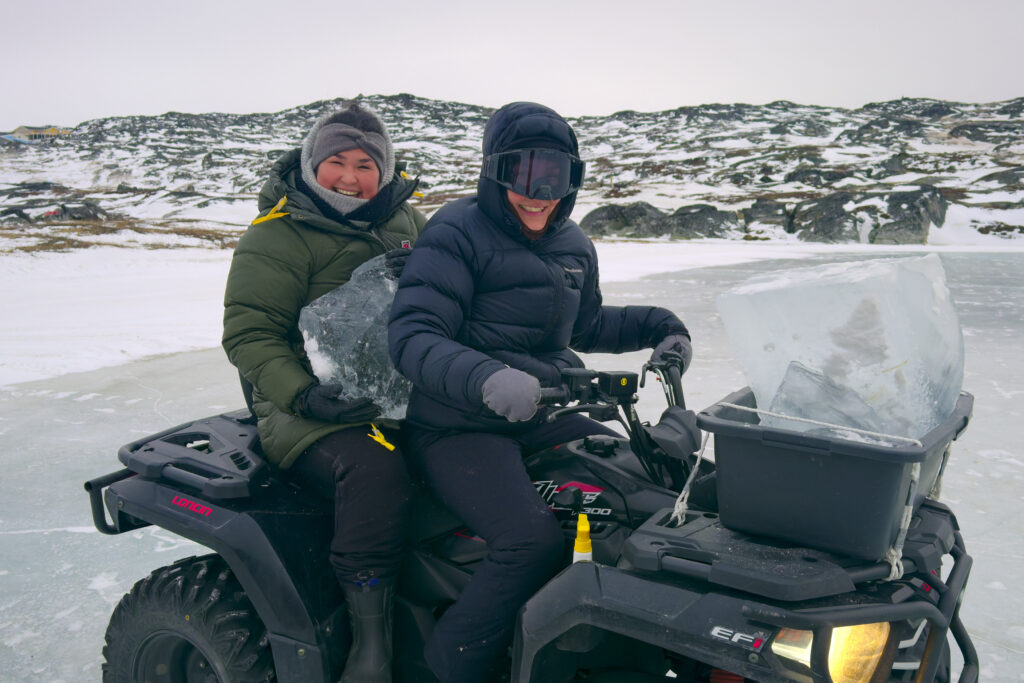
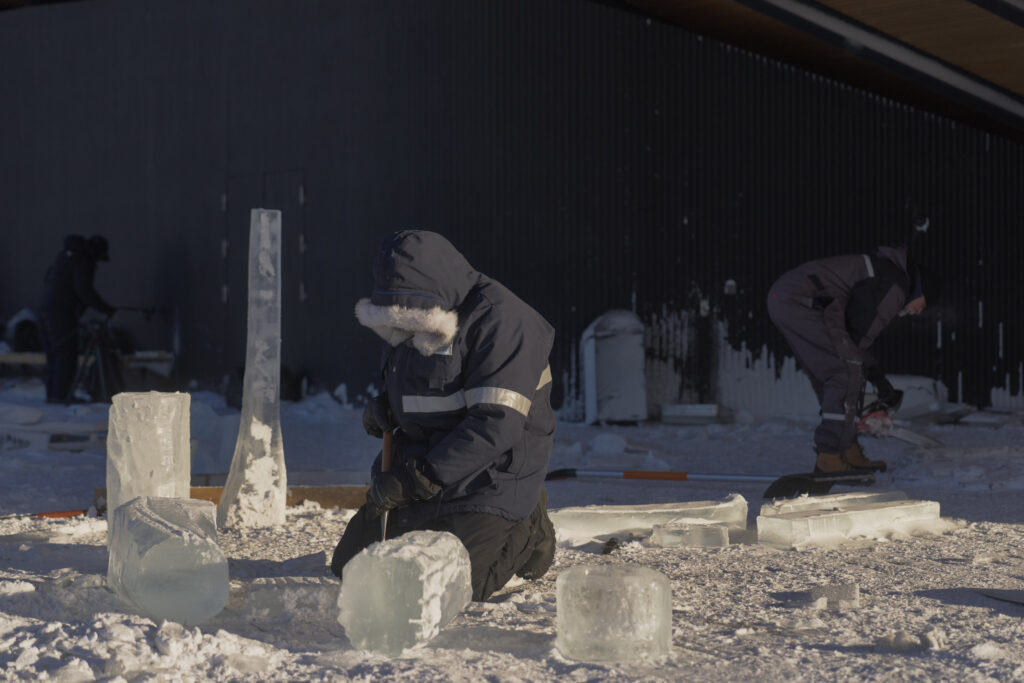
Armed with chainsaws and a long ‘cut list’, Karl and I set to work extracting ice from a lake nearby Kangiata Illorsuani. Fortunately, the ice was high-quality and very hard, almost steel-like. After a few hours and several 250kg blocks extracted, we noticed the temperature dropping. Ice extraction continued over several days, resulting in a substantial stockpile ready for carving into instruments – all moved to an ice instrument ‘cut zone’ successfully by the town’s incredible Handball team!
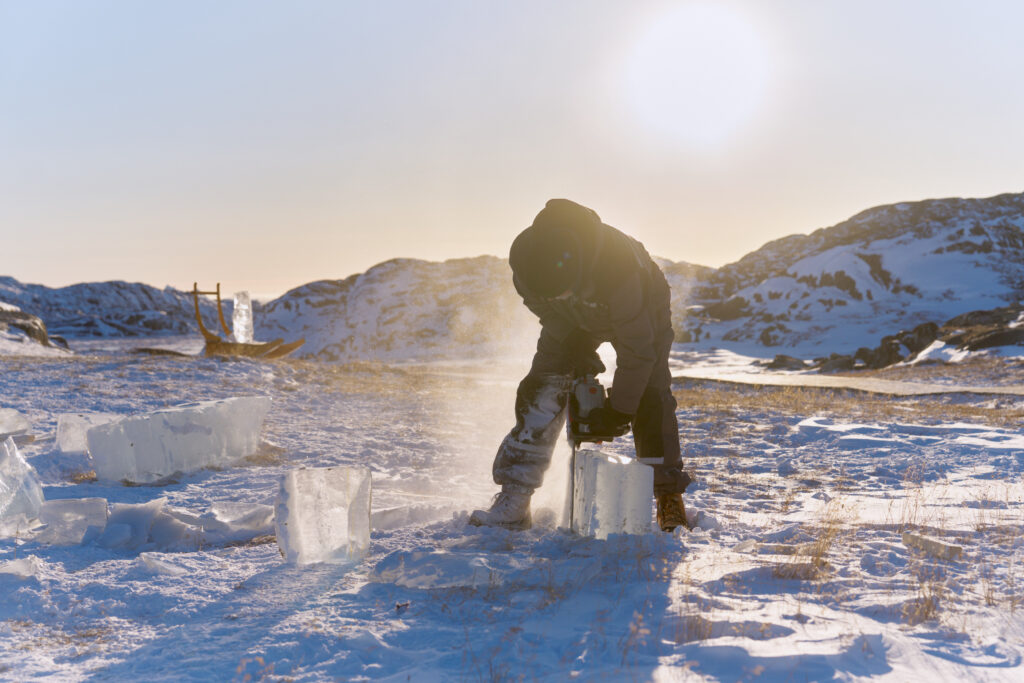
So with just a week to go before the festival’s first note was to be played, we had two crucial ingredients: plenty of ice and, now, cold temperatures. Spirits were raised. However, due to a lack of snow, we still needed a different plan for stage construction.
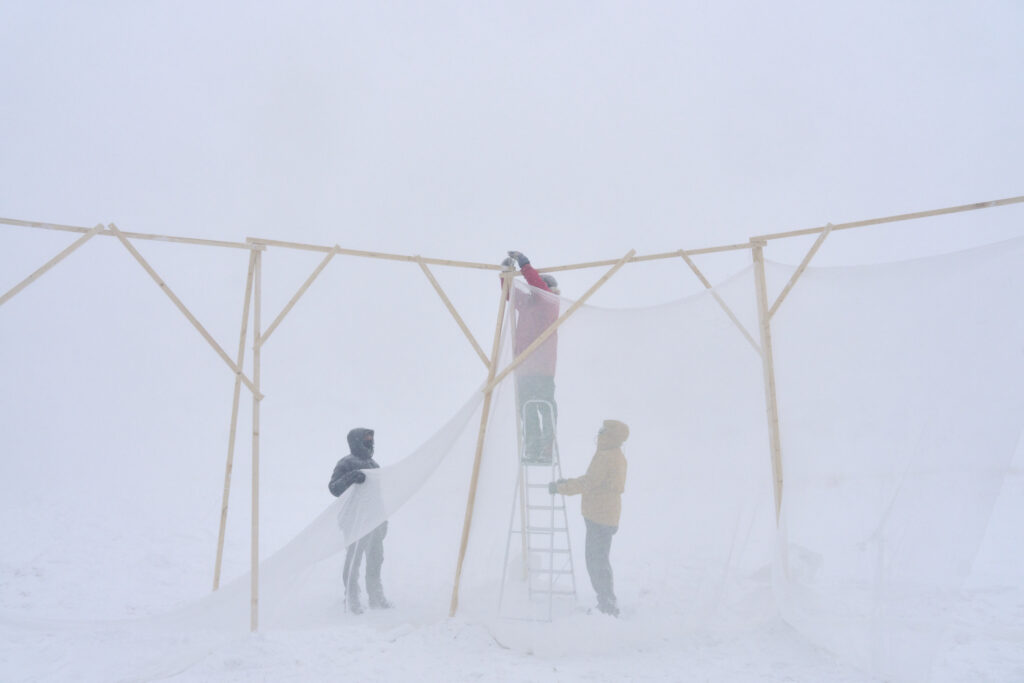
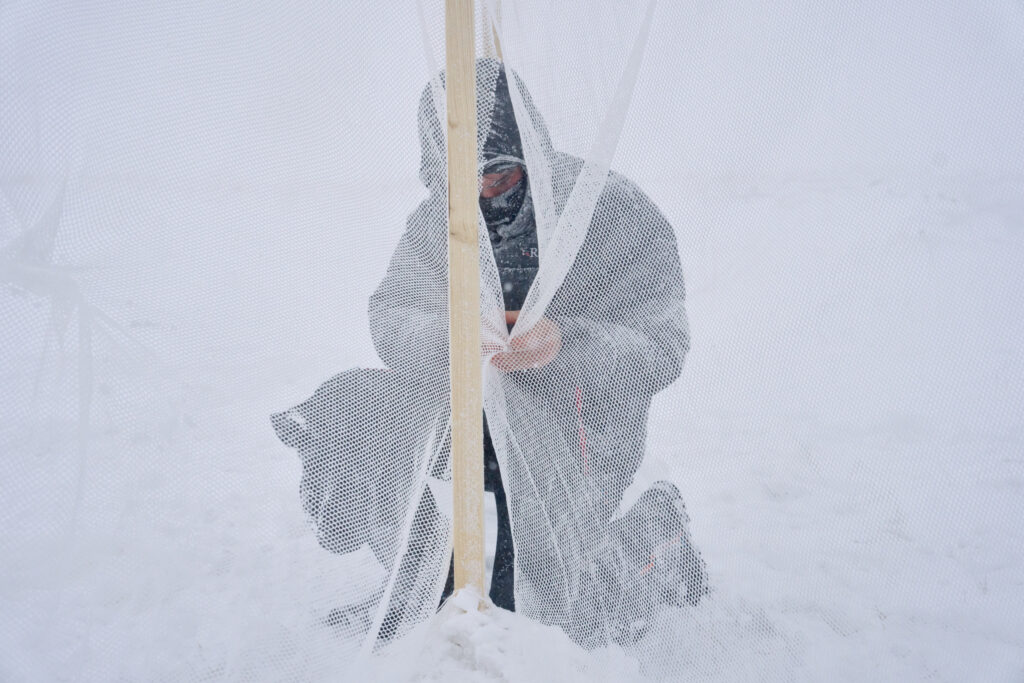
Upon the arrival of the rest of the Ice Music Greenland team, we decided to build a 3.5-metre-high curved wooden skeletal structure resembling a traditional Greenlandic shelter. We then hung large stretches of very fine white mesh to mimic the shape of animal hides. Using a tried-and-tested method, developed by Ice Music crew member Petter Bergerud (Professor, Faculty of Fine Art, Music & Design, University of Bergen), we began spraying water across the mesh to create a thick, incredibly strong layer of ice that would replace the snow wall. This was going to plan, or so we thought. The topsy-turvy weather had other ideas. High winds, a severe snowstorm forecast, and rapidly plummeting temperatures threw our plans into disarray.
Earlier, I mentioned that even in ideal winter conditions, making Ice Music is difficult.
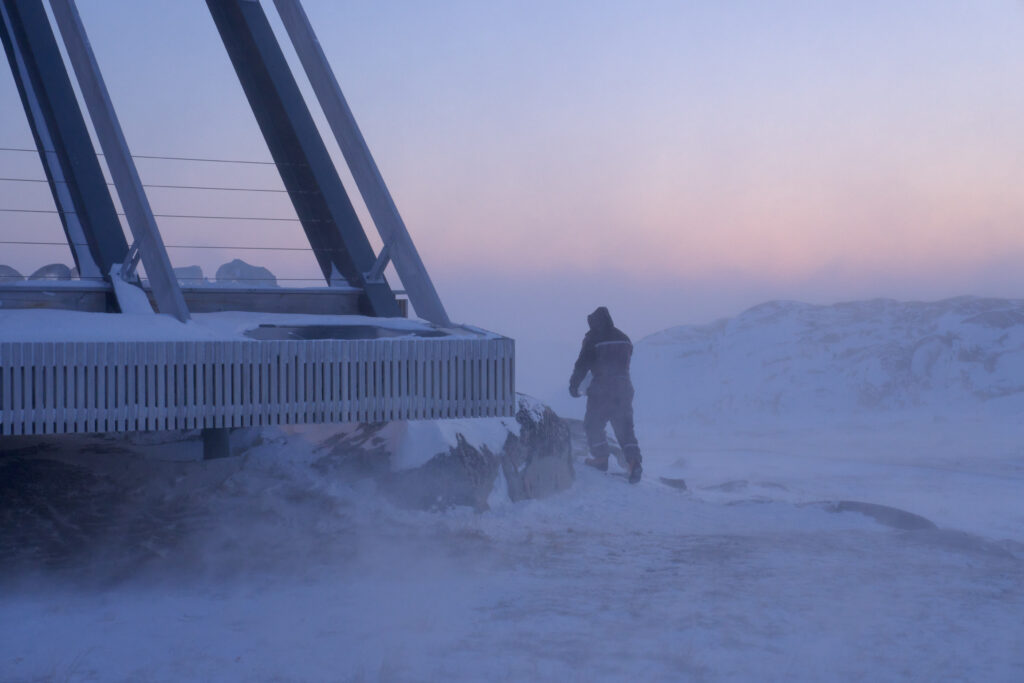
Too warm, anything warmer than around -12ºC, and the mesh/water spray freezing process takes days rather than hours. ‘Gluing’ ice blocks together with icy slush (essential for ice instrument fabrication) becomes tricky, and overall, all festival construction processes take far longer. Furthermore, if the wind is too high, the water spray won’t hit the mesh, significantly lengthening the process and turning the hosepipe person into a frozen winter statue!
Too cold, anything cooler than around -22ºC, also presents challenges. Ice becomes brittle and harder to handle, making ice instrument fabrication a delicate and therefore slower process. The icy slush mix used for gluing is much warmer than the ice blocks, which creates a temperature shock that expands the ice and causes it to crack apart.
Each Ice Music Festival is at the mercy of the weather, and as a crew, you learn to see every problem as a challenge. 2026’s edition of Ice Music Greenland was fast becoming the festival’s greatest ever challenge.
During the course of 24 hours, Ilulissat transformed from a snow-free town basking in bright, warm sun, offset with a unseasonal sea-ice-free coastal breeze, to a settlement sitting in the middle of a cold weather depression with gale-force winds, temperatures nose-diving, and flight cancellations leaving members of the audience stranded at other airports. Overnight, sea ice started to form and jam up coastal bays, air temperatures sat around -30ºC, and Thursday night’s opening concert drew closer.
Ice Music draws people from all over the world, including Europe, Canada, Australia, China, South Africa, Singapore, the USA, and Mexico, to name a few countries. Perhaps they’ve heard Terje’s critically acclaimed Ice Music albums, read articles in various media outlets, or seen news reports about the festival over the years. Perhaps they simply crave the adventure of being part of a winter festival focused on climate change through innovative and expressive music.
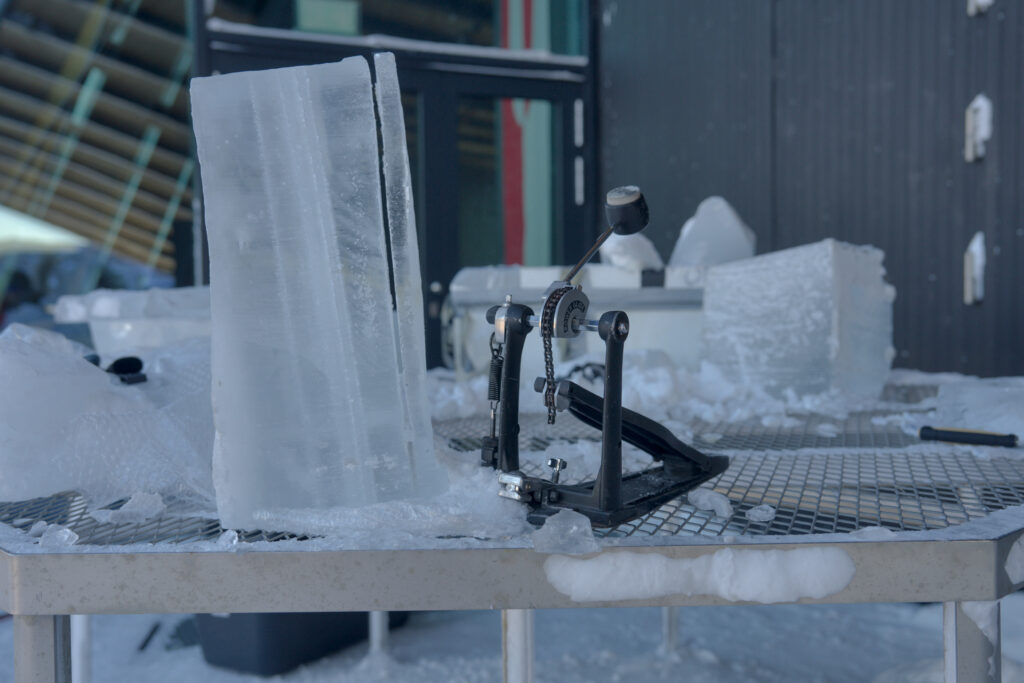
Regardless of their reason for attending, the memorable experience for most is the unique and visceral sound of ice. This beguiling sound encourages musicians invited to perform to embrace the imperfections of ice and rethink what’s possible with improvised music. They’re also encouraged to sculpt their ice instruments by shaving the ice’s thickness to achieve ideal pitch and tone. The festival has mastered a wide range of ice instruments, including ice cellos, ice harps, ice marimbas, a variety of ice percussion instruments, and a legendary ice bass drum design.
Generally, the lower the temperature, the brighter and clearer the sound is; however, this extended fidelity also poses a risk of the ice instrument becoming too brittle and breaking.
After an ice instrument is finished and frozen onto the stage, the next challenge is to amplify its acoustic frequencies. Naturally formed ice produces a wide range of sound waves, but they’re emitted at a very low volume. Therefore, specific microphone types and microphone placement are essential for a successful live performance or recording. Terje Isungset and a select group of experienced sound engineers pioneered this process. Generally, the lower the temperature, the brighter and clearer the sound is; however, this extended fidelity also poses a risk of the ice instrument becoming too brittle and breaking.
Personally, I love the sound around -20ºC, a manageable temperature for the audience and a musician to perform for about 30 minutes with appropriate clothing. Anything lower sounds truly extraordinary, but ice fragility is a real hazard. Pushing the limits of Ice Music, Terje has recorded in -42ºC, and during a previous year, a sound engineer recorded over 15 seconds of reverberation from an ice bass drum!
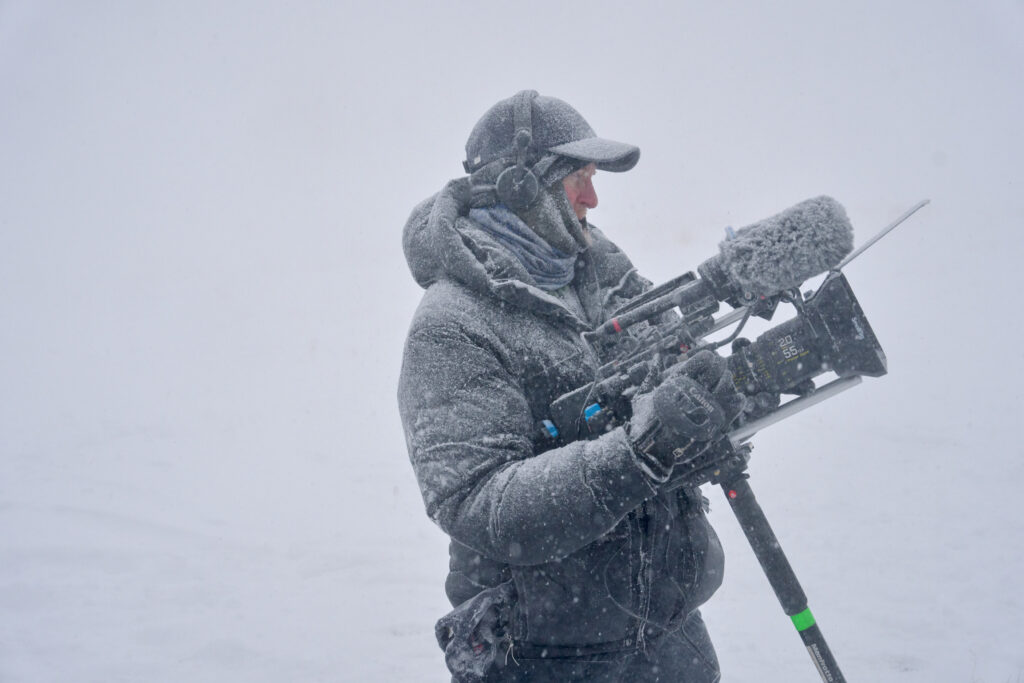
The crew battled hard through two days and two nights of blinding white-out blizzards to reconstruct the wooden framework and meshing system twice. Each version faced stronger winds and lower temperatures. As time ran out, we desperately hoped the stage area would survive another night.
Be careful what you wish for…
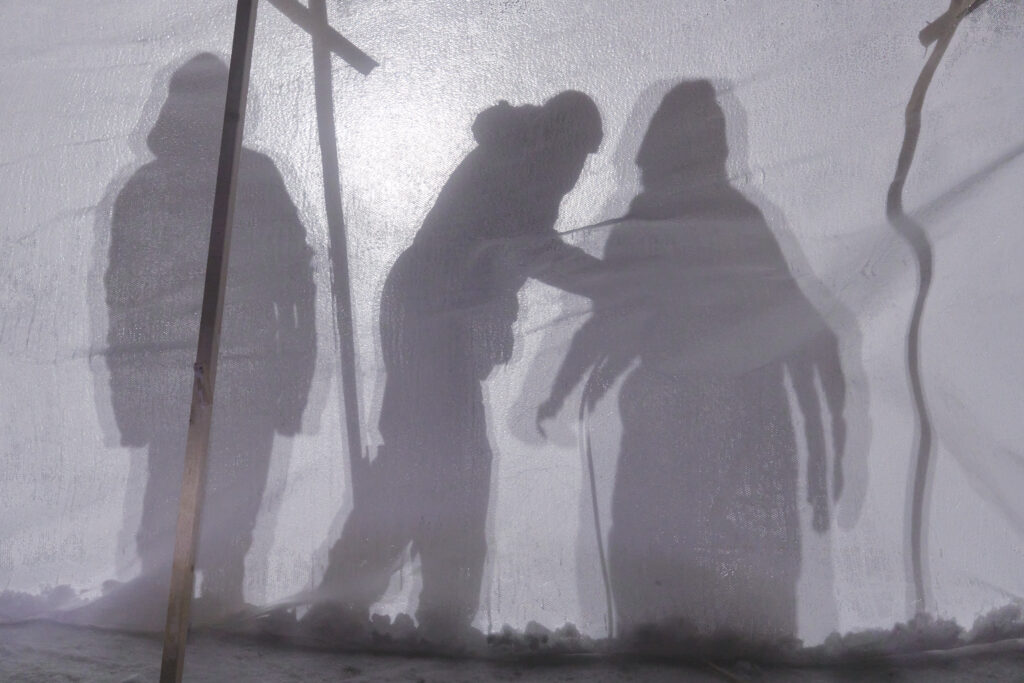
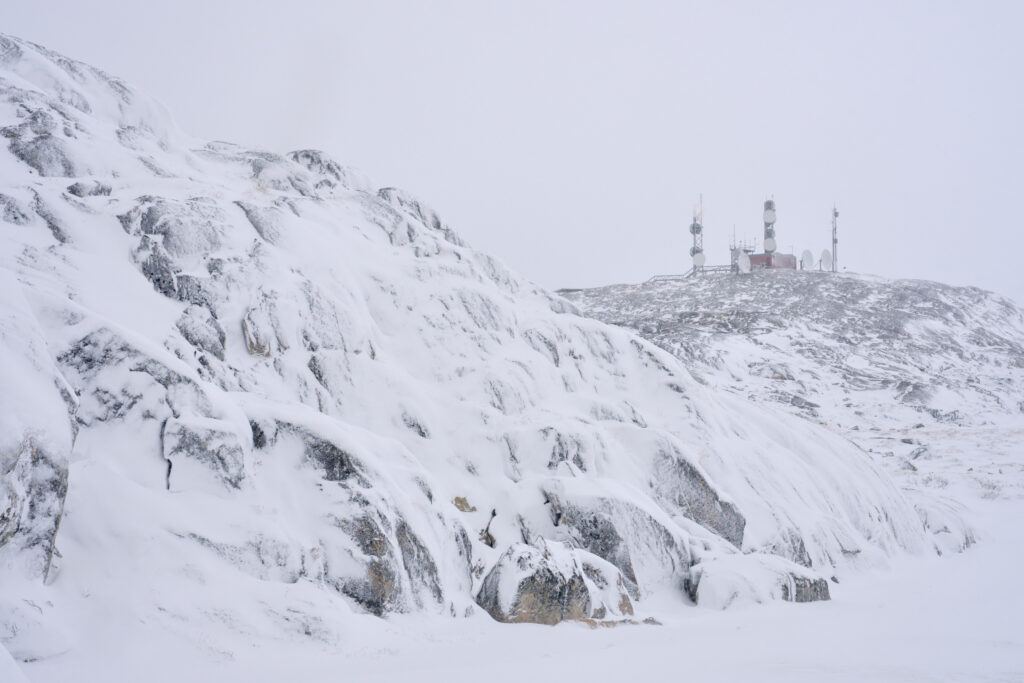
Around 8 p.m. on Wednesday night, just 25 hours before the first concert, a catastrophic loss occurred. A crucial protective part of some stage infrastructure collapsed under the relentless battering of a storm-force blizzard. The wind chill plummeted to -62ºC, sending equipment and stage material spiralling into a snow-filled vortex mysteriously drawn to the centre of the stage arena. Given the dire situation, we were forced to abandon our work.
This year’s programme was ambitious. Sissel Vera Pettersen, a versatile artist, blended creative vocal techniques with live electronic processing and wanted to play an ice saxophone. Miké Thomsen, a Greenlandic Inuit actor, musician, and traditional performer, rooted in Inuit culture, wanted to play an ice guitar. Paninnguaq Jensen, a rising star from Ilulissat, immersed in traditional Greenlandic Inuit throat singing, wanted her voice to carry meaning alongside her glamorous touch.
During the day, families could enjoy fun science workshops led by Kerim Hestnes Nisancioglu, Professor of Climate Dynamics at the Department of Earth Science and the Bjerknes Centre for Climate Research at the University of Bergen. Workshops that explored snow and ice structure, alongside the glacial processes that are abundant in the local area.
Music mediation would be accompanied by a live audio stream from hydrophones (special underwater microphones), that transmitted the sounds of whales and seals in nearby Disko Bay. The festival offered much to enjoy.
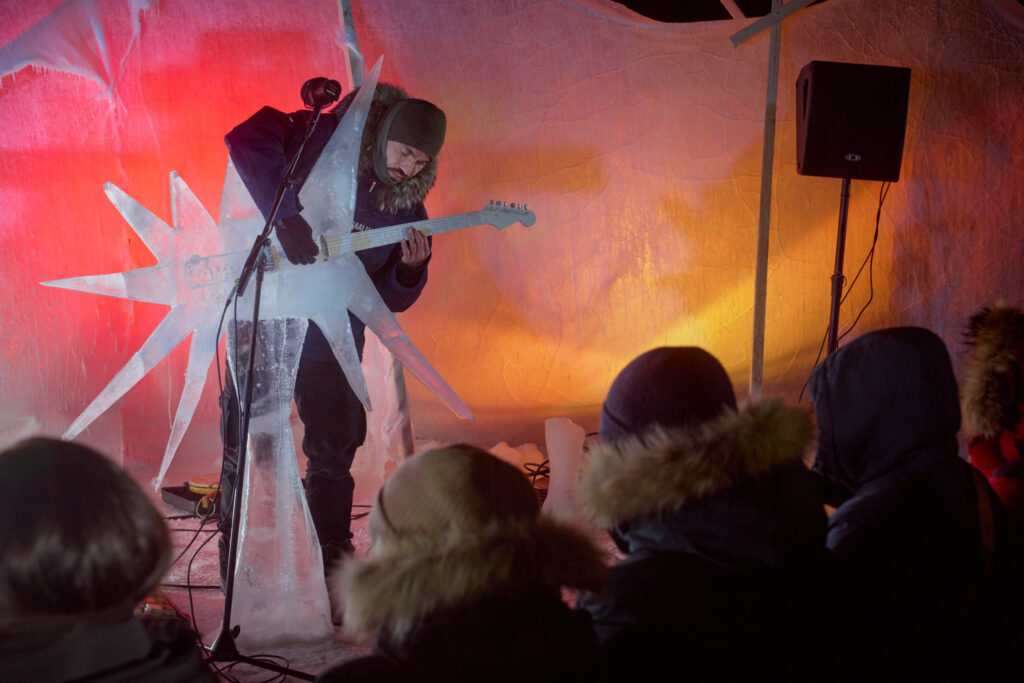
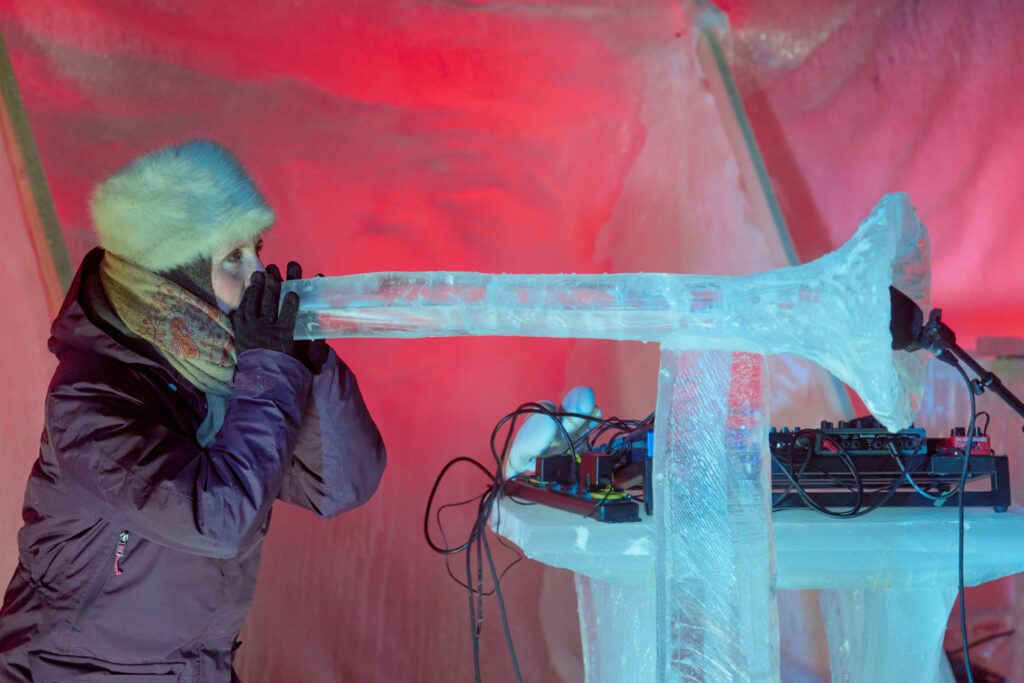
Weather conditions didn’t improve enough to give us any confidence to be ready for the opening concert, so another revised plan was required. We joked that we were now on plan D, K, or even plan X (?), given the relentless nature of the winter conditions.
Due to the proximity of the stage to the main structure of Kangiata Illorsuani (Icefjord Centre), a decision was made to incorporate an inside seating area for members of the audience who didn’t want to be exposed to the deep cold (temperatures were forecast not to be warmer than -25ºC for the evening concert times) as the centre’s immersive glass walls positioned at a slightly higher elevation than the stage area would allow people to view the concerts perfectly. Setting up a second speaker system was no problem. So inadvertently, we had stumbled upon a brilliant venue layout that ultimately turned out to be a huge success!
Thursday’s winds stayed super strong, and with many international ticket holders stranded in Nuuk or Sisimiut due to grounded flights, we knew audience numbers would be low, so two hours before the first concert we decided to utilise the additional indoor sound system and perform a stripped-down version of Ice Music with Terje playing an ice marimba and Sissel improving with her voice, looping, and her sound effects board. Sonically very intimate, with an understanding audience of around 65 people who embraced the change in schedule.
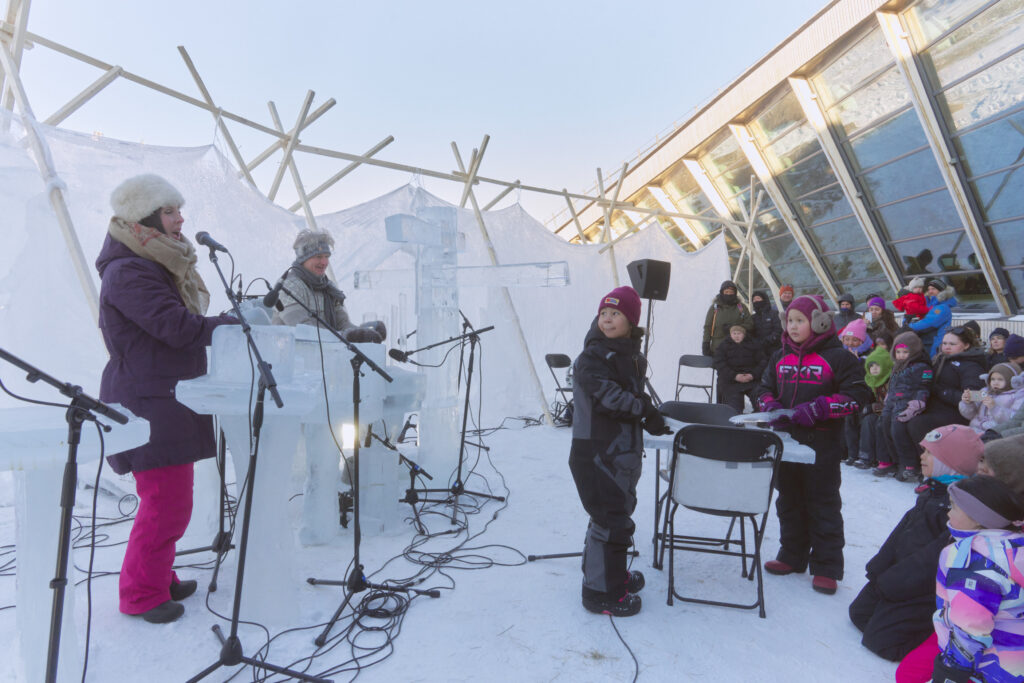
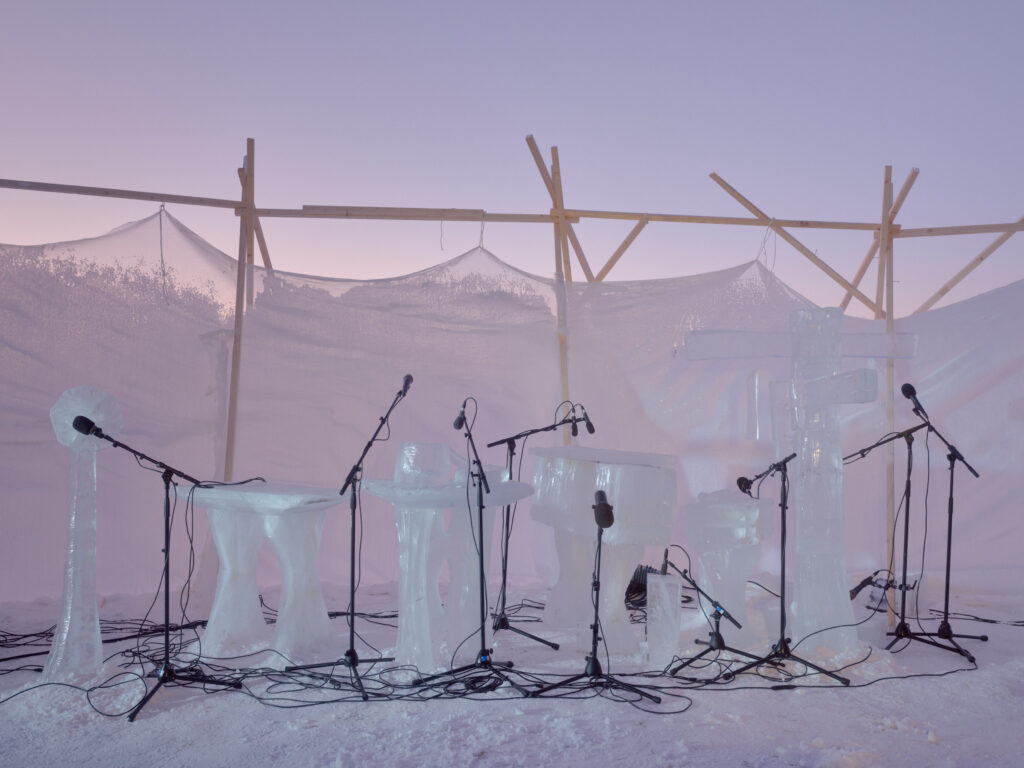
Just five metres from the mini concert room’s warmth, the wind raged on deep into the bitterly cold night sky.
Friday’s weather was near miraculous; zero wind, around -17ºC, with clear skies and bright sun. We could not believe the contrast. We joked that no one would believe how bad the conditions were.
The ‘mild’ conditions allowed for an extraordinary crew effort in moving ice instruments from the cut zone area to the stage, an outside sound system and lighting set up to be installed, and a huge clean-up to make a very beleaguered stage look moderately appealing.
Word about the construction challenges had got around Ilulissat, and a strong sense of community support prevailed. Both Friday evening concerts were hugely successful, with the audience using both inside and outside spaces as planned. With many international visitors unable to attend due to continued flight disruption, the concerts felt like a local, glorious Greenlandic Ice Music party.
The country’s spirit is generous and could not have made us more welcome for a third consecutive year. Qujanaq! (Thank you).
The idyllic weather continued throughout the weekend. Flights resumed, dramatic stories were exchanged, families thronged the science workshops, and the Ice Music crew could relax for the first time in a week. Saturday’s midnight concert drew an enormous audience with all tickets sold out, leaving the last, welcome challenge of this year’s Ice Music Greenland – where to seat the extra demand for tickets!
Kalaallit Nunaat is under a great deal of global spotlight at the moment. The country is rugged, remote, and extraordinarily beautiful. A small population of just 57,000 (Ilulissat is Kalaallit Nunaat’s third-largest town with a population of just 4,000) is, by the nature of its local environment, extremely resourceful. The country’s spirit is generous and could not have made us more welcome for a third consecutive year. Qujanaq! (Thank you).
The Ice Music Greenland 2026 crew comprised Greenlandic Inuit, Greenlanders, Norwegians, an Englishman, Danes, and two Germans. Everyone involved rose to many challenges with a common sense of pride, purpose, and the desire to put on the show. All their hard work, ingenuity, and understanding were truly inspiring.
We stand with Kalaallit Nunaat.