underGRANDE:We Celebrate the End of the World Like Nobody
In São Paulo’s contested centro, the underGRANDE scene transformed nightlife into a form of cultural guerrilla. Through parties like Mamba Negra, abandoned factories and occupied buildings became spaces of queer autonomy, collective survival and political confrontation. Tracing fifteen years of independent electronic culture, Laura Diaz maps a movement where celebration operates as resistance, memory and refusal against gentrification, repression and neoliberal capture.
Translation Note:
Consult our Conversion Scale!
Brazil is continental in scale. São Paulo, with 11.9 million people, is both everything and nothing to the rest of the country, and aggressively so.
The city alone equals the total population of Portugal, Belgium, Sweden, or Greece. When we talk about the “Centro” of São Paulo, we mean roughly 10 neighbourhoods that form the city’s core, the territory where the underGRANDE scene developed as a meeting ground and a site of fri(c)tion between people from everywhere. This centre isn’t anchored only by “Marco Zero” at Sé, but also by two rivers, Pinheiros and Tietê, that wrap around the city like snakes, carving out the expressways known as the “Marginais” and the so-called “expanded centre.” And even far beyond the Marginais—the huge Zona Sul, Zona Leste, Norte, and Oeste.
A city permanently under construction; full of noise and makeshift fixes for structural problems. It’s not easy to meet one another spontaneously in a city where public space isn’t built for permanence, but for transit. If you’re not spending money, there’s almost nothing for you. And the few public spaces that have survived are mostly managed by public-private partnerships. I would add that São Paulo has the best-equipped Military Police and Tropa de Choque (Riot Squad) in the entire country, with armoured vehicles imported from Israel (!).
The centro is the shortest distance between extremes.
The centro is a universal territory of dispute and occupation.
It’s in this context—in a centre with fluid historical and geographic contours—that MAMBA NEGRA was born in 2013, as part of a broader LGBTQIAPN+ movement of independent parties and collectives that spent the last 15 years professionalising and consolidating into what I’ve named the underGRANDE scene of São Paulo.
The Decline of the Golden Era
(1990s–2000s) of São Paulo Clubs
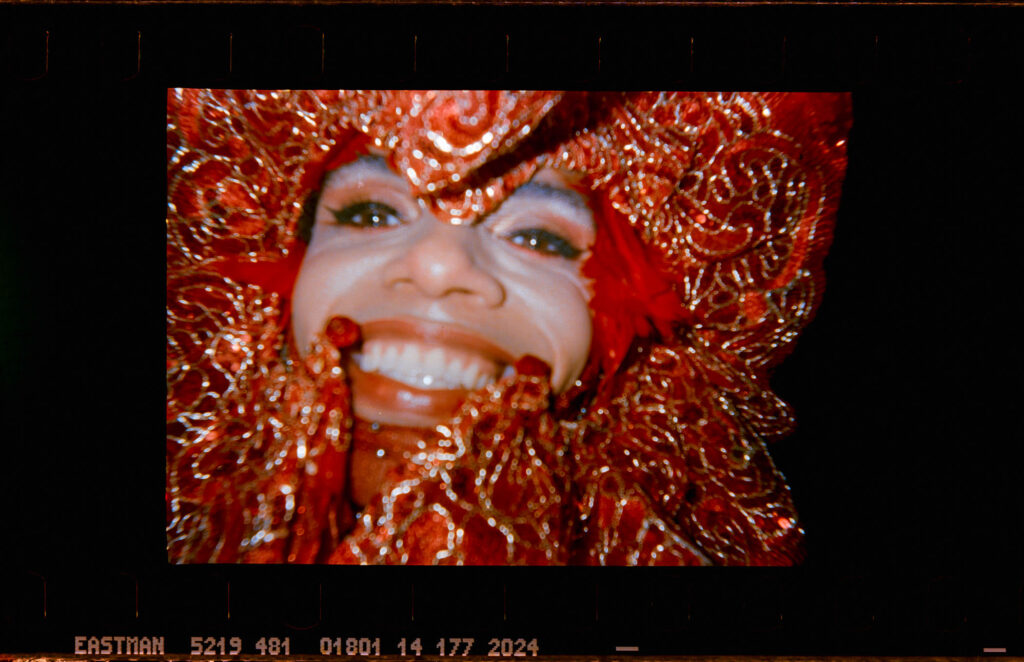
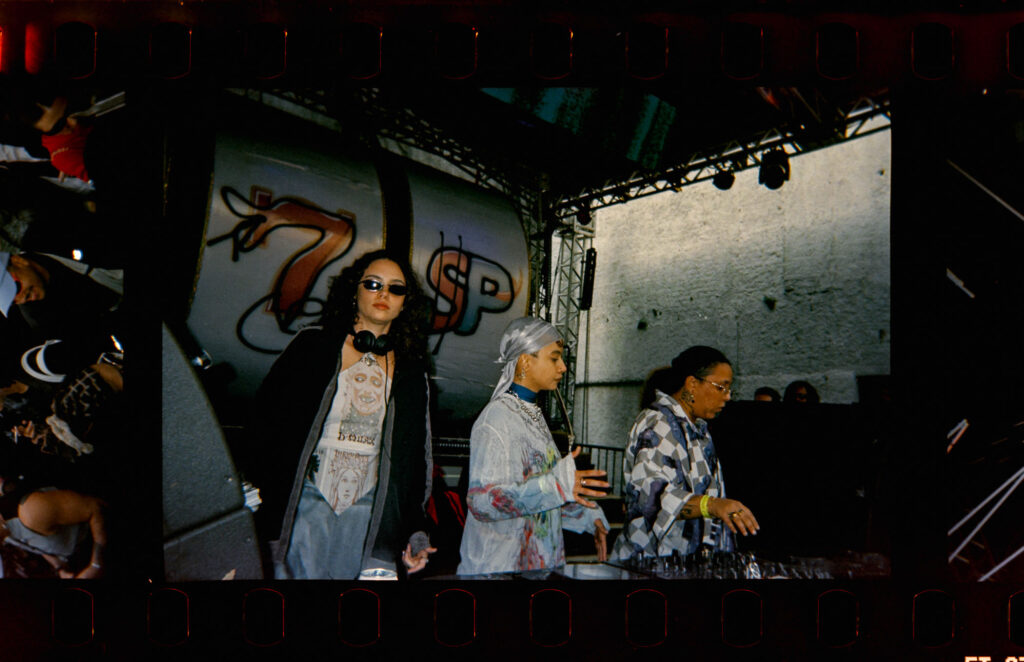
Photos by Victor Akira and Aj Santa Rosa.
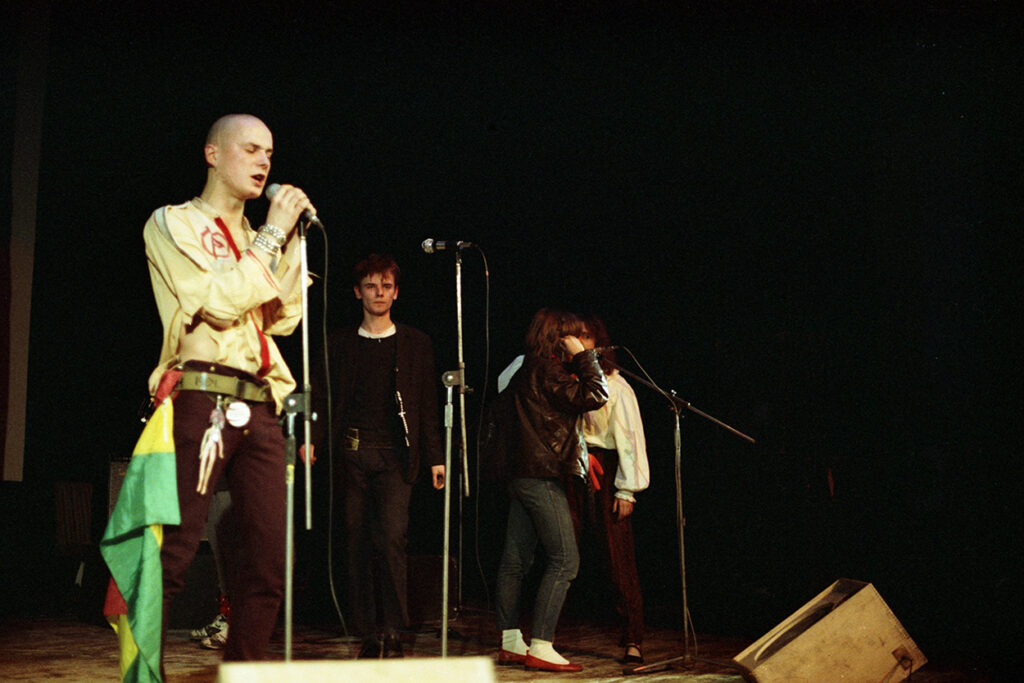
It might feel like ancient history, but a big part of my teenage years in the 2000s (after Street Punk) was spent at the tail end of what I could call the Golden Age of a certain kind of clubs in central São Paulo: Vegas, Fun House, Astronete, Hot Hot, Berlin, Glória, DJ Club, Atari, Milo Garage, Estúdio SP, Sarajevo, Java, Outs, Lions, Clash, D-Edge, Lov.e, Manga Rosa, Hell’s Club, Torre, A Loca. Somewhere between underage and almost not, between these were places of discovery and encounter—filled with teenage, flavoured memories, and slightly abusive aftertaste. They were what existed back then, not necessarily what we wanted. These clubs were built by a minority, we must admit: cis white businessmen who used to own São Paulo’s nightlife. That might sound harsh. It’s not a value judgement. It’s just accurate.
That’s what the central area had, alongside butecos (dive bars), porn cinemas, and puteirinhos (small brothels). A time when venues could stay open through the night, and the street was somewhere you could still inhabit.
For some of us, these clubs also represent historical and legitimate spaces where people from our LGBTQIAPN+ community had our first nights out, crazy experiences with sex and drugs, and a scene to sniff around and figure things out—including the direction we did not want to take as a generation.
The SubPrime Crisis:
from Croatã to Piratininga—and where does it leave us?
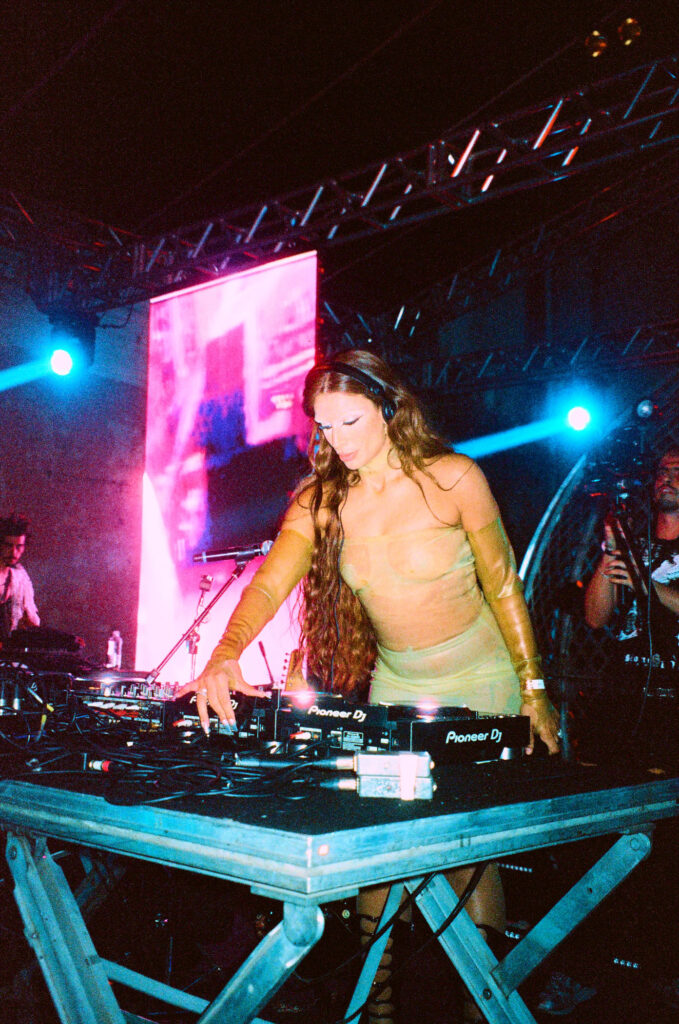
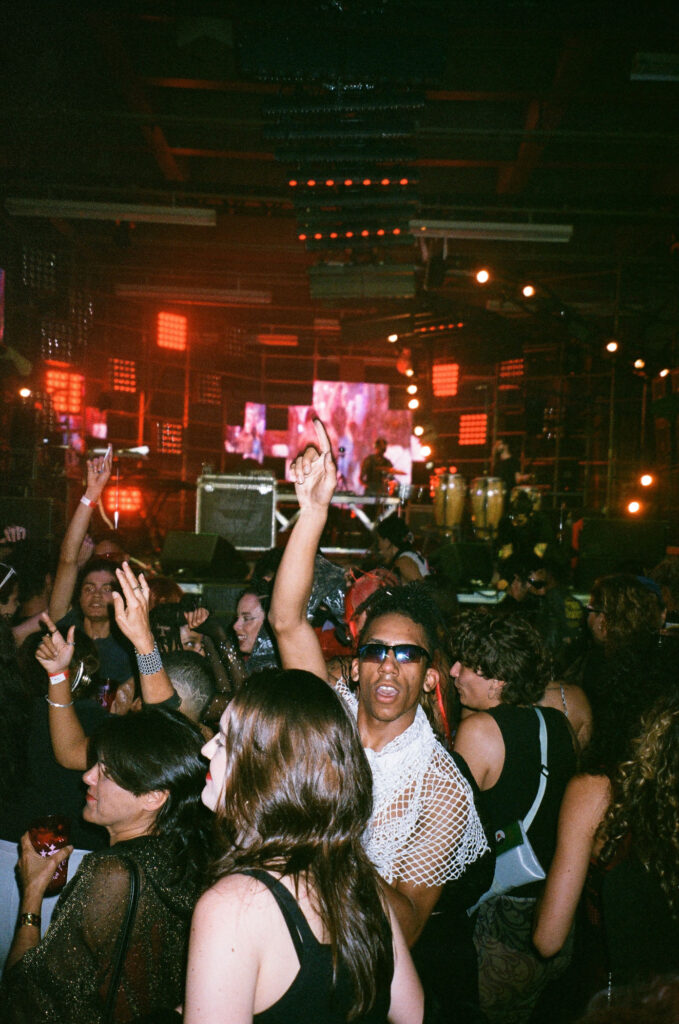
Photos by Pedro Pinho and Ivi Maiga Bugrimenko.
Mid-conversation with a dear friend and scene curator, we landed at one of the countless new restaurants in Barra Funda to have lunch and catch up on conspiracies. We shared how both our professions are key to activating the flow of money across neighbourhoods: vacant spaces abandoned by public authorities and speculation shelter our movements, we organically strengthen these areas, and then we’re quickly expelled or pushed further to the margins through government-driven gentrification. The Vila de Galpões, with those filthy industrial warehouses that housed our parties, now runs on mirrored floors and luxury weddings (!). From McDonald’s to art galleries, whoever anticipates the territorial dispute wins.
I put forward the idea that we were undergoing a precarious Europeanisation of the Brazilian artistic class. Over more than ten years of independent nightlife, we grew into a school for a generation—we became LGBTQIAPN+ professionals. Making a living from cultural production, music, performance, theatre, lighting, photography, audiovisual, fashion, styling, and beauty was unthinkable twenty years ago in a deeply colonial country. Now, it feels more possible. Though we’re still fighting hard to get out of vulnerability.
He pushed back: even for Europeans, that ‘welfare’ had been crumbling for about 15 years. In 2008 and 2009, his first gringo friends were already talking about drastic cuts to culture. And right there, like a lit fuse, hypotheses began bubbling up in me.
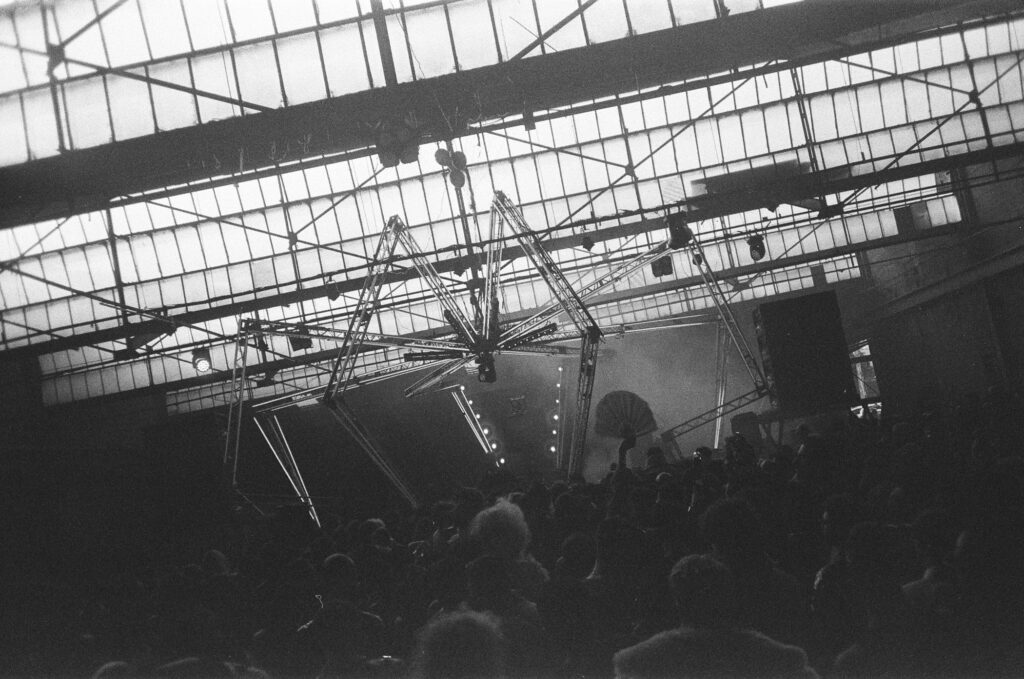
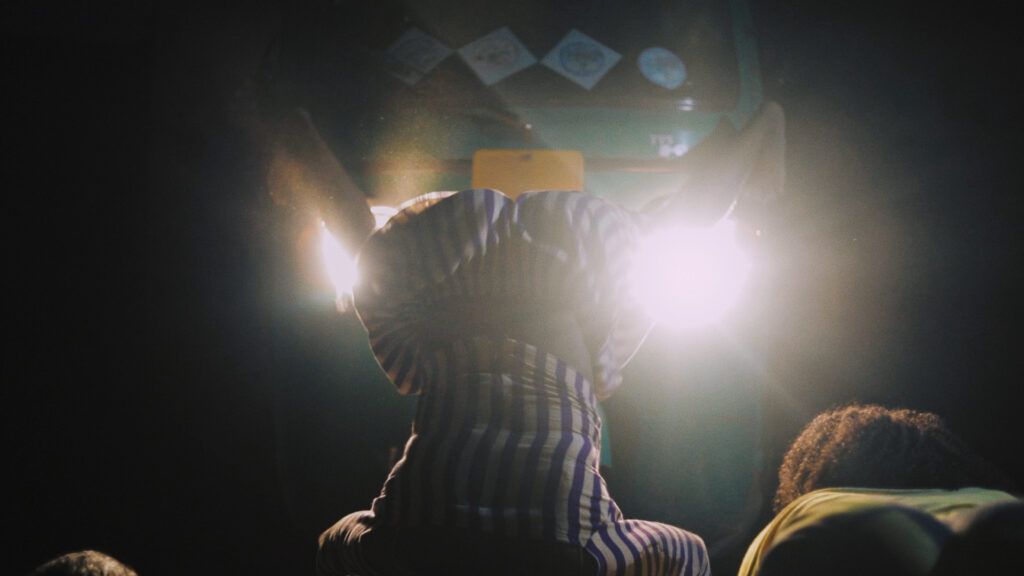
Voodoohop started almost like a rumour: psychedelic electronic music parties with strange people in small spaces and puteirinhos, addresses revealed only hours before. Self-financed, self-organised, half-chaotic, half-democratic, totally spontaneous, and exquisitely hedonistic.
In September 2008, Lehman Brothers filed for bankruptcy, perhaps marking the peak of the Subprime crisis. The global recession that followed forced most European countries to treat culture as a non-essential service on their crisis agendas. In Brazil, the opposite happened: the Lula governments consolidated culture as a national asset, fundamental for the economy, tourism, development, foreign relations, and technology.
It’s at least curious that 2009 is also the year parties like Metanol and Voodoohop sparked into existence as flashes of countercultural movement in São Paulo. In Voodoo’s case, two Europeans gave up on Croatã (T.A.Z.) and headed to Piratininga (SP) full of new ideas.
Voodoohop started almost like a rumour: psychedelic electronic music parties with strange people in small spaces and puteirinhos, addresses revealed only hours before. Self-financed, self-organised, half-chaotic, half-democratic, totally spontaneous, and exquisitely hedonistic. Music, performances, and installations were constantly reinvented, along with colourful handmade scenography.
From 2009 to 2012, many emerging artists and I saw in Voodoo an opportunity to work in cultural production and to carve out a space where we could be legitimised and recognised for it. A party could also mean collective self-financing. Over those four years, the political conjuncture intensified with major strikes by students, oil workers, metalworkers, bank workers, and even the military police.
On January 1st, 2013, Haddad (PT) took office as Mayor, and, as a form of pressure, more than 15 vacant buildings in the centre were occupied overnight as new housing .
So what does any of this have to do with electronic music parties in São Paulo’s disused factories?
To Party Is War:
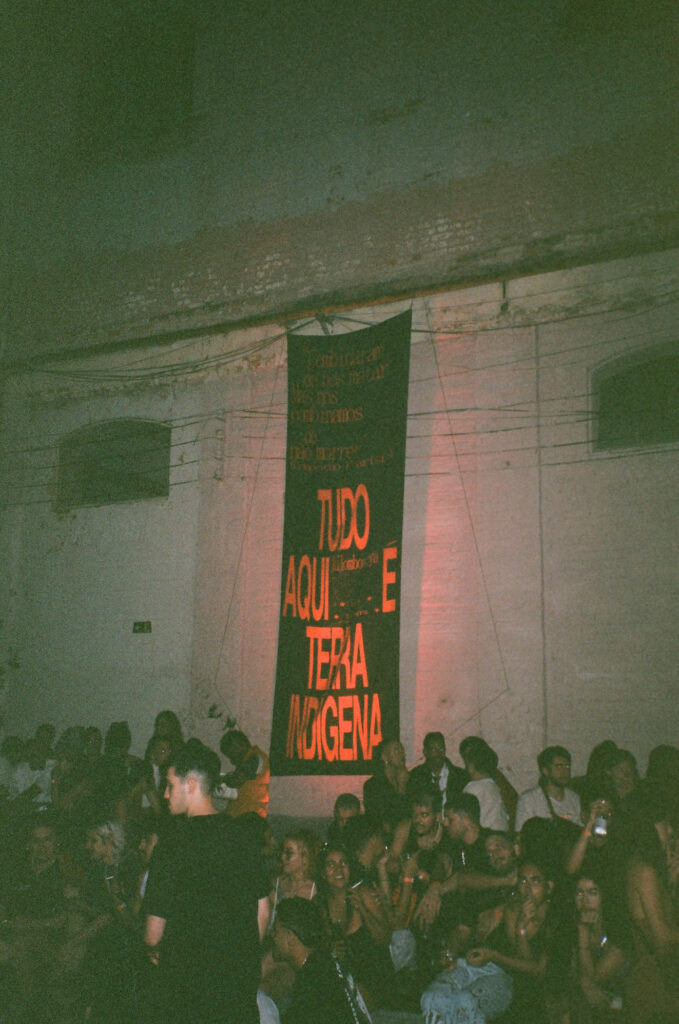
o underGRANDE é aqui
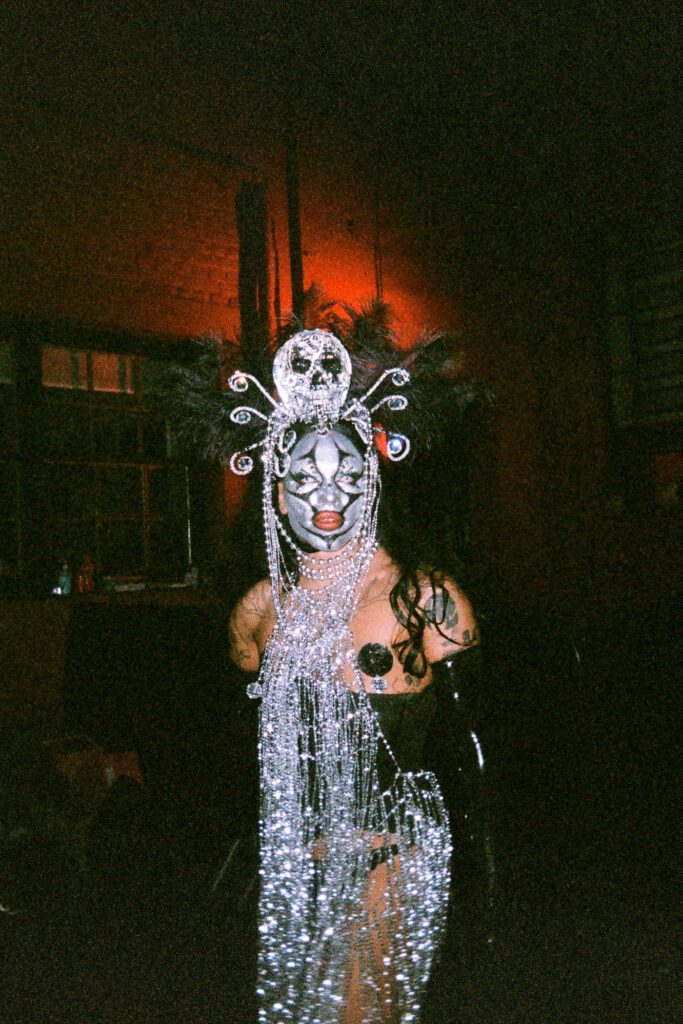
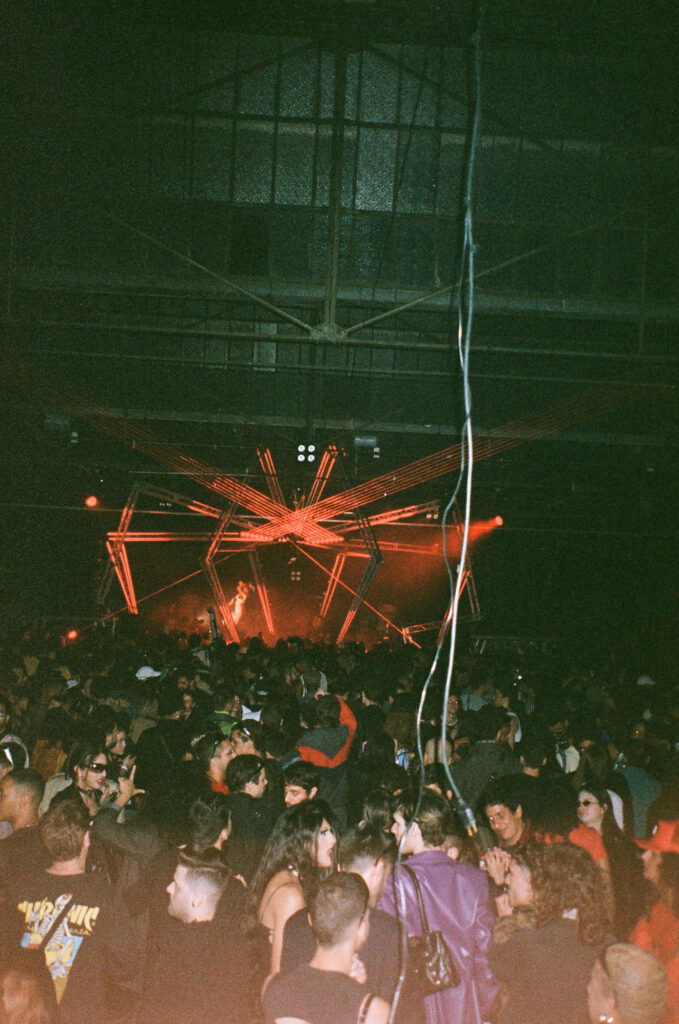
Photos by Ivi Maiga Bugrimenko.
MAMBA NEGRA is, above all, a product of a context in motion, in time and space.
Electronic music worked in the centro and across movements as a language of cultural guerrilla warfare. Partying became a tool for articulation and financial autonomy for independent artistic movements. The electronic—its relentless sense of the machine and the kick—represented the energy we needed to occupy São Paulo’s nightlife without being club owners. Curatorial nights in various venues turned into parties that sought out other spaces, beyond the club/client logic: parking lots, idle buildings, porn cinemas, puteirinhos. The risk was higher in every sense. So were the possibilities and desires.
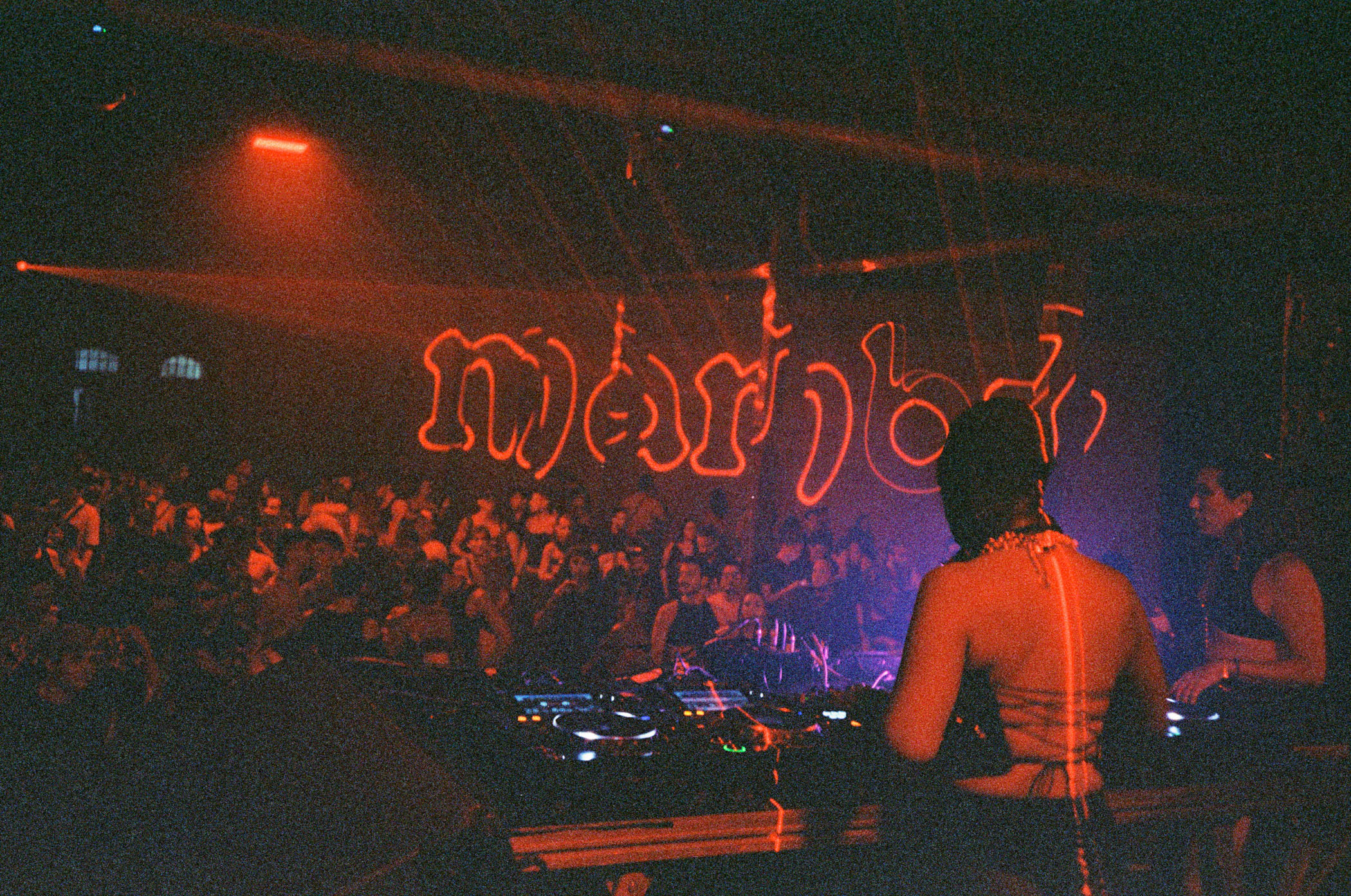
May 2013—in the year of the Snake in Chinese Astrology—was shaped by the political moment that changed São Paulo’s history forever, MAMBA NEGRA was born: founded by Laura Diaz and Carol Schuzter. An explicitly political party in black and red. A crack in the city wide enough to dream of spaces where women and LGBTQIAPN+ people aren’t just welcome—they’re the protagonists, the majority. With no fixed venue, the parties opened throbbing wounds in the city and wove new affective urban cartographies, bringing together original Brazilian electronic music performed live, DJ sets, performances, and installations. MAMBA didn’t just build a strong graphic, visual, poetic, and musical identity; it gave a name, a body and a space to a pack language—a territory claimed by an LGBTQIAPN+ movement in permanent transformation.
To get the full picture, here’s a partial map of the independent electronic scene effervescence in central neighbourhoods of São Paulo alone: Metanol and Voodoohop in 2009; Calefação Tropicaos in 2010; Capslock and Selvagem in2011; Pilantragi in 2012; Mamba Negra, Blum and Venha Venga in 2013; Batekoo, Odd, Vampire Haus, Sonido Trópico, Dusk, Dsviante, Lua, Mel, Tenda and SP na Rua in 2014; Caldo and Estranha in 2015; Bandida, Dando*, Sangra Muta, Tormenta, Tesãozinho Inicial, Existe Pista Após a Morte, Sintética, Psico.trópica in 2016; coletividade Namíbia, Folklore, Chernobyl, Silver/Tape in 2017; Marsha!, Darq, Coriza, House of Divas in 2018; after COVID, Trevvo in 2021 and Novo Affair in 2023.
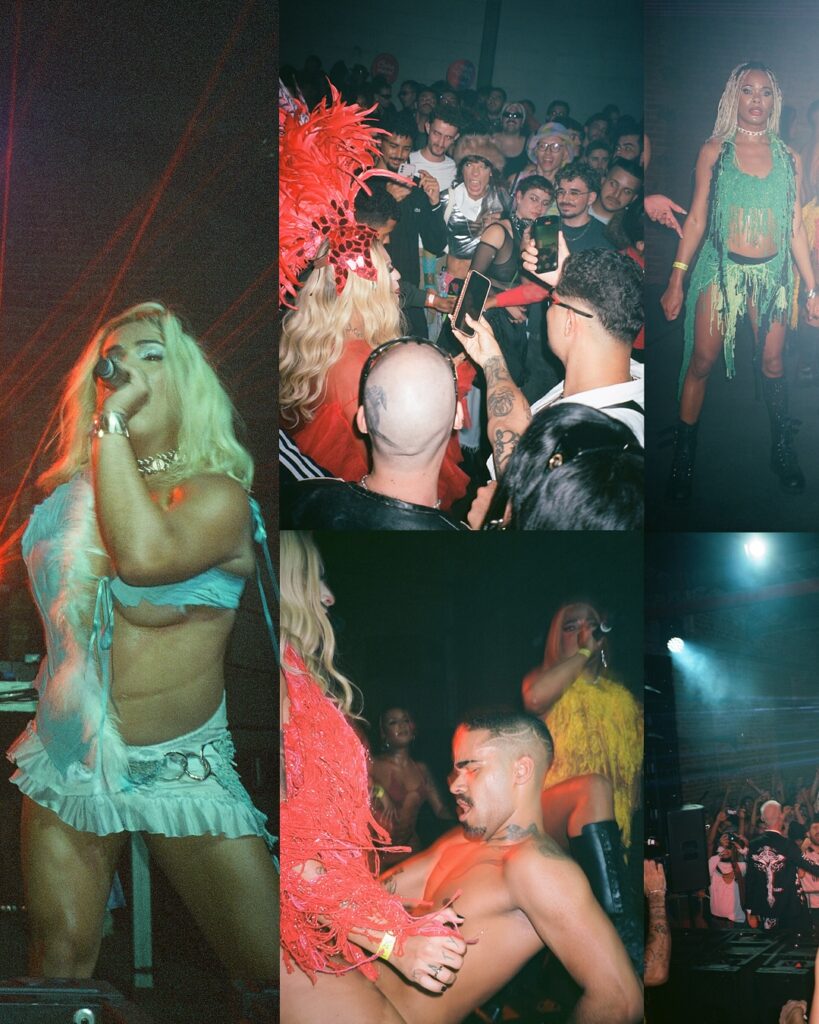
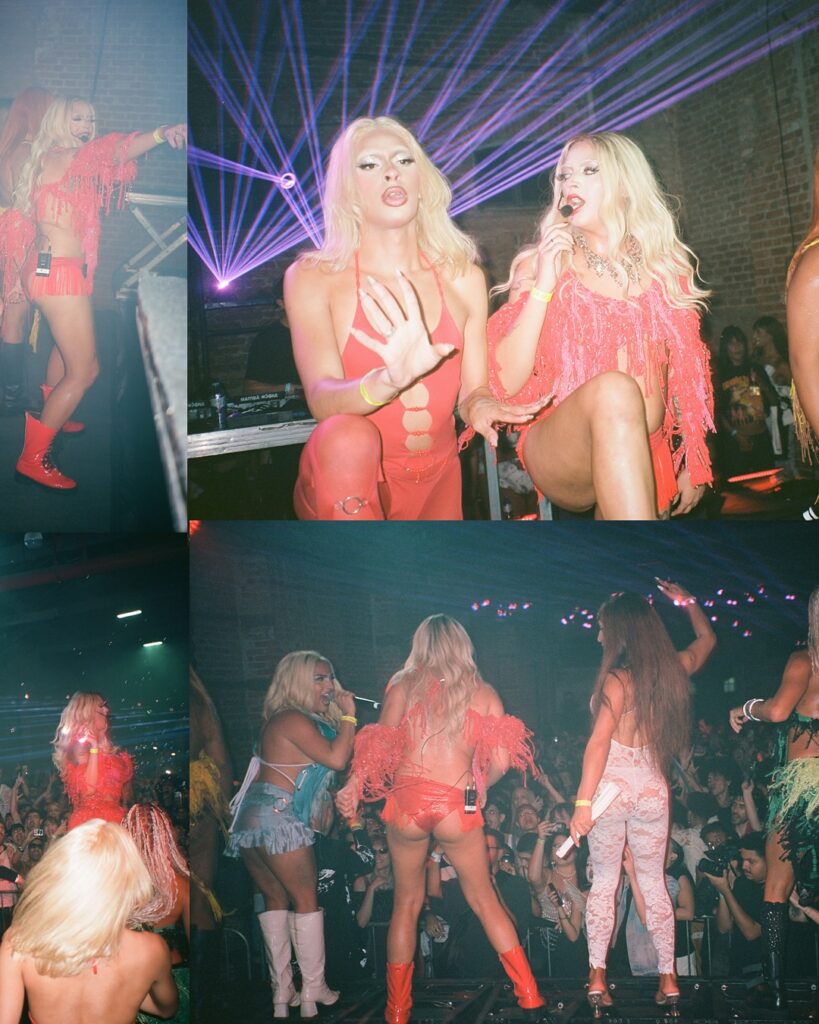
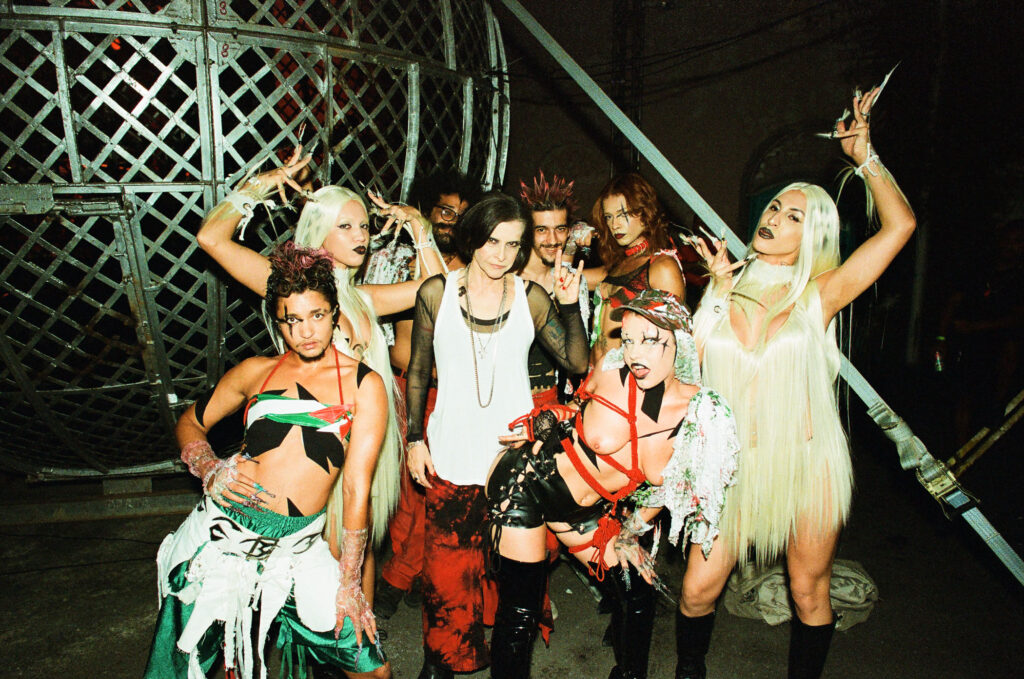
Dozens of collectives, hundreds of artists and professionals forged themselves in this independent nightlife that emerged spontaneously from São Paulo and reverberated across the whole country. These parties were—and still are—spaces of becoming: how many people started out fumbling through roles in this circuit and went on to become major cultural professionals?
From 2013 to 2015, the parties developed side by side with urban occupations in the centro—Ouvidor 63, where MAMBA celebrated its 1st year, Cine Marrocos, Ocupa São João, 7 de Abril, vigils at occupied secondary public schools and the occupation against developers that became the current Parque Augusta. In 2015, Ana Giselle arrived from Recife, bringing Trans VIP Lists to MAMBA—and the ballroom scene began to awaken in Belo Horizonte, Rio and São Paulo, which were fundamental for strengthening performance and dance roles within the electronic scene.
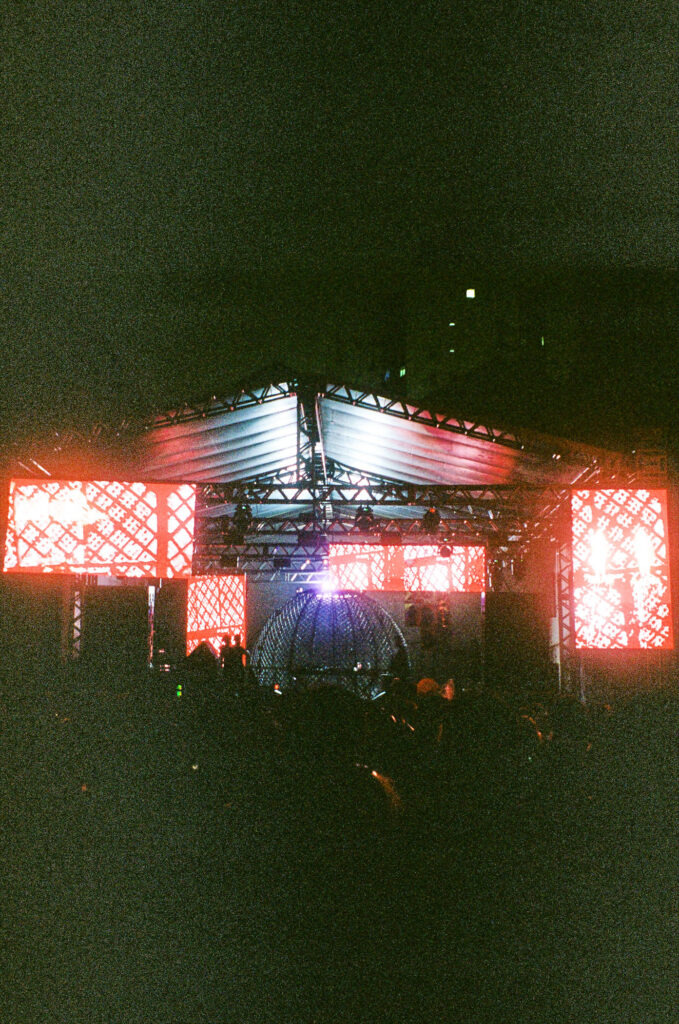
By 2016, parties were drawing 1,500 to 3,000 people per edition, pushing us into deactivated factories: Milk, de Brooms, de Ink, and Olive Oil. It was at Milk Factory that we celebrated MAMBA’s 3rd anniversary—and where I filmed half of the “Gasolina” video, the first release on the MAMBArec label, with TETO PRETO—the resident band I founded as CARNEOSSO to embody the party’s universe. The other half was filmed at protests against the Olympics in Brazil.
We were fighting for dreams—and actually living them, half-clandestinely, as a generation. This was making noise. Literally.
In 2017, the response came with the end of Haddad’s left-wing administration and the election of Dória, whose campaign was also financed by club owners. Independent parties started getting shut down by city inspectors demanding event permits (Alvará). During the week of MAMBA’s 4th anniversary, the Fabriketa was simply sealed with a wall—one of the only factories with proper permits and documentation for events since 2017. Sealed anyway. This wasn’t about safety. It was about politics.
We were fighting for dreams—and actually living them, half-clandestinely, as a generation. This was making noise. Literally.
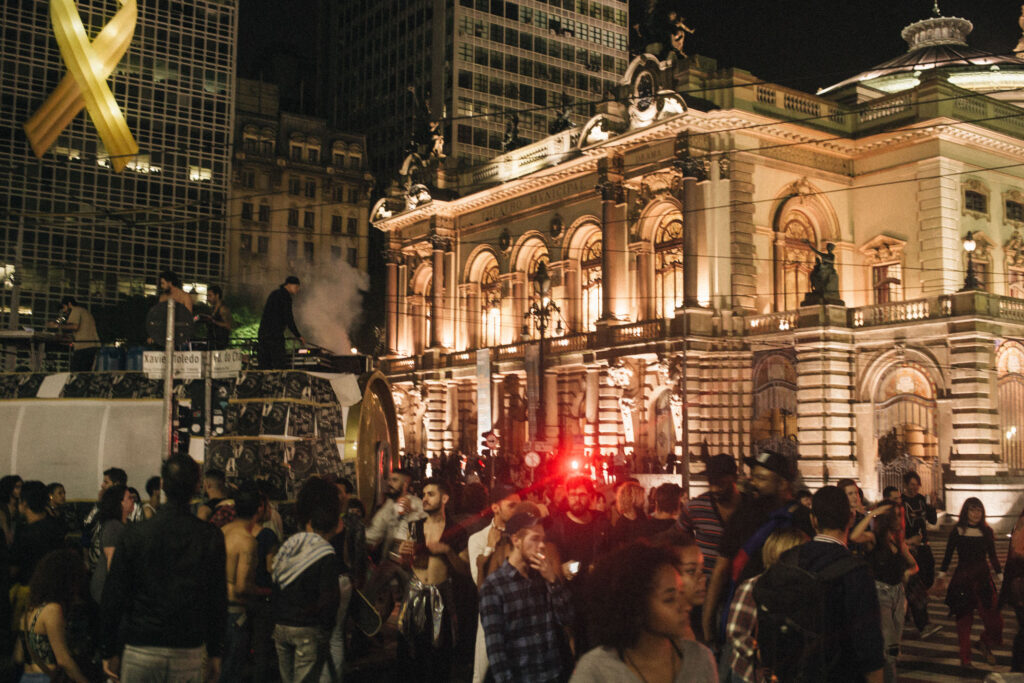
The only alternative left was Via Matarazzo, a sertanejo club that had backed the winning candidate. Humiliating—but we did it. And on the way out, we launched the 1st Act for Freedom of Operation in São Paulo’s Nightlife: a sound truck leading thousands of clubbers dancing from the club’s door to the City Hall, denouncing the mayor and the Alvarás Mafia. We named what was being done to us, and naming it was essential for people to understand their own history.
These episodes defined the legalisation of parties as a whole. Street permits became increasingly difficult to get. We organised collectively to find more factories and split documentation costs—and beyond legalisation, we started taking our own professionalisation seriously in every sense to secure our freedom.
With Bolsonaro’s election as president in 2018, the political stakes tightened further. Then came the pandemic in 2020, putting the whole world on pause.
MAMBA survived by being much more than a party. It expanded into the independent label MAMBArec, Radio Vírusss, and across social media and diverse platforms, forming interconnected hubs of original production and serving as the front. We stayed independent: sponsorships were only ever supplementary to our self-financed activity. The entire independent scene still operates under enormous risk, with margins that are practically non-existent.
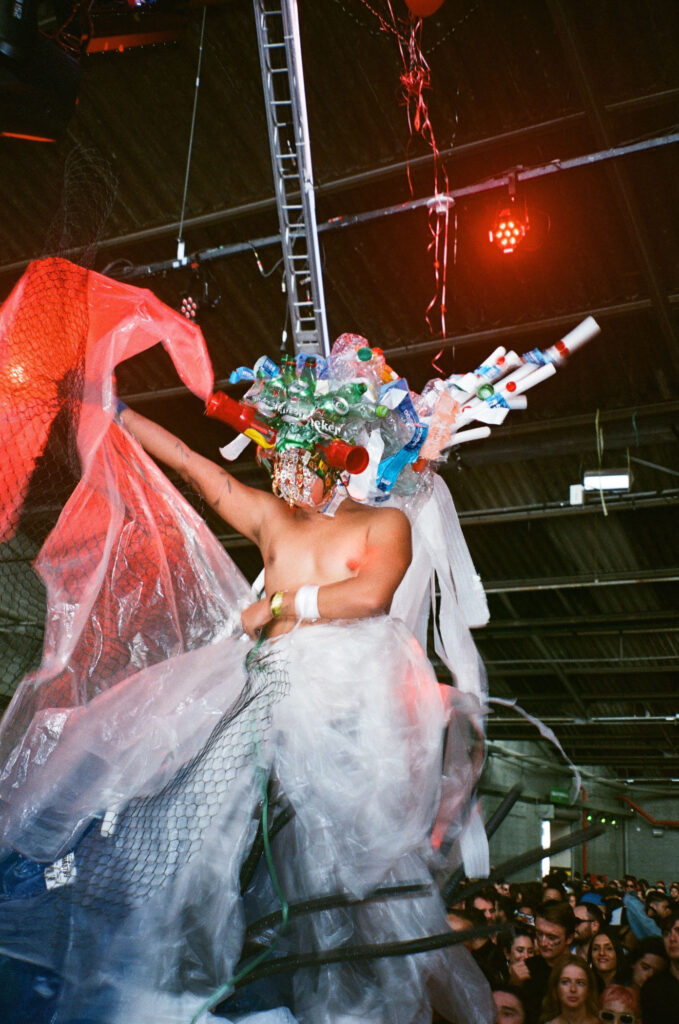
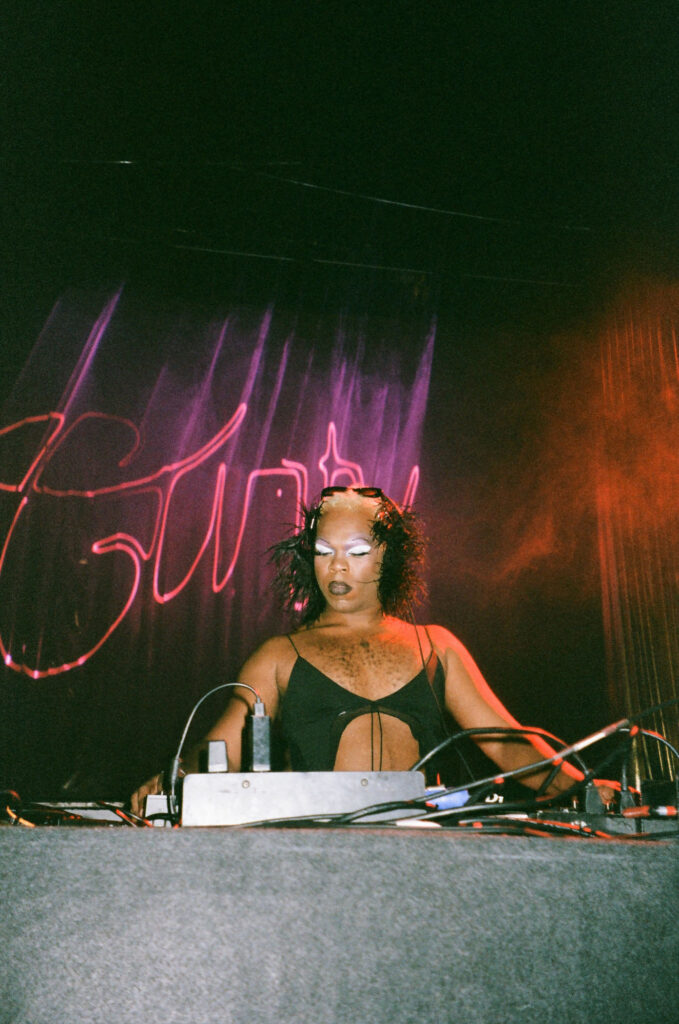
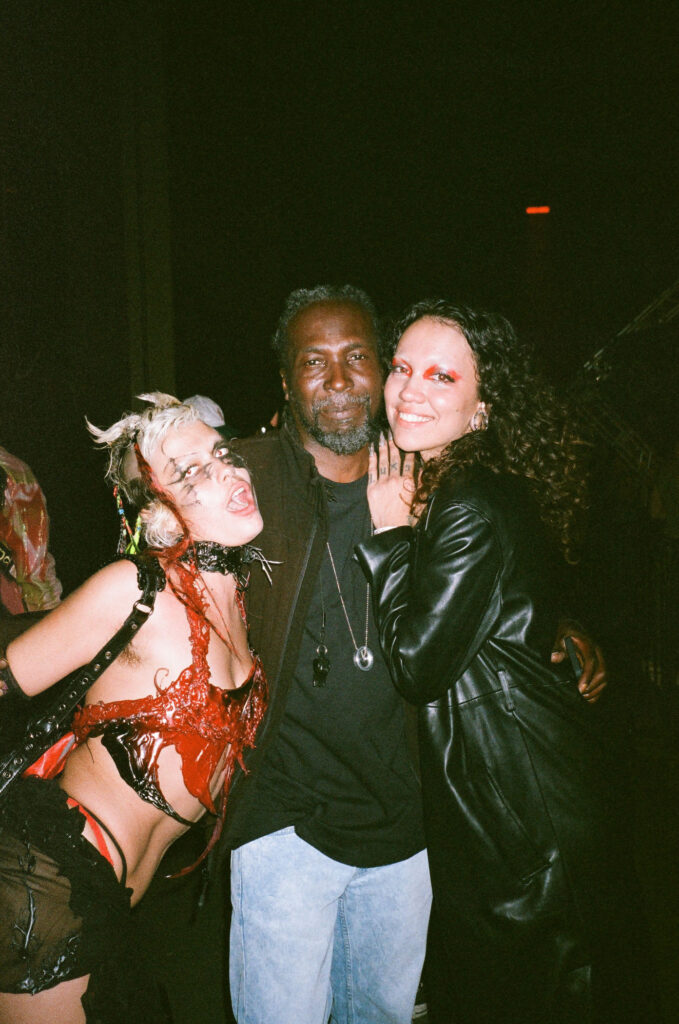
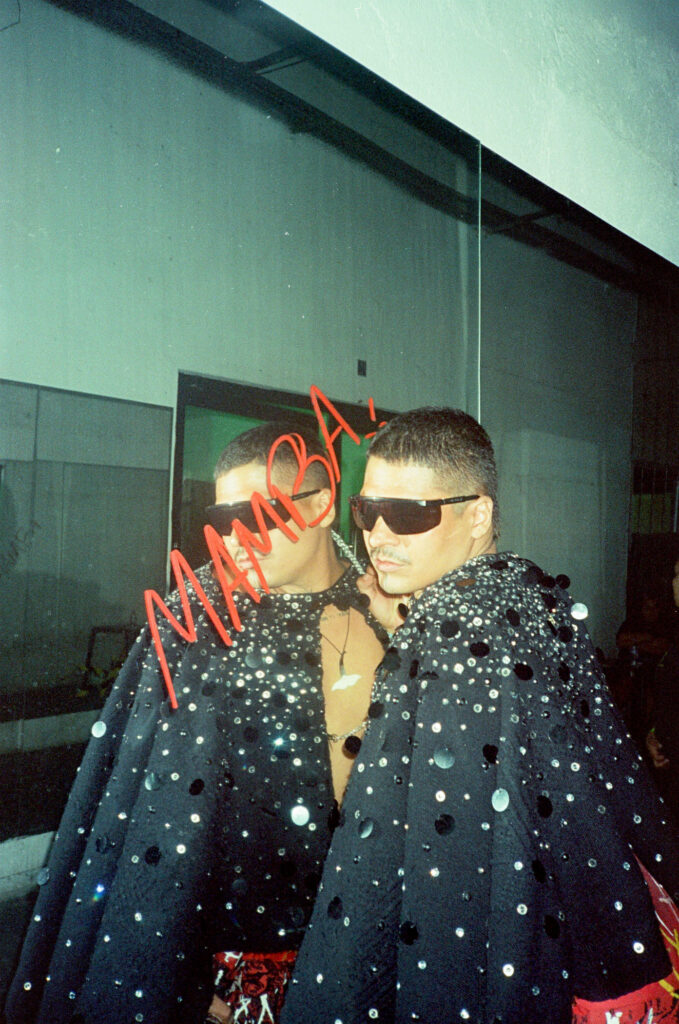
Photos by Ivi Maiga Bugrimenko, Aj Santa Rosa, Pedro Pinho,
Through 2020 and 2021, MAMBA organised online parties, radio broadcasts and two landmark audiovisual Festivals—7 Anos and 8 Anos. It is held together as a network of work, support, creation, care, visibility and survival. That’s how we made the short film “A Pista / The Track / La Piste” as part of the MO(N)STRA installation for the Goethe Institut’s international touring exhibition “Techno Worlds”—which is still showing today. MAMBA’s entire trajectory is the result of years of work by many people committed to creating a legitimate space for us to exist. We developed long-standing partnerships that shaped the scene: Luzco behind the always iconic stage and lighting design; Estúdio Margem with the full design and visual identity team that became an international reference; Ivi Burgimenko, our official photographer; and the impeccable executive production team that became NR CORP.
With the post-pandemic reopening, surviving parties faced significant increases in basic production and documentation costs. New factories opened: Brinquedos, Ford, Impressões. From 2021 to 2023, a regular MAMBA edition drew 2,800 to 3,400 people; 6,000 at the 9th anniversary festival in 2022; 8,000 at the 10th in 2023.
In 2024, Madonna—mother of all—headlined the first mega-show on Copacabana Beach, financed by Banco Itaú. That investment marked, among other things, the consolidation of Brazilian LGBTQIAPN+ dancefloor culture as a driver of mass consumption.
That’s why it needs to be named. And so I named it: underGRANDE.
Our underground grew and consolidated, becoming a cultural patrimony of the city and the country, shaping major artistic, democratic and economic interests. It’s not a coincidence that Beyoncé chose to go to Salvador in the hands of Batekoo to premiere Renaissance in Brazil, or that Sevdaliza contacted MAMBA to premiere “Alibi” at our Festival. We stayed independent—and that became something enormous, connecting underground directly to pop, our queer world breaking through bubbles with Linna da Quebrada commenting on MAMBA NEGRA live on Big Brother Brasil.
Aside from the semiotic connections, we planned a free street party, MAMBA, at the end of 2025. This involved six months of pre-production, technical alignment and documentation with the private company managing the public space. The authorised, fully legal event was arbitrarily cancelled 72 hours beforehand by Mayor Ricardo Nunes. The whole team mobilised in revolt; the party relocated to Jurubatuba in the Zona Sul, and the crowd went wild. More than 6,000 people crossed the Marginais to dream the impossible: a bold and abundant São Paulo, celebrating free culture and fighting for its right to resist, even in times of crisis.
This is more than raising dual power: it’s refusing to die.
They Won’t Kill Us Now:
notes for futures of non-forgetting
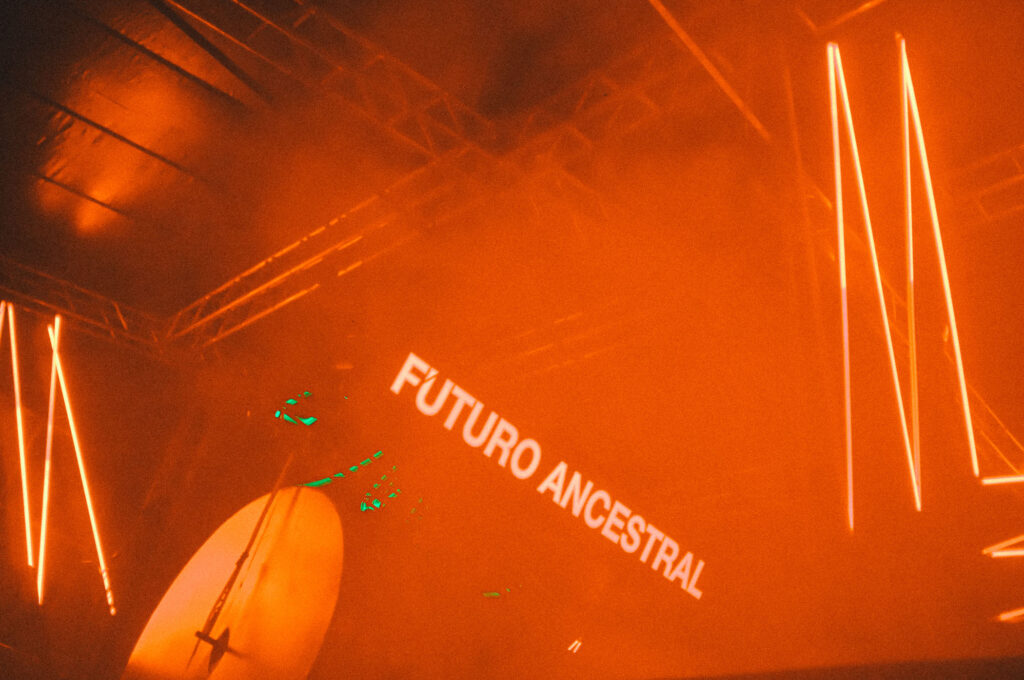
We gained national and global visibility, democratic advances, a professional network, and space to survive as Latin American LGBTQIAPN+ people. São Paulo knew how to absorb the contradiction and economically suffocate whatever was most spontaneous. Culture rekindled interest in neighbourhoods previously abandoned to real-estate speculation.
The centro was swept by hygiene police operations. Most occupations were evicted. Meanwhile, hundreds of middle-class condos shot up alongside new bars and restaurants. Few mid- and large-scale independent parties survived the invasion of mega music festivals with unaffordable tickets, and the best, and the online gambling epidemic.
I see history as cyclical.
From 2018 to 2024, brands had to turn to Black and LGBTQIAPN+ collectives and “minorities”. Now they’ve realised they can operate on their own terms. Once the collective network is destabilised by neoliberal urgency, the spotlight shifts back to private capital and whoever sells more. When culture becomes a commodity, you’re at the client’s mercy.
We built our Autonomous Zone territories through the night—like so many other ancestral scenes in Brazil. Celebrating is purging tragedy. Celebrating is an exercise in addressing the anguish that is both lack and desire. Celebrating is the opposite of fear. And as Paulete Lindacelva says, we celebrate the end of the world like no one else.
They tried to kill us during the pandemic.
And in fact, much of that world did die.
They kept trying, relentlessly, after the reopening.
But they failed.
Here we are.
And that leads me to believe we’ve claimed ET(H)ERNITY.
So, why do we always have to throw a party?
Because the party is, above all, a device of non-forgetting.
And non-forgetting is the practice of et(h)ernithy.
VIDA LONGA AO UNDERGRANDE LATINOAMERICANO!