Magazine
Society
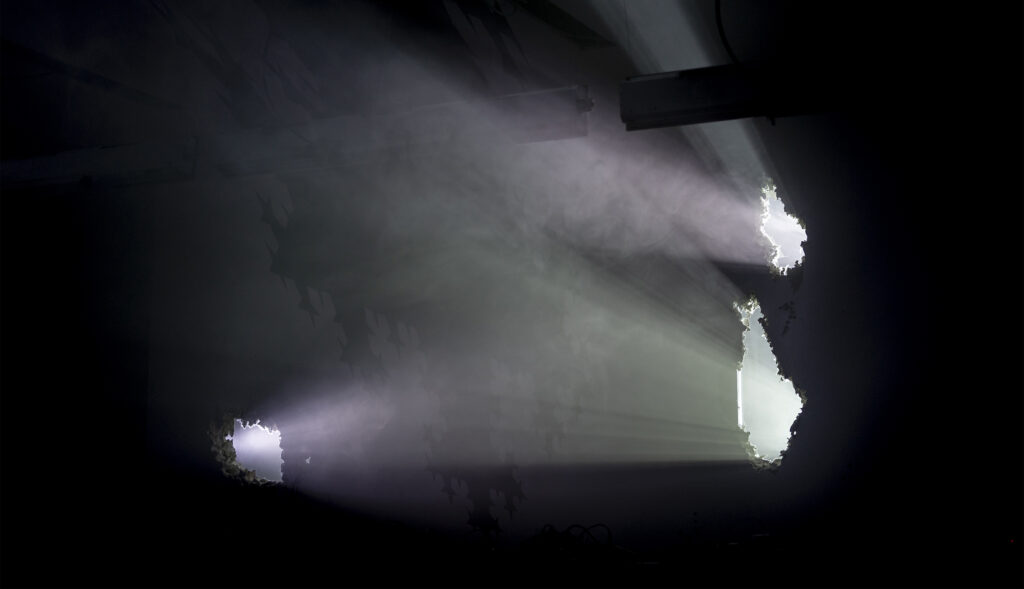
Bodies May Be Arranged
Moving through his childhood memory, nightclub architecture and metaphysical theories of light, Vitaly Weber reflects on the dancefloor as a space where perception is reorganised. Centred on Milan’s A.R.X. gatherings, the personal essay follows how light and sound cease to merely illuminate bodies, becoming forces that orient attention, and transform collective experience into an almost ritual condition.
Written by Vitaly Weber
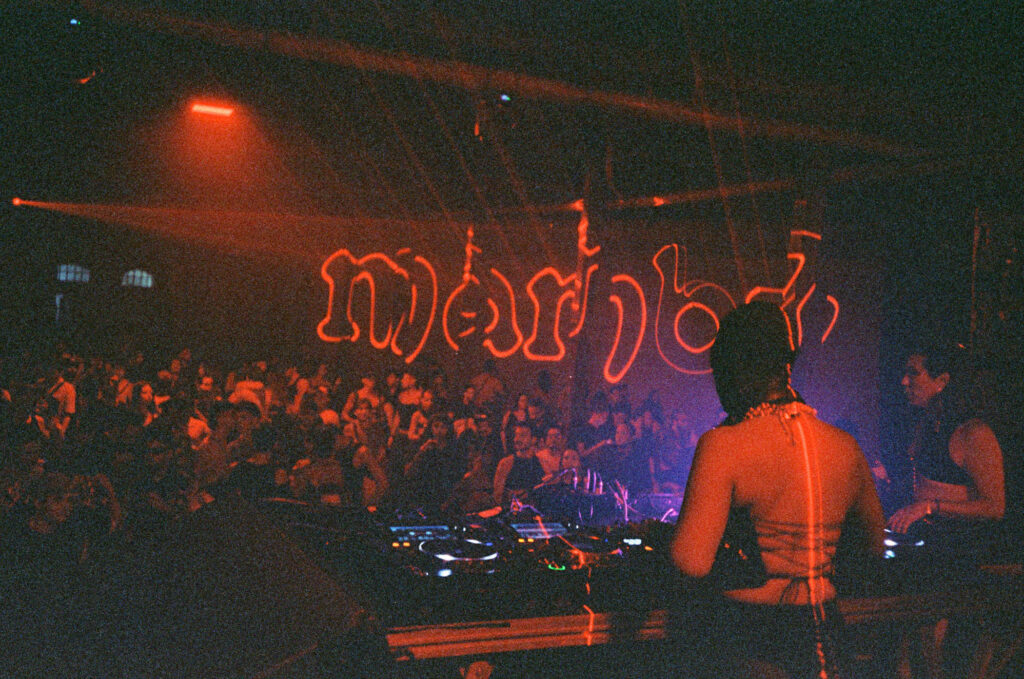
underGRANDE:We Celebrate the End of the World Like Nobody
In São Paulo’s contested centro, the underGRANDE scene transformed nightlife into a form of cultural guerrilla. Through parties like Mamba Negra, abandoned factories and occupied buildings became spaces of queer autonomy, collective survival and political confrontation. Tracing fifteen years of independent electronic culture, Laura Diaz maps a movement where celebration operates as resistance, memory and refusal against gentrification, repression and neoliberal capture.
Written by Laura Diaz aka CARNEOSSO
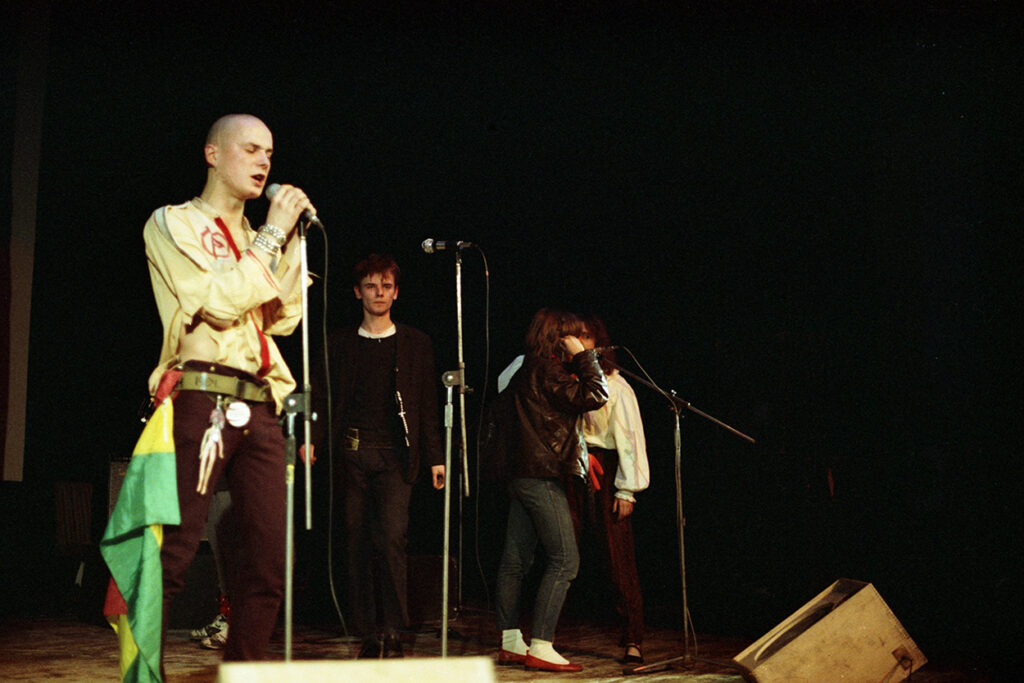
There is No Silence in Tower Blocks. The SUBstructure of Ursynów’s own rap movement in three brief snapshots
Before Polish hip-hop had a name, Ursynów was already producing the frequencies that would transform Warsaw’s concrete outskirts into an incubator for a distinctly local urban imagination. In the grey, hollow metropolis of late socialism, post-punk experiments, children’s futurism and proto-rap broadcasts collided inside the tower blocks. Through three critical snapshots, Filip Kalinowski uncovers the underground circuitry that turned urban alienation into the foundations of a new cultural language.
Written by Filip Kalinowski
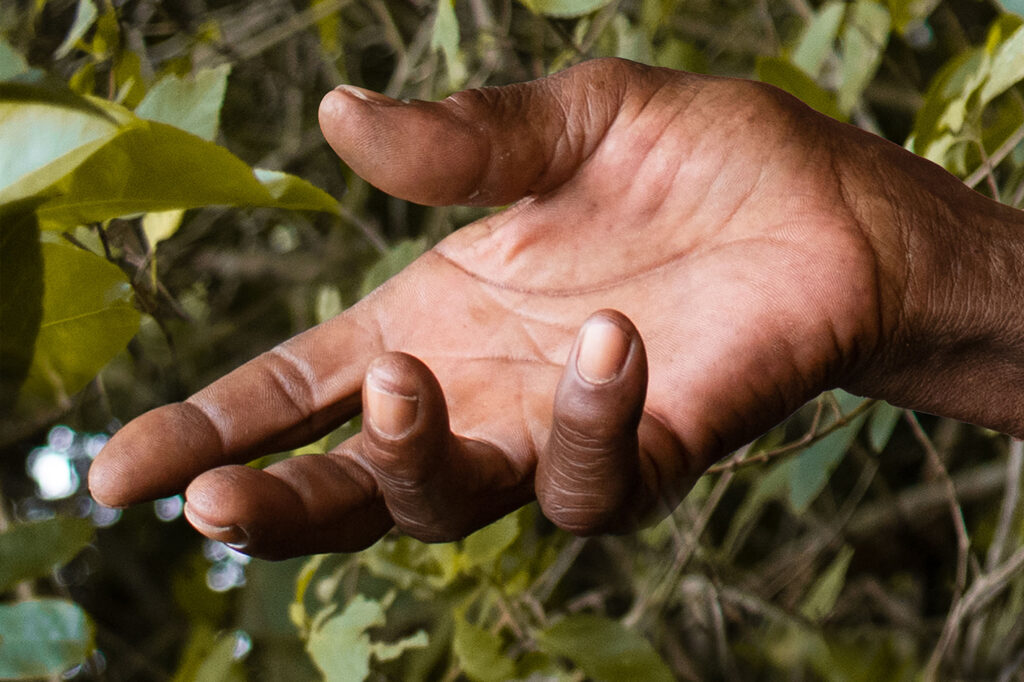
Where the Drums Clear the Air
On a full-moon night in Jamaica, Nyabinghi, one of the most ancient Rastafari ceremonial practices, unfolds as a living ritual in which drums, chants, and fire gather bodies into a shared field of clarity. “Tonight we a chant,” a young Rasta tells German Iraki, author of the book ‘Get Nuff Nuff Data’. “We a do the opposite of what the evil man a do. We use the moon for prosperity and to fight evil spells.” Nyabinghi uses rhythm to cleanse; it is a kind of spiritual technology, transforming communal presence into a practice of grounding, healing, and collective awareness.
Written by German Iraki
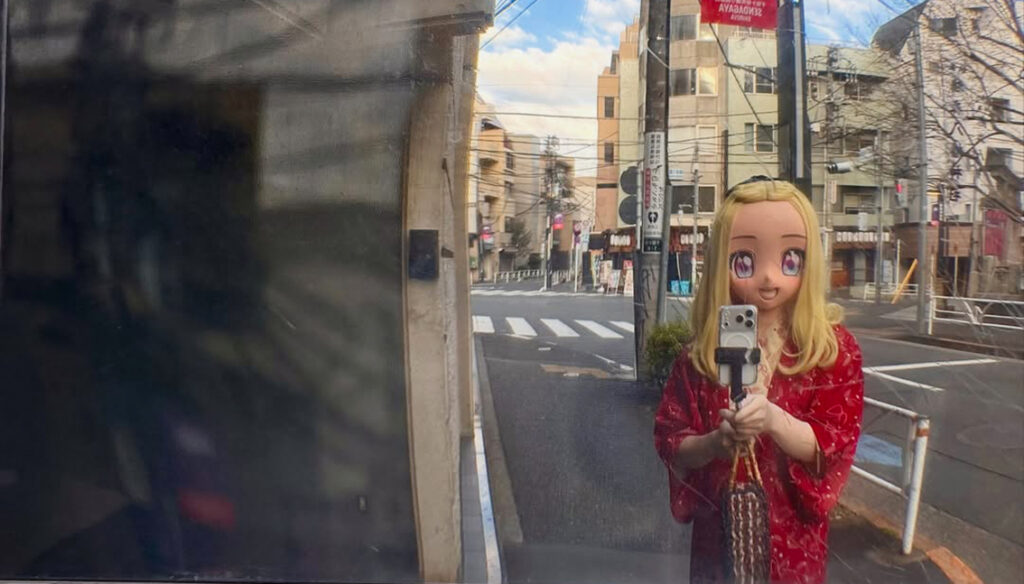
Forever Seventeen. Or, an Unconvincing Tree
Beginning with a theatre piece about a man in love with a silicone sex doll, Simon(e) van Saarloos, author of Against Ageism: A Queer Manifesto (SPBH, 2025), explores attachment without reciprocity and the material conditions of care and projection. Turning to animegao kigurumi, and through a dialogue with Oshiruko Chan, a forever seventeen-year-old fictional character with large blue eyes and blonde hair, Simon(e) explores how masks and garments shape behaviour rather than express identity, positioning age as a structuring fiction and the self as an architectural phenomenon.
Written by Simon(e) van Saarloos
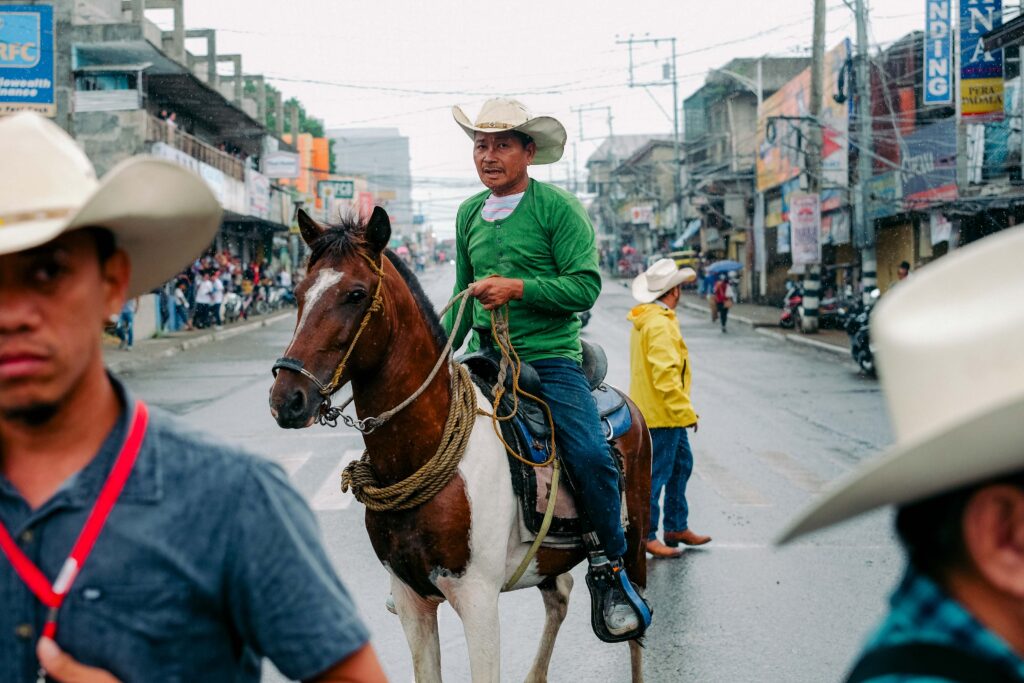
At The Heart of the Herd
Masbate, one of the largest islands in the Philippine archipelago, revolves around cattle. Bulls, cows and pasture define its culture; ranches span the land, and labour has shaped a landscape marked by centuries of hoofprints. Lassoing, cattle wrestling and horse breaking are not just survival skills, but the basis of a singular public ritual: Southeast Asia’s largest rodeo.
Written by Mark Jerome Torres
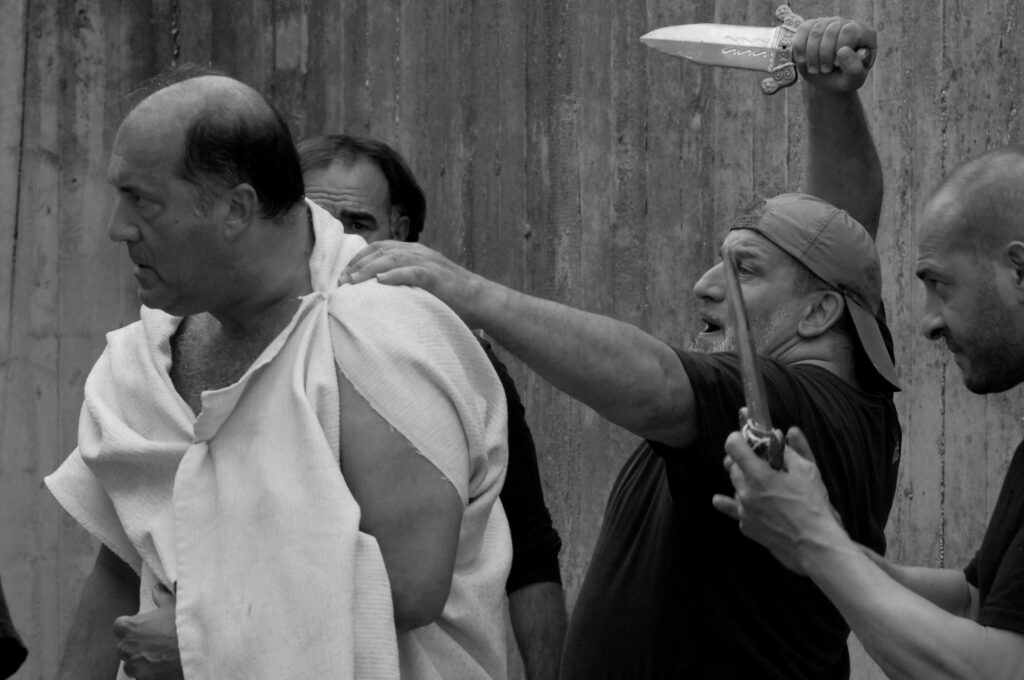
“It sounds like this Shakespeare lived in the streets of my city.”
“Caesar Must Die” is a 2012 movie by Taviani Brothers, inspired by the Shakespeare’s Julius Caesar. The directors had seen the Rebibbia ensemble at work and were convinced of its cinematic potential but needed a story with universal resonance. Conspiracy, betrayal, guilt, leadership, and the corruption of power—all central themes in Shakespeare’s tragedy—echoed the actors’ own lives and the paths that had led them to prison.
Written by Graziano Graziani
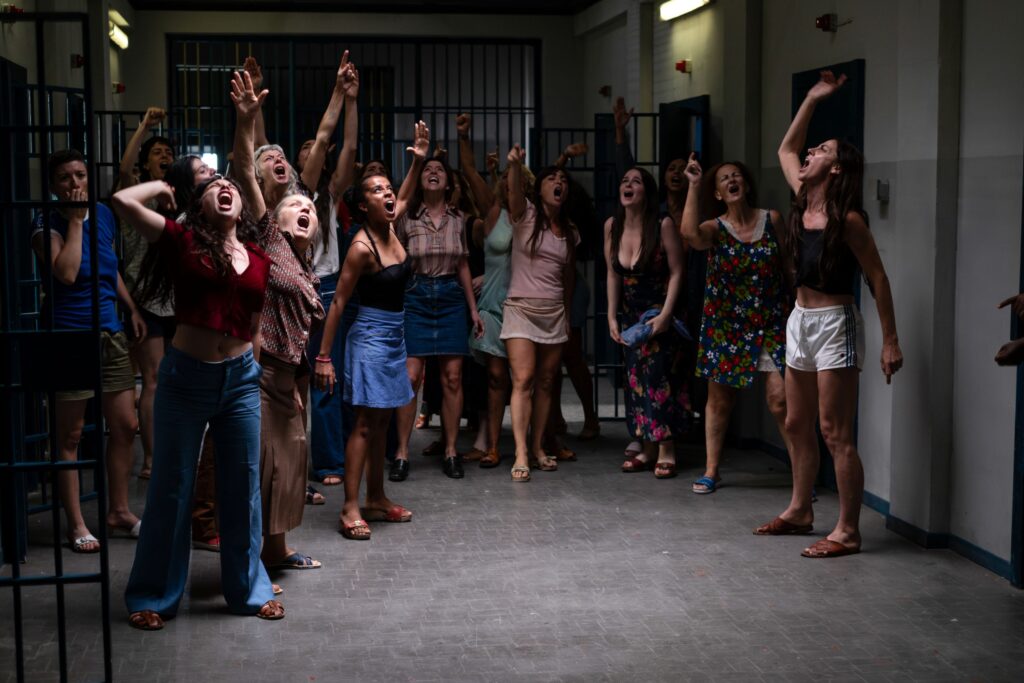
“You are you, I am me, and I don’t care what you did to end up in prison.”
The prison is a crucial passage for those who end up inside it. Fuori, the film by Mario Martone, shot in prison and based on Goliarda Sapienza’s novel The University of Rebibbia, portrays the spaces of Rebibbia as a labyrinth where fragmented space and disoriented senses contribute to “regressing you to childhood,” as Goliarda writes, and which can suddenly become a kind of home, strangely similar to the outside world.
Written by Alice Sagrati
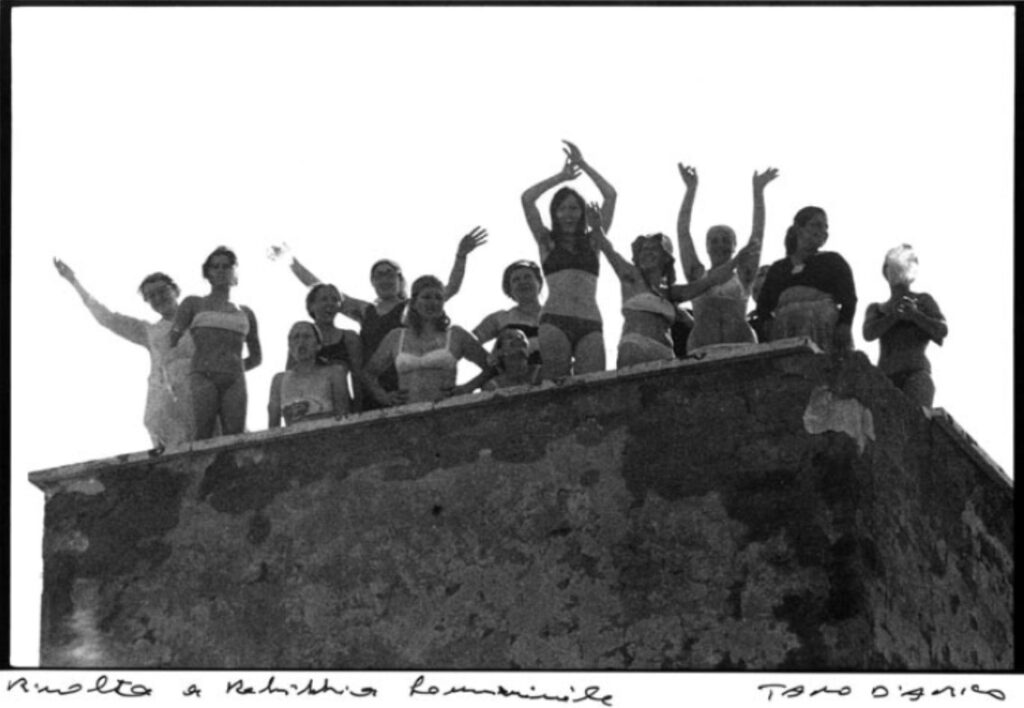
“In images, more than in words, we must look for the stories of the defeated.”
“Camera Oscura” was a photographic project by Tano D’Amico occurred in Rebibbia. One of the few that let the detainee shoot their own photos. It was a way to overturn photography’s usual role from an instrument of control and transform it into a space of shared freedom, and above all, a way to bridge, or at least narrow, the distance from the outside. As some participants wrote years later: “Since we do not wish anyone to have to come and visit us here, we prefer to reach you ourselves through our images.”
Written by Silvia Basile
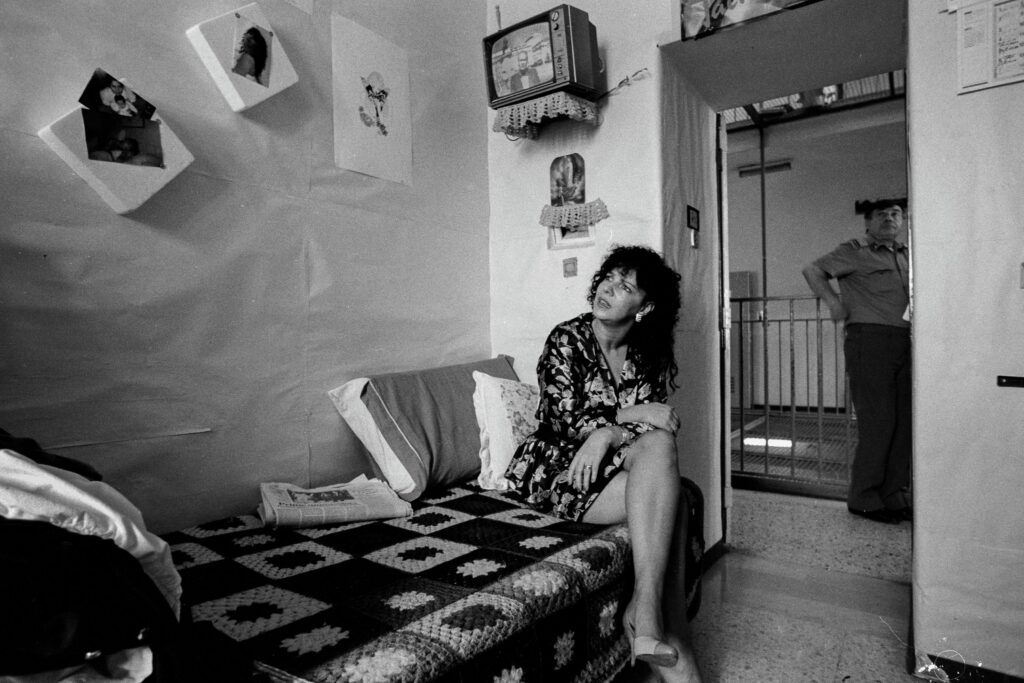
“No Flowers for the Brides.”
How does a wedding happen in prison? Isabella De Silvestro tells the story of Tiziana, a woman who attended two weddings, one as a guest and the other as the bride, during the 1980s, when they were all political prisoners in Rebibbia.
Written by Isabella De Silvestro

“On earth, there’s church and there’s prison. If you go to church, you go to heaven. If you go to prison, you go to hell.”
In early ’90s Rebibbia, three lives crossed: Princesa (Fernanda Farias de Albuquerque), a trans woman from Brazil; Giovanni, a Sardinian lifer; and Maurizio, ex-Brigate Rosse. Their secret letters became the novel Princesa, an act of liberation that lingers on her experiences of desire, sex, and self, while suggesting a historical passing from political struggle to identity struggle.
Written by Elisa Cuter
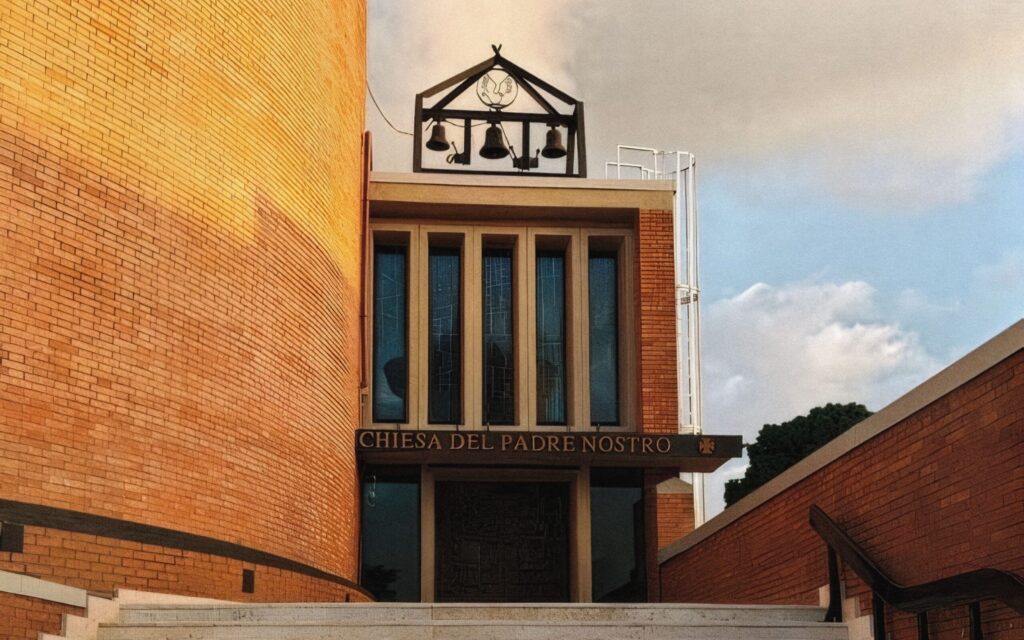
“I wanted the second Holy Door to be here, in a prison.”
Pope Francis died in prison. He entered Rebibbia, fell into a coma, and died. It gave meaning to his mission. For the first time in history, a pontiff opened a Holy Door inside a penitentiary. Francis himself said that on that occasion, for one day, Rebibbia became a basilica: “I opened the first Holy Door at Christmas in St Peter’s, but I wanted the second Holy Door to be here, in a prison. I wanted each of us here, inside and outside, to have the chance to fling open the doors of our hearts and understand that hope does not disappoint.”
Written by Christian Raimo and Giulio Pecci
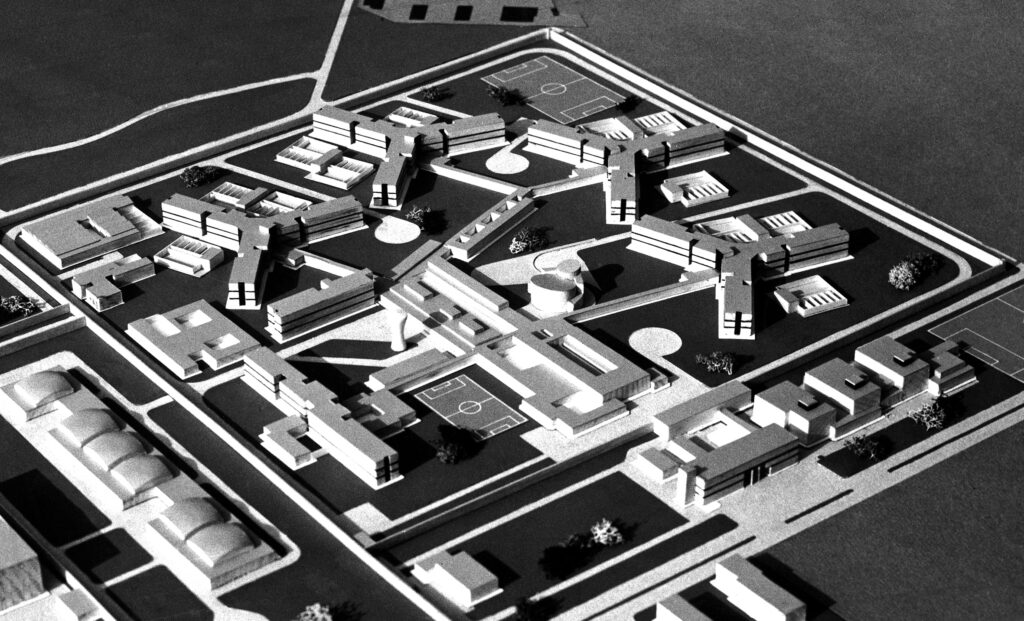
“In the end, the reward I expected in return for the wrong I had suffered was impossible.”
Sergio Lenci was the architect of the New Rebibbia Penitentiary Complex. A visionary modernist, attentive to social issues and to the living conditions of inmates, he became the victim of an attempted assassination by a group of Brigatisti in the 1970s. From that day and for the rest of his life, Sergio devoted himself to understanding the reasons behind the attack. The story of the new Rebibbia begins in this way: in armed struggle, in the internal conflict within the architectural instrument, and in reflection on the idea of forgiveness.
Written by Nicola Gerundino
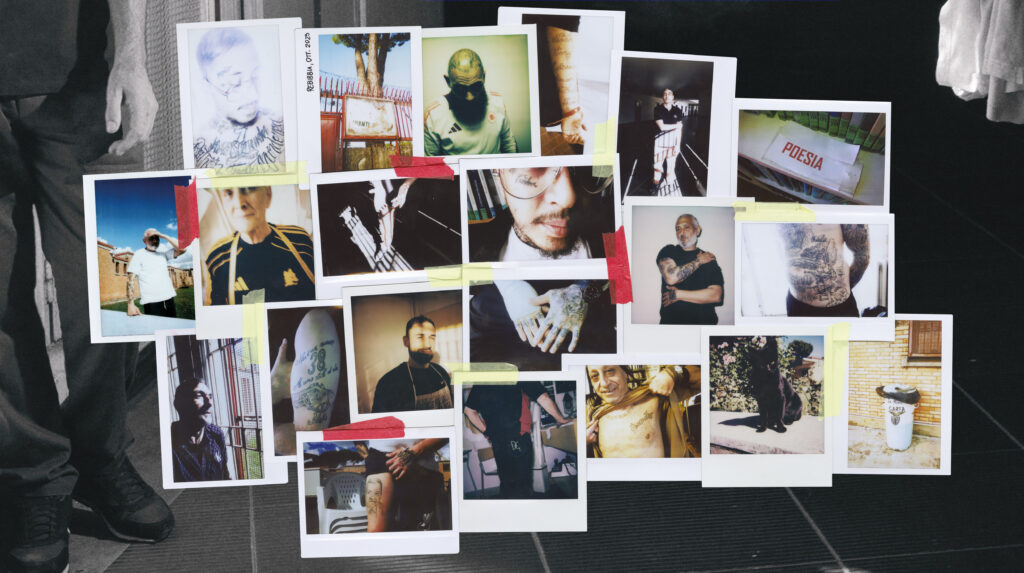
Inside Out
Check this excerpt: Prison is a country most people never come to know. You don’t set out for it; you end up there, often without quite realising how. No one chooses it, but who lives in it? These are the stories of Rebibbia. The stories of 17 people—a small group who resemble, however, the many who inhabit all these countries where you end up without ever wanting to.
Written by Isabella De Silvestro; Federica Delogu; Nicola Gerundino; Giulio Pecci.
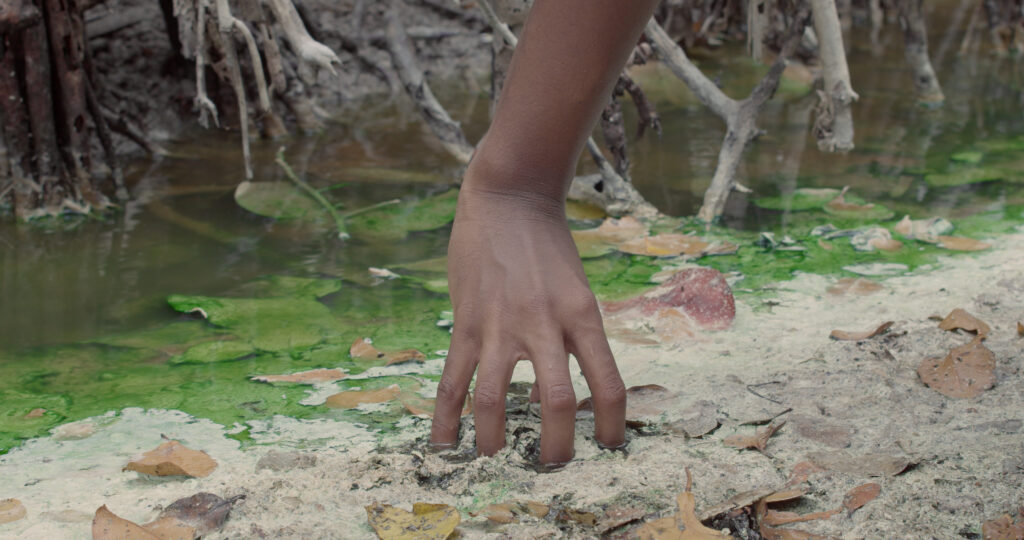
A Sea That Diffracts
Inextricably linked to Jamaican dancehall, Shatta emerged in the 2000s and 2010s in Volga-Plage, a neighbourhood of Fort-de-France. From the capital, it quickly spread across the island, then the archipelago, and more recently—and on a larger scale—to the métropole, the Martinican slang for mainland France.
Written by Simone Bertuzzi/Palm Wine
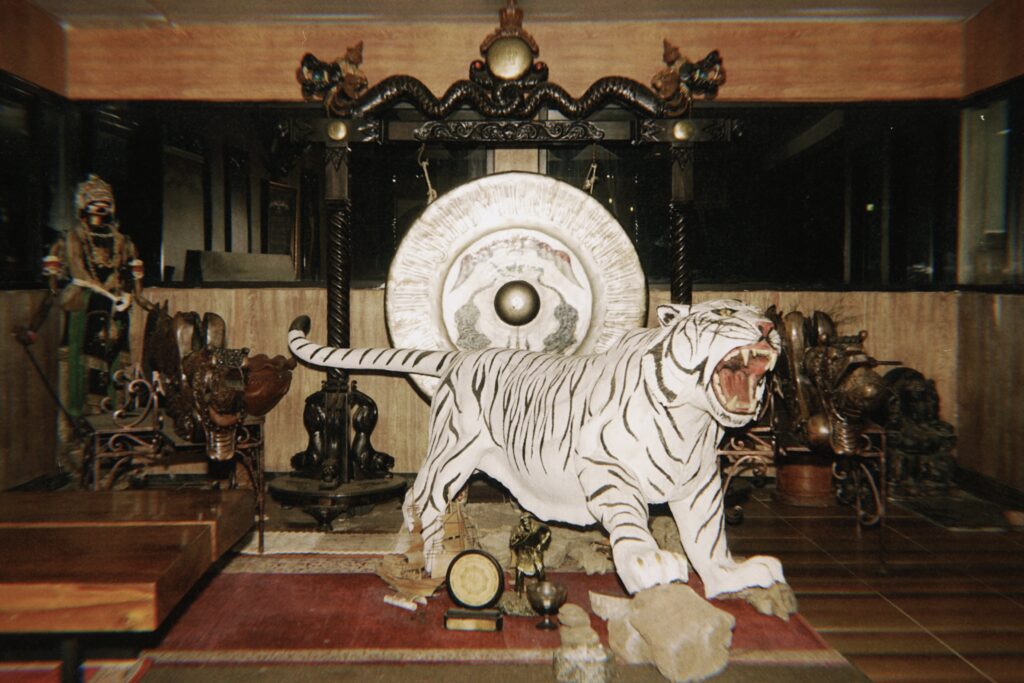
Hanging Out with a Purpose: Diving into Bandung’s Underground Music Scene
Bandung’s underground music scene isn’t just about the music—it’s a living, breathing culture built on community, resistance, and shared memory. The ritual of nongkrong is its lifeblood, a sacred space where history is passed down, alliances are forged, and creativity thrives against all odds.
Written by Teguh Permana (Tarawangsawelas)
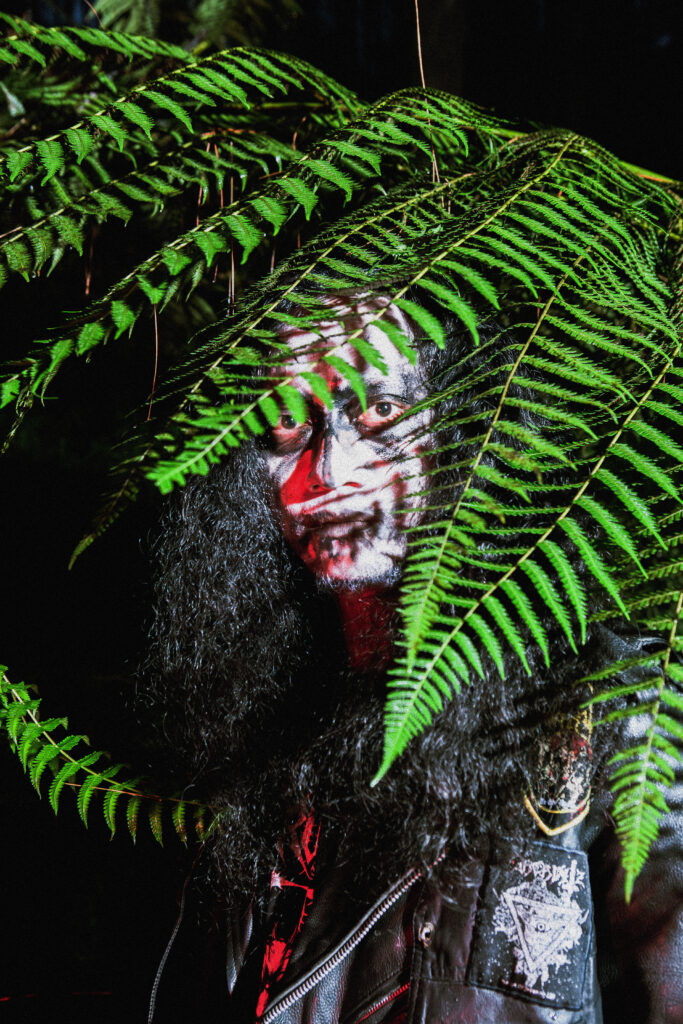
Farmers in Corpse Paint
From corpse-painted farmers to sonic cartographies of the countryside, West Java’s black metal scene reimagines agrarian life as radical resistance. Bands like Bvrtan, Pure Wrath, and Sufism parody, honor, and weaponize rural imagery to confront inequality, history, and power.
We have follow the vocal project Ensemble Tikoro, in a trip through Bandung’s countryside.
Written by Luigi Monteanni
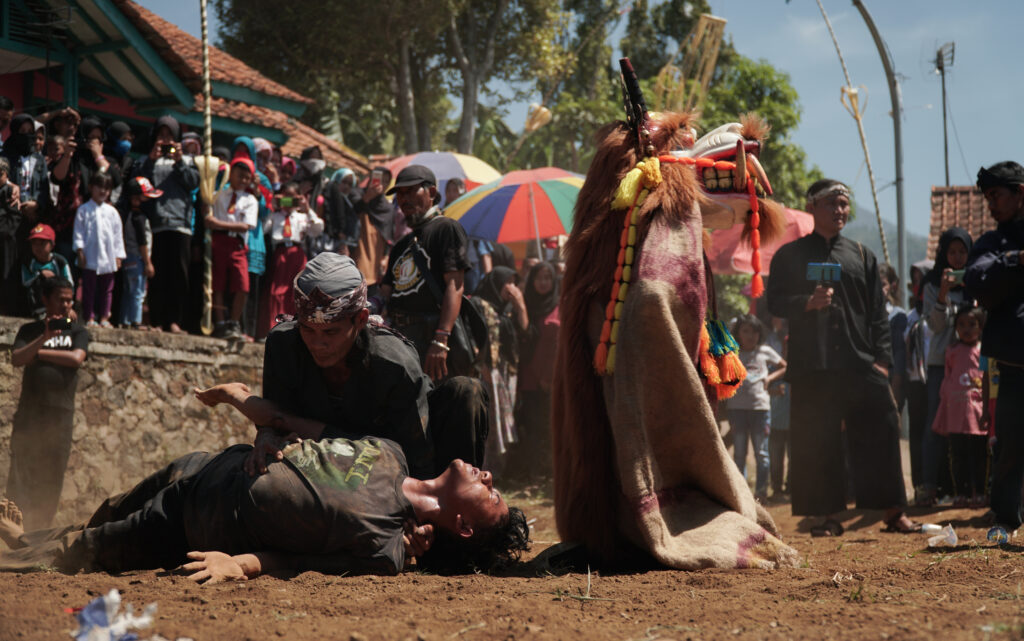
All fun, no rules: oppositional tradition and punk attitude according to Reak Balebat Pakidulan
Réak is a trance ritual which originated in Bandung, a subregional variant of horse trance dances, a group of pan-Indonesian performances known under various names such as jaranan and jathilan.
Written by Luigi Monteanni
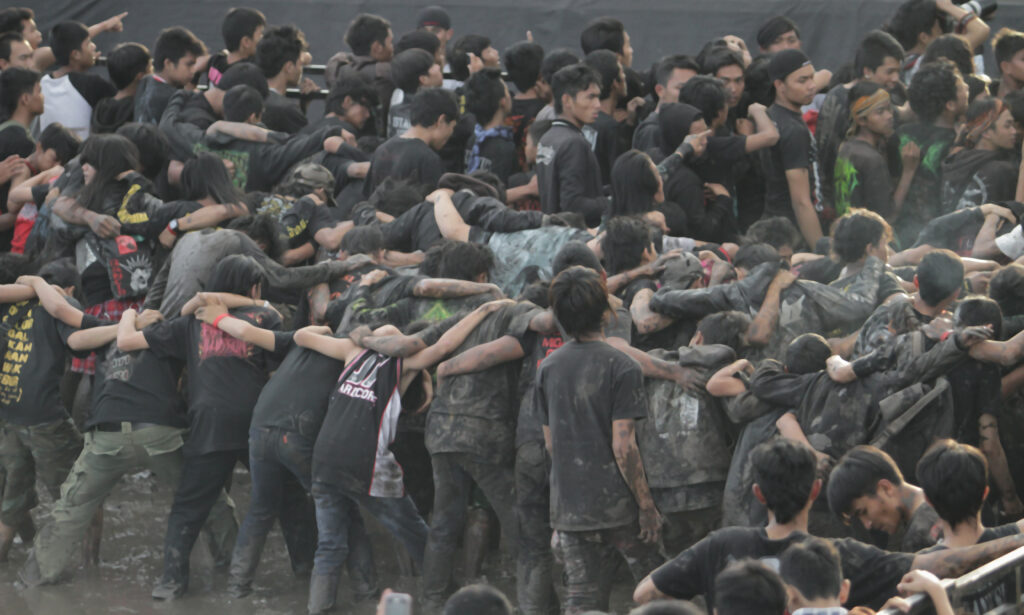
UJUNGBERUNG REBELS
There is a district on the outskirts of Bandung where traditional arts and heavy metal have collided since the 1990s—giving rise to pioneering bands, an underground zine scene, and DIY festivals that reshaped Indonesia’s music landscape.
Written by Kimung

La Comunidad
In the Umberto I neighbourhood, each small group, each corner, each bar, kiosk, and bench has its soundtrack: from the most traditional and rhythmic merengue, with its accordion and drum rhythms, to the melodic, guitar-driven bachata, to the fast-paced dembow, a frenzied beat popular among the younger crowd, featuring percussive beats and alternating rap vocals.
Written by Danilo Manera