Forever Seventeen. Or, an Unconvincing Tree
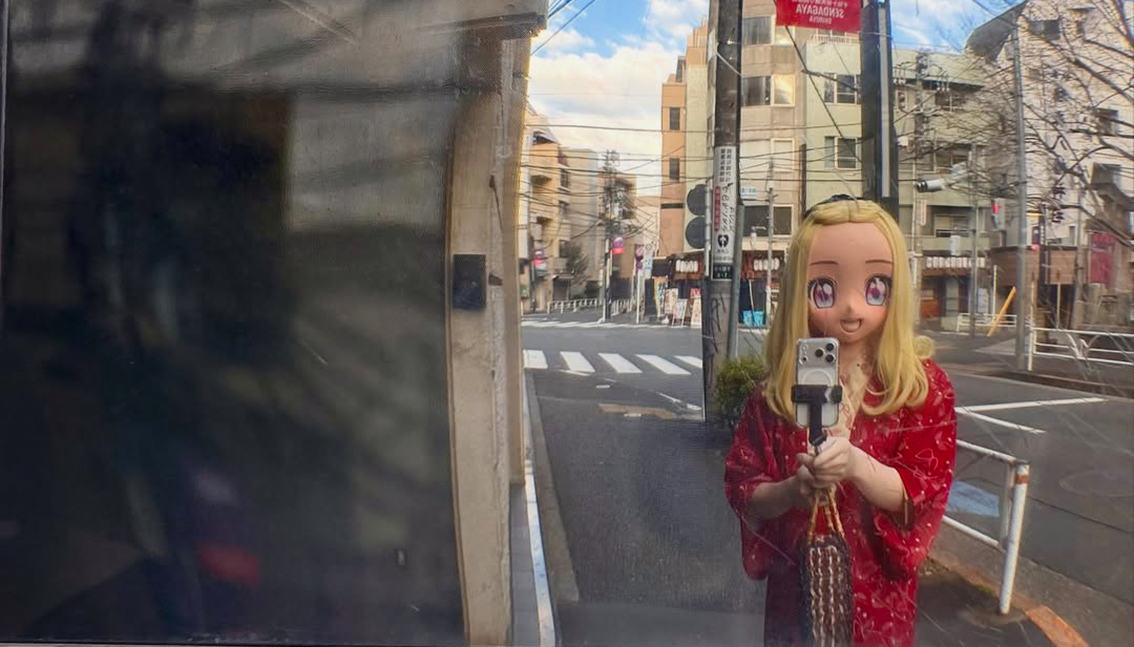
Beginning with a theatre piece about a man in love with a silicone sex doll, Simon(e) van Saarloos, author of Against Ageism: A Queer Manifesto (SPBH, 2025), explores attachment without reciprocity and the material conditions of care and projection. Turning to animegao kigurumi, and through a dialogue with Oshiruko Chan, a forever seventeen-year-old fictional character with large blue eyes and blonde hair, Simon(e) explores how masks and garments shape behaviour rather than express identity, positioning age as a structuring fiction and the self as an architectural phenomenon.
Once upon a time, I wrote a theatre play about a man falling in love with a sex doll. It was a commissioned piece. Meaning that, in this case, I got assigned a topic and theme. The play was supposed to be about a man’s loving relationship with a sex doll. And while the title of the play was Maniacs, it was important that the affection of this guy was not stereotypical or stigmatised. Even though the world is full of lonely people—understandably, under capitalism—he was not supposed to come across as a lonely wanker. There is no need to see a play about someone you ridicule or pity only. Besides, Maniacs was staged by an international theatre company often working with puppets, and so, falling in love with a doll wasn’t very different from usual: if you regularly share the stage with puppets, love is just an emotional naming of what can otherwise be called ‘collaboration’.
The sex doll came from Japan. She was assembled carefully, with a vagina that could be removed and disassembled for cleaning. The man, her lover, was an actor. He wasn’t Japanese, but did have Asian roots. I never figured out if this was important to the theatre director, considering that most images we see in the West of people marrying their bots and snuggling sex dolls come from Japan, especially before the recent surge of AI, which seems to have globalised virtual attraction.
My aim in writing his monologue, was to convey a sincerity, generosity and care about his desire for her. Since he wasn’t getting any affirmation in return, I approached his love as an exercise in giving: an extension, without an expectation to receive back. This approach helped me break a more expected narrative—a man simply wanting a woman to be his mute beauty, catering to his every desire. To me, her silicone stillness seemed to suggest not narcissism from his side, but a beautiful capacity to pour love outwards, without requiring reciprocity. Classical philosophers teach that Eros is not about the actual meeting of another person, but about the energetically felt force to cross a perceived distance. From that point of view, the attraction to a doll makes perfect sense: the distance that draws you close, remains.
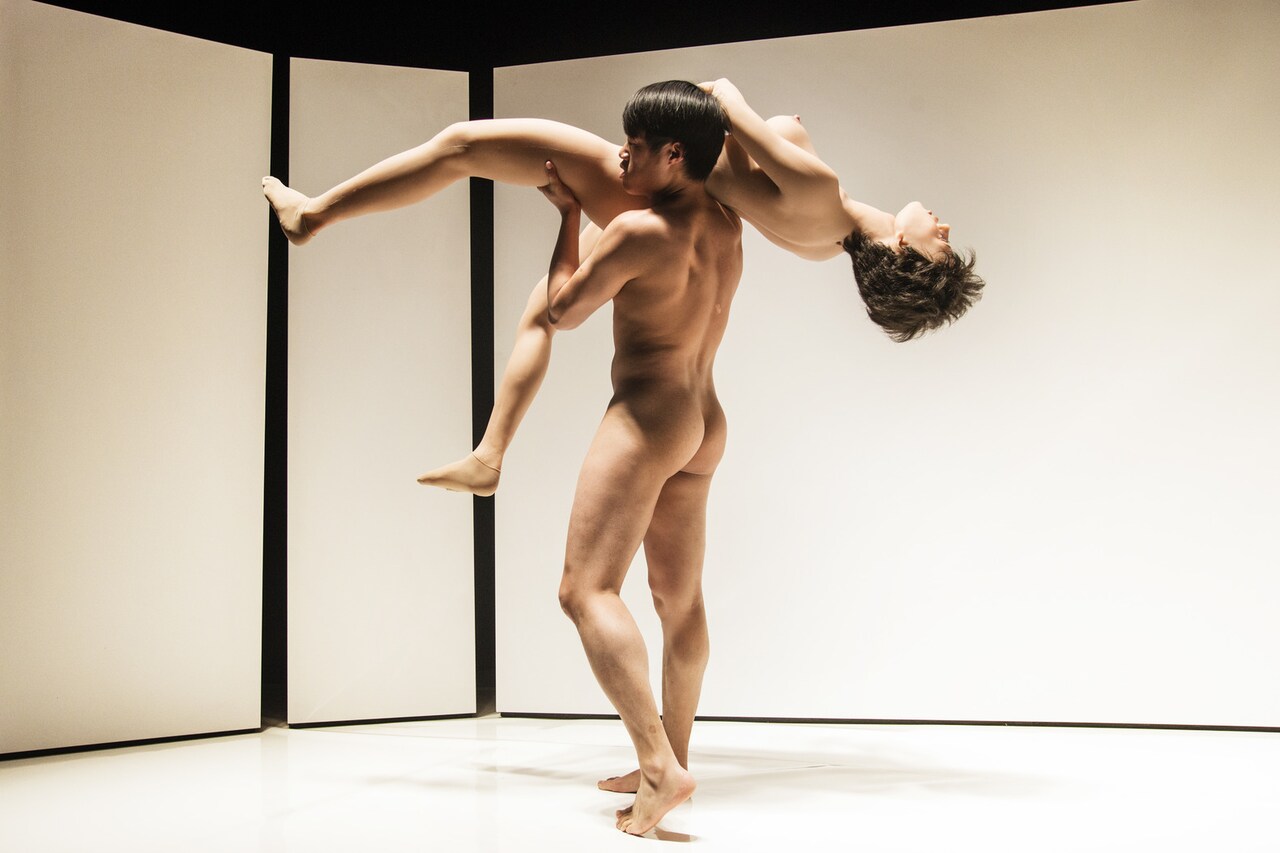
He did test her limits. In one scene, he would slap her face. Not once, but many times, creating a sonic silicone beat on her cheek. Perhaps his slaps were meant to wake her up, because upon kissing her lips, the doll didn’t transform into a woman like the fairy tale frog turned into a princess. The doll’s cheek became puckered and peeled from the repeated slaps, performed every night while the play was touring. While it is tempting to focus on the psychological why of his aggression, I was and am more interested in the affordances* that her open cheek created. Slapping is a movement; repetition is a rhythm. Fatigue creeps in. Slapping has a sound, a bounce. This sound, this bounce, this lifting of the arm and raising a flat hand, swinging forward to reach the cheek—these are all effects that are not just outward and perceptible, but boomerang back into the body.
Over time, the actor changed shape. Mirroring his object of affection, he became heavier and more muscular. The doll was bigger than him, and mobilising her dead limbs was like lifting weights at the gym. Together, they rehearsed and toured to different cities. Their closeness wasn’t an exercise of method acting; it proved mere material necessity: she needed to be dragged around and cleaned. They travelled internationally, except to Norway, because the airline didn’t allow her on the plane, objecting that if an emergency were to happen, flight attendants might risk their lives trying to save a false human figure. When a doll is manufactured in 2003 and on stage in 2015, how old is she? Is she twelve years of age, or does her size and look—large breasts, a stern short haircut—give her extra adult years? Or was she born earlier, with the making of her material (I’ll cite from the play: ‘God created Adam and Eve for a reason … but maybe God created silicone for a reason too.’)? Or perhaps one only exists once flown to Norway?
The reality of age is even more naturalised than gender, as linear time is approached as a biological inevitability, despite the wild and wide variety of different experiences and conceptions of time.
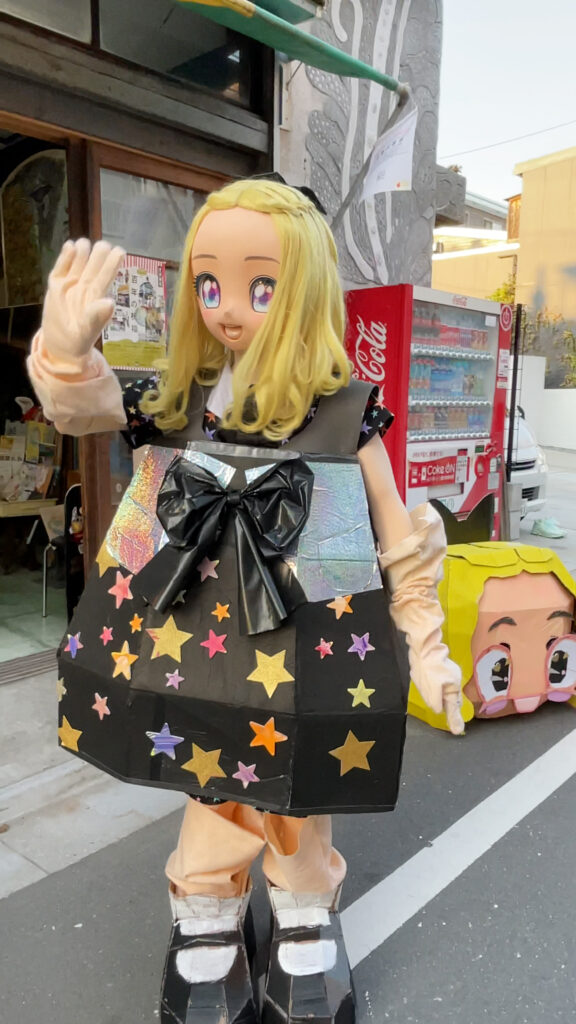
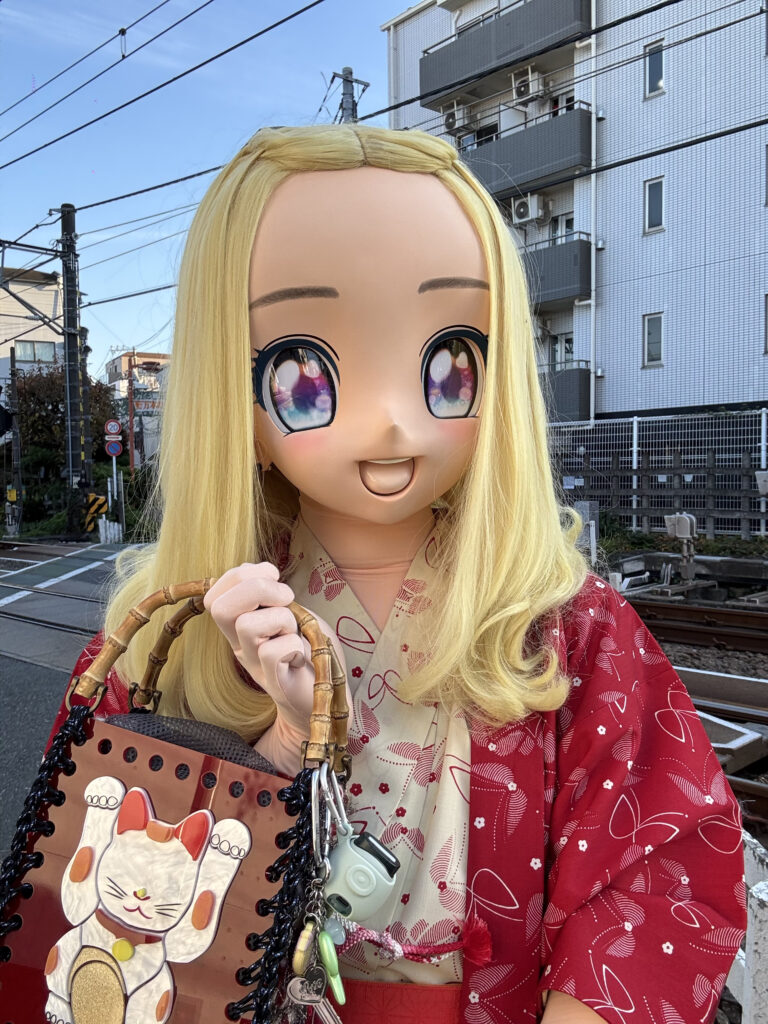
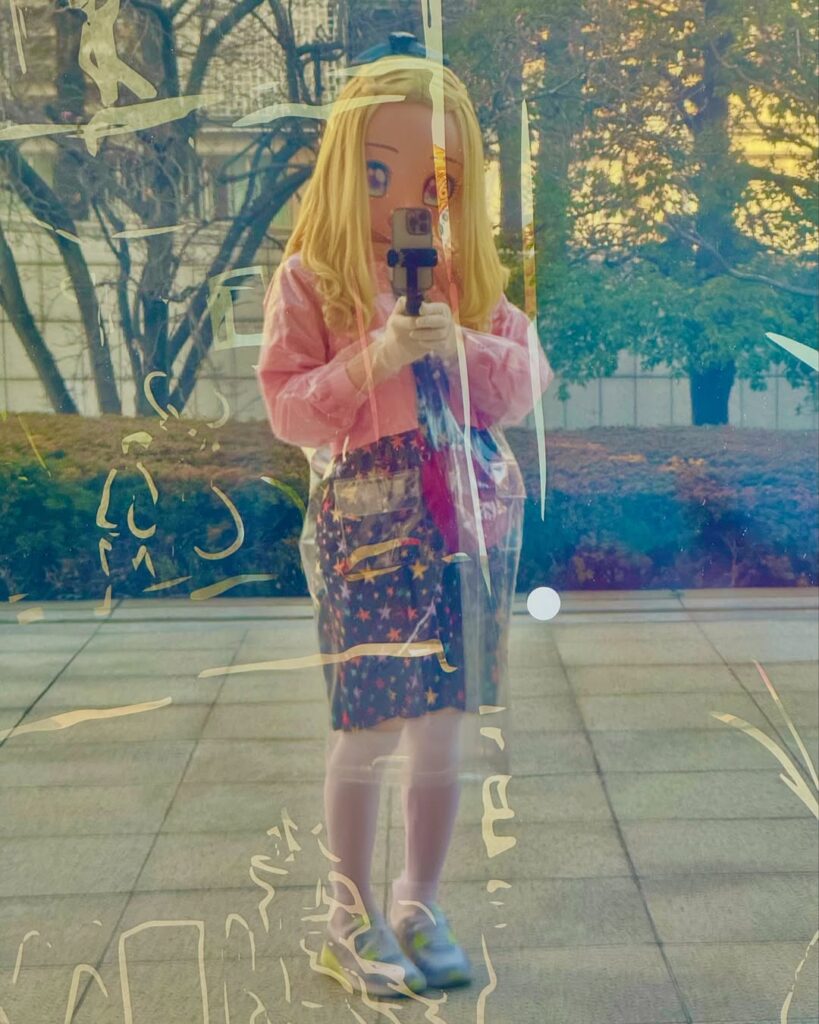
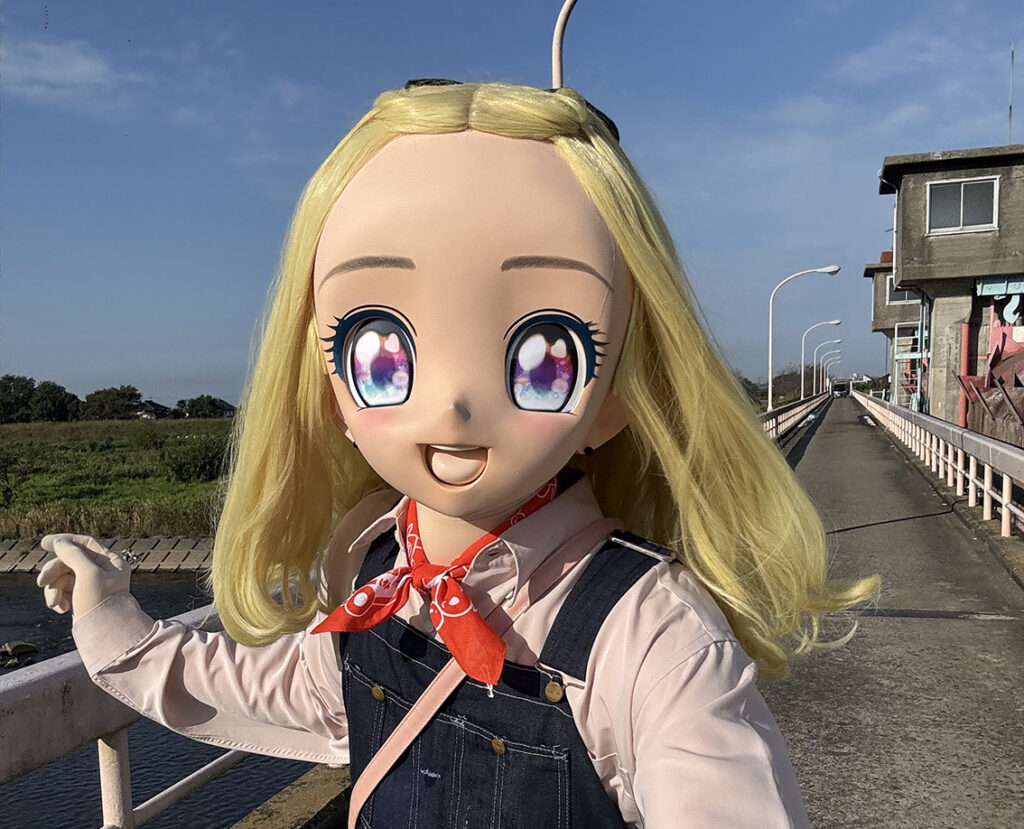
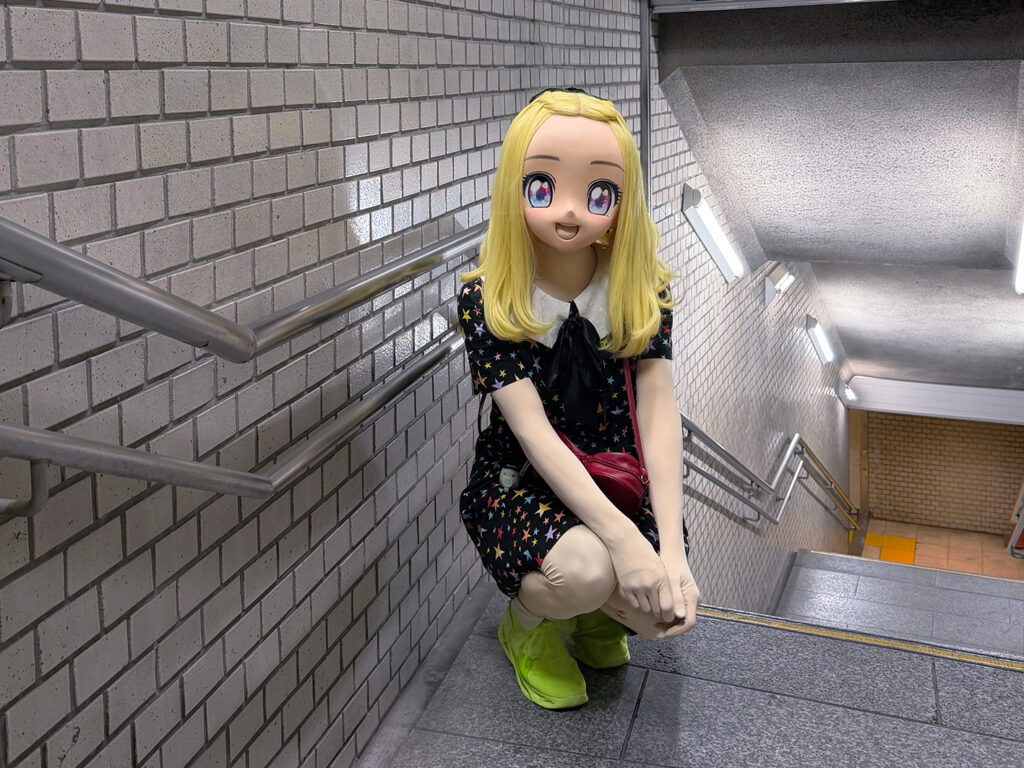
Oshiruko Chan is a doll, an animegao kigurumi character, a cutie pie, her name conjuring a sweet dessert, and she is a forever seventeen-year-old. With large blue eyes and blonde hair, Oshiruko looks like the mixture of a porn character and a young girl—the two blend well, of course. But there is something non-human about her too, which is partly why, unlike real seventeen-year-olds and people generally, she shows no interest in sexual stuff, her human body explains.
In a short documentary report in the NOWNESS ASIA series, the person inside of Oshiruko is described as having twenty years of experience in the DJ world and in mask-making. This reference to accumulated time is meant to underline the artist’s craft and expertise. In my book Against Ageism: A Queer Manifesto, I question such use of time as an attribution of value. Longevity, for example, does not have to mean accumulated experience or serious commitment. Just like we are assigned gender at birth, I approach age as being assigned at birth. Age dictates how we should develop and behave, and by adhering to its prescriptions, the directive force of age grows and stabilises further. The reality of age is even more naturalised than gender, as linear time is approached as a biological inevitability, despite the wild and wide variety of different experiences and conceptions of time.
Age doesn’t just inform individual behaviours and interpersonal relationships. It also informs infrastructures. Much of our everyday life is formulated by age-segregated institutions, such as our classes in school. Study has a prescribed velocity, and some rhythms and speeds are appreciated over others. This shows up in romantic love too, as couples often follow a relationship escalator, moving up from dating to living together to marriage to having kids to becoming grandparents. You shouldn’t go too fast, because then you are ‘love-bombing’ each other or U-Hauling, but you cannot crawl too slow either, because that just signals fear of attachment.
Oshiruko
The individual timeline of age signals a similar escalator with a prescribed cadence, speed and unilateral direction (up). Expectations, desires, behaviours, preferences and achievements are mapped along this timeline. On this escalator, Oshiruko seems to have stalled, and willingly so. A forever seventeen-year-old, she doesn’t adhere to the idea of time moving forward. The self-ascribed ‘ordinary middle-aged man’ that animates Oshiruko from the inside, celebrates her pinned age because it offers a perfect balance of possibility and restraint: inside of Oshiruko, he cannot slump or slow down, he cannot have a tired tread. This cannot is a kind of freedom. And it works the other way around as well: while he acknowledges that he should feel free to move his body regardless of appearance, it’s a lot easier to behave bouncily and joyfully once inside of Oshiruko. The cannot that he formulates, reminds me of trans embodiment. Where genderqueerness and fluidity prescribe that you can behave however you like, regardless of the body you are perceived in, transitioning can feel like a submission to the cannot, leaping towards a form and reception that enables different behaviours.
In an email exchange, Oshiruko’s insides tell me:
Oshiruko dances energetically in clubs until morning, often without worrying too much about how others might see her. She might also behave freely and joyfully in a park, or take selfies at her favourite spots. These are the kinds of actions she does naturally.
For me, without the mask, those behaviours feel a little difficult. I tend to become conscious of acting in a way that matches my age—in other words, behaving appropriately as a middle-aged man. This sense that I should behave “appropriately for my age” works on me like an invisible gravity.
Of course, many of these expectations may exist mainly in my own imagination. I understand that people around me are probably not paying that much attention to me in reality. Even so, for some reason, it is not easy to resist that gravitational feeling. In an extreme case, perhaps if I were completely drunk, I might be able to behave freely without caring, but in my everyday state, that is not how I am.
By putting on the mask, I feel that I am somewhat released from this sense that I must behave according to my age.
At the same time, I do not think this is only about age. Appearance, gender, and the overall atmosphere a person carries also influence the expectations placed on how someone should behave.
While I fight the gravity of age-appropriate behaviour—more accurately put: I oppose the whole category of age and instead propose abolishing it—I love how animegao kigurumi completely disguises the human interior of the character. Instead of using a mask and suit as an extension, drawing out some hidden, real self, the character creates affordances. In my view, the character’s constructive force is closer to architecture, than to role play. When it’s less about internal motives (a line of questioning that always adheres to the existing categories, assuming that there is a strangeness to interrogate, by asking for example: why does a middle aged man want to be a seventeen-year-old?) and instead focus is placed on the materiality of the character (how does this dress flutter while speeding on a skateboard), a psychological approach is defied and a more relational interplay appears.
If a dress and a mask are not just viewed as simple garments in a wardrobe, but as architectural phenomena, the dress and the mask create and shape and construct.
Before Oshiruko was Oshiruko, her creator visited a clinic for trans care and gender reassignment therapy. They wanted him to draw a tree, and the tree came out hesitant and unconvincing. He expressed that he wanted to look cute and wear dresses, and instead of going on hormones or getting surgery, he created Oshiruko. The difference between wanting to be a girl and wanting to wear girls’ clothes, has historically been narrated as a difference between the transsexual and the transvestite. But if a dress and a mask are not just viewed as simple garments in a wardrobe, but as architectural phenomena, the dress and the mask create and shape and construct. They are not just expressions of something internal; they also build a sense of what is inside: without walls, the differentiation between inside and out does not exist. Referring to animegao kigurumi in English, roleplay or cosplay do not seem strong enough as terms. Perhaps archplay, combining archetype and architecture, makes more sense.
With the recent US administration, the slogan Protect the Dolls has increased popularity. But what does this expression of trans support really mean? Of course, ‘dolls’ is a self-referential term used by (some) transfeminine people, proudly claiming the desire to attain a particular plastic femininity through surgery and accessories. In progressive circles, to come out as handmade, as plastic, is sometimes more difficult than coming out as transgender, which has become framed and understood as an internal, inborn identity. To assert instead a plastic make-up, sides with artificiality and excess, leaving behind the ideal of feeling like a ‘natural woman’. This artificiality is a beautiful bow to vulnerability, exposing one’s own dependence on external influences. These influences have to be offered, granted, acquired, collected, crafted, bought. A skin changed by synthetic hormones oozes dependence: like disabled entanglement with accessibility aids, the doll is not hiding her need for assisting prosthetics.
Instead of hiding the prosthetic and naturalising it as an extension of a real self, the prosthetic itself is celebrated. The mask is not like the thin layer of make-up that is meant to highlight someone’s features. The mask is an invitation to engage with the fake, rather than pretending it’s not there at all. Plastic is often degraded as unalive, not porous, hard, clean, hygienic. Dolls too, are contrasted with the soft fleshiness of the human. But in Maniacs, and in Oshiruko, the mask and the suit and the silicone skin do not form a shield or barrier but instead offer an opening. Oshiruko’s large eyes do not just cover a human face, they also consist of small holes. The mask does not solely invite curiosity for what is inside, but expresses a kind of hyper-appearing.
When walking through Stockholm, Sweden, Oshiruko noticed women glancing at her with ‘expressions of strong discomfort.’ In Japan, this is not how people respond: usually, Oshiruko’s appearance makes people giddy and excited. Where in Stockholm, a tall, doll-like female figure with blonde hair and big blue eyes might be experienced as propagandising a stereotypical ‘perfect’ woman, Oshiruko’s existence in Japan seems to immediately reference visual culture. Which is where her aesthetic came from, her maker explains:
I do not have a strong sense that I am performing white girlhood. In my mind, I am performing something closer to an abstracted image of girlhood found in Japanese manga, anime, or idol culture.
I have always been drawn to small moments such as laughing honestly when something is fun, showing a natural affection for cute things, or simply spending carefree time like a child or a young girl.
I am not a researcher, but in the manga and anime I saw growing up, I often noticed characters with visual features such as pale skin, blond hair, and long limbs. I was not the type of person who followed specific works closely; rather, I encountered these character images fragmentarily through magazines, television, and other media.
Oshiruko
I imagine women in Sweden are side-eyeing Oshiruko, because of a sense of recognition. Centralising one’s own humanity, the doll is an extension of the woman, not a different figure altogether. This is the ontology of liberal humanism, making of trans existence a fight for human rights, saying that humans deserve to exist, while keeping in place the animacy hierarchy of the human over other forms of life. The doll and the woman cannot exist simultaneously and be equally valuable; one has to win over the other: the woman is real and the doll is fake and fake is less. Oshiruko is seen as a mockery, an extravagant version of the natural woman. Transmisogyny follows a similar logic, portraying trans women either as really men or as an exaggeration of natural womanhood. The idea that there is something real and natural to preserve (such as the biological woman), creates a sense of being under threat, fueling a defensive mode.
So far, the category of age remains to be perceived as natural. Pushing against this comfort and safety of having something real that shapes you—an idea of linear time, imposed onto the individual body and organising our societal infrastructures—will not get easier. Time does not move forward like that. Dismantling age as a social construct, might feel a little like loving a doll—nothing will be offered in return. And, as we have seen with the push for visibility and acceptance of LGBTQ people, kissing a frog might not mean waking a princess. When dismantling the existing categories, it might get much worse than the initial frog. We might start to long for the frog to come back. With already so little space to shuffle norms, do we keep pushing or retreat? It’s my hope that we find masks, not as protective shields, but as portholes to archplay with.
* Drawing from his training in phenomenology, neuroscience, architecture and art, Erik Rietveld uses the term ‘affordances’ to investigate, disrupt and propel how landscapes create different possibilities for different actions: ‘The term “affordance” means a possibility for action that the socio-material environment offers to us.’ Rietveld, Erik. “The Affordances of Art for Making Technologies.” Adaptive behavior 30.6 (2022): 489–503.
For more on affordances and my own, crip and queer approach to Rietveld’s introduction of the term within architectural and artistic installations, see van Saarloos, Simon(e). “Centralizing the Cut: A Feminist, Queer, Crip Response to Powerful Playgrounds.” Adaptive behavior 30.6 (2022): 573–575.