‘London? Live? Coding?’
In South East London, you can find an algorave or two most months, in pubs, churches, clubs and universities. When there’s no algorave on, you can almost certainly find a coding club, game jam, hackathon or permacomputing meetup. More and more of these events are popping up between New Cross, Peckham and Camberwell, with some artists approaching mainstream appeal and developing closer ties with London’s academic world. Here, a range of emerging computational arts courses combine coding with the arts, creating a heavy crossover with the London algorave scene.
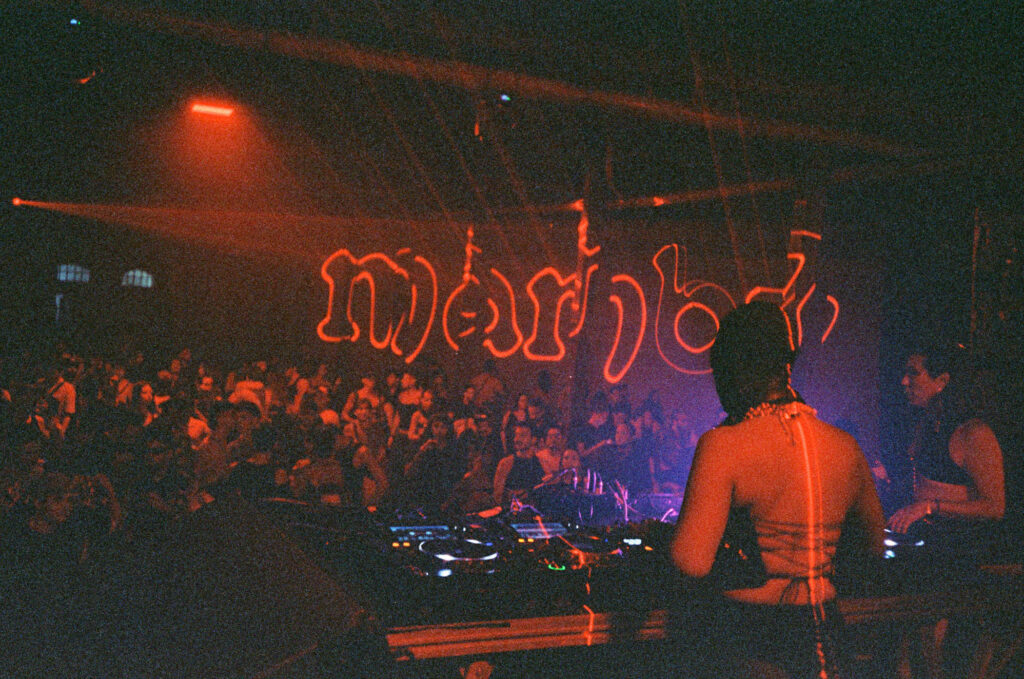
Let’s go out this weekend, there’s a crazy event happening. Let’s just go have fun and let go a little. It’s a jam, you can bring your own laptop. Someone’s bringing an oscilloscope, another has a 3D printer. These events go by the name Algoraves. “You can’t go wrong with full range speakers and high contrast ratio projector in a small, dark room, preferably with fog/haze,” says the official guide on how to host one. Though there are some shared themes with raves, the audience feels more like one of jazz, quietly standing and bobbing their heads whilst they watch a performer (or several) code. These are computer people.
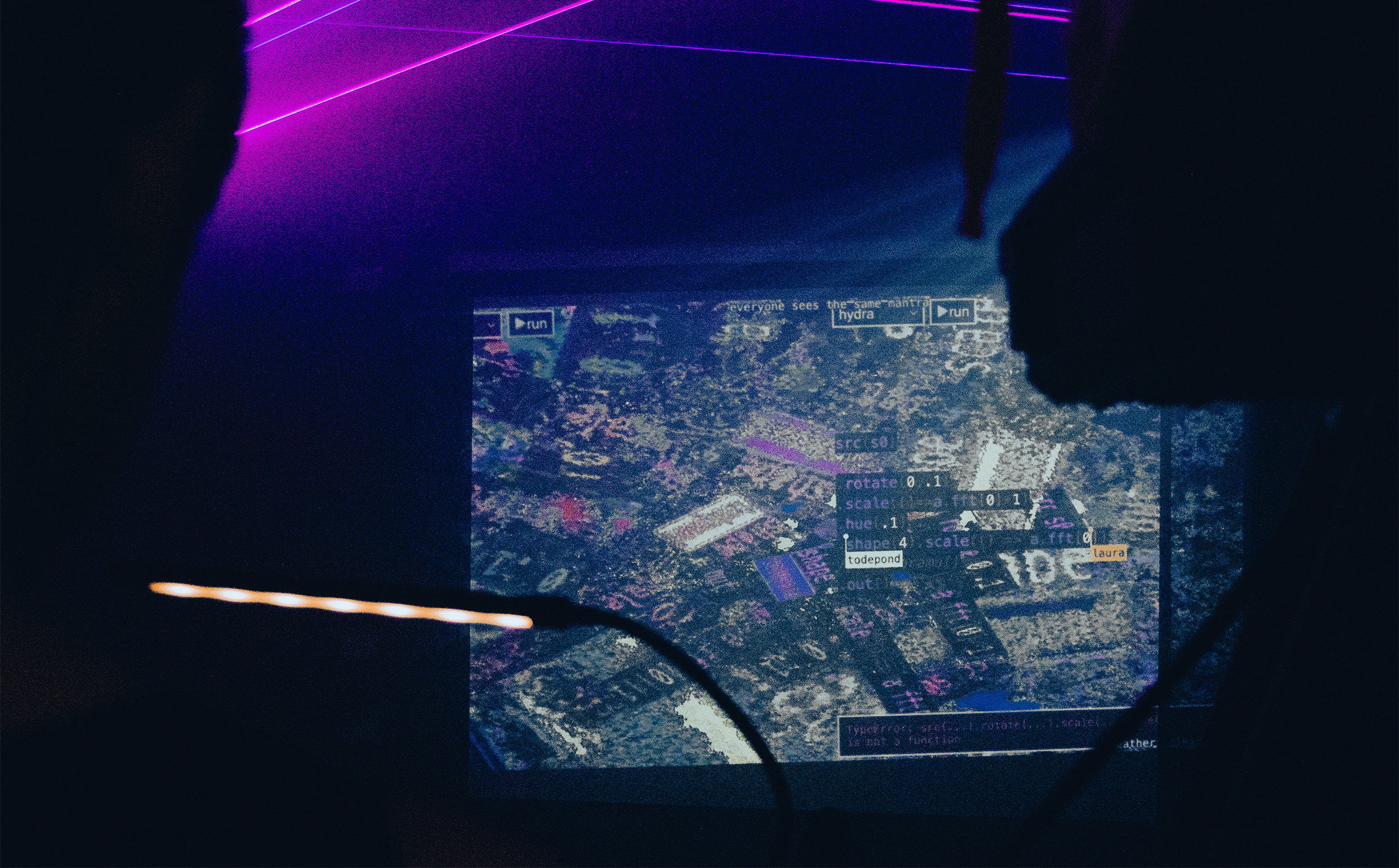
Plainly put, an algorave is an event where performers play music and visuals created with code in front of an audience. They are generally live-coding, which means that they write the code during the performance, and the code should be visible to the audience. There are also open jams, where everyone can connect to a server and play along together. The musical genres are very varied, playing practically anything that you could play on a computer.
The term algorave was coined around 2011 by musicians Alex McLean and Nick Collins, supposedly whilst listening to pirate radio on the way to a gig. McLean was completing a PhD in arts and programming languages at Goldsmiths, and Collins was an academic in music informatics at Sussex University. The first event archived on the official algorave website occurred in 2012.
You might be idly thinking, ‘isn’t this a laptop orchestra?’ But you would be mistaken. The laptop orchestra, or lork, is a similar but distinct practice. A kind of chamber music ensemble concerned with making music primarily with laptops. There is at least one lork in South London, too. But live-coders are tinkerers and craftspeople, in a mechanical world of cause and effect; the computer is a microcosm containing all of its own rules and maps and navigation guides. Lorkers inhabit a cosmic space housing New Age sounds and a little Steve Reich. They invite a more mystical ontology.
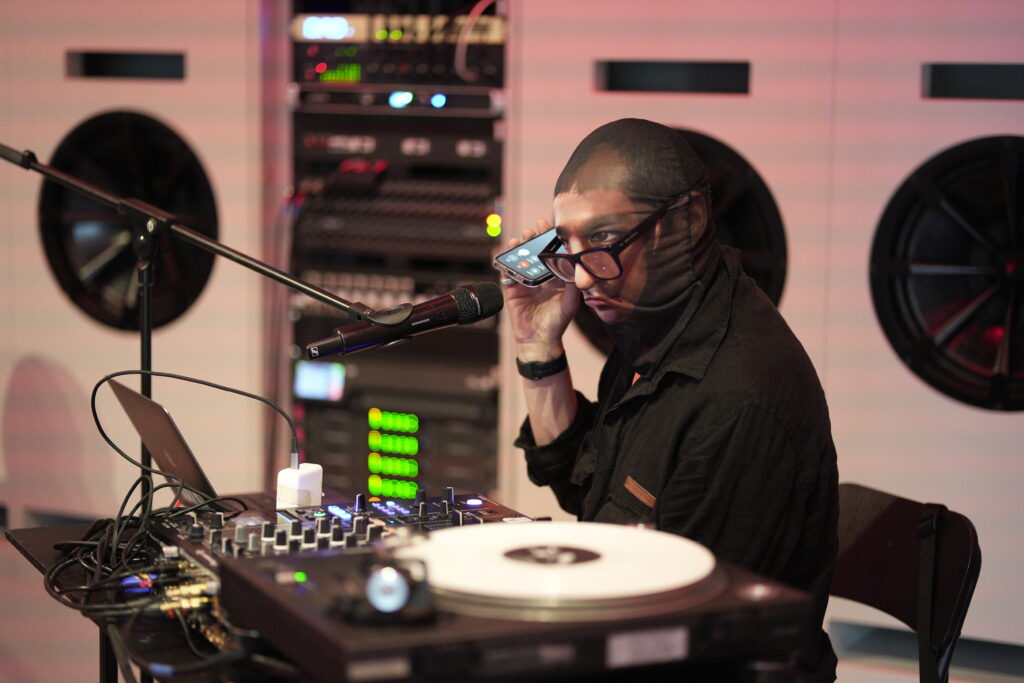
Most of the performers use a live-coding environment called Tidal Cycles, created by Alex McLean, or Strudel, which is a port of Tidal to the web browser made by McLean and Felix Roos. Some may bring other electronic instruments and synthesisers. The main point of difference between using live-coding instruments and a more traditional synth or sampler is that in practice (at algoraves) the performers expose their screens to the audience, which is supposed to be a doorway into their minds. It’s also possible to get a sense that the instrument belongs to the performer, as their creation; some use their own personal software, something they’ve been working on privately for years.
I spoke to a musician after their set, where they had performed with another person making the visuals. “Everyone was cheering, I was thinking, what did I do?” “The visuals; he was using his scripting language, building a tree, but then he had to open the engine and rebuild the renderer more drastically,” I said.“So it wasn’t the music,” he said, a little hurt at first, but quickly smiled and said “that’s the most algorave thing ever, the crowd cheering because someone had to recompile their engine.”
In South London you can find an algorave or two most months, in pubs, churches, clubs and universities. If there’s no algorave on, you can almost certainly find a coding club, game jam, hackathon or permacomputing meetup. More and more of them are popping up, with some artists approaching mainstream appeal (Switch Angel, DJ_Dave) and a recent event at the Southbank Centre on September 12th. New Cross, Peckham and Camberwell have become important areas for hosting algoraves and producing new artists. Goldsmiths began teaching a master's program in Computational Arts around 2013, and in 2019 several academics moved to Camberwell to start a new school, UAL’s Creative Computing Institute. Both departments focus on combining computers, including hardware and coding, with the arts, and have a heavy crossover with the London algorave scene (recall that McLean was at Goldsmiths around the inception of algoraves). The Peckham Digital festival, held since 2021, continues to cement this section of South East London as (a) home of the algorave.
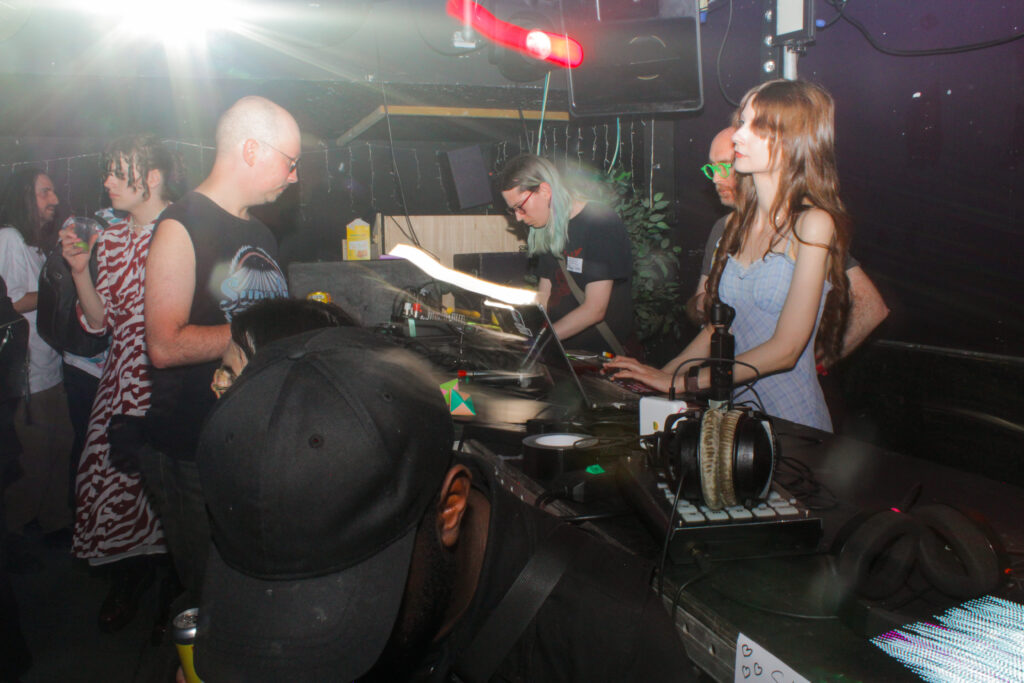
The audience feels more like one of jazz, quietly standing and bobbing their heads whilst they watch a performer (or several) code. These are computer people.
This proliferation is due to a committed grassroots community hosting events, fundraisers and meetups. In many ways, the persistence of algoravers is owed to the culture’s roots in Free Open Source Software (FOSS): software which is free to use and has its ‘source code’ open for anyone to view. It goes further than this, as ‘FOSS’ implies a philosophy of openness which extends beyond letting people read the code; it’s generally an anti-capitalist (anti-big-tech, at a minimum) stance that computer software should be free and available for anyone to use, study and modify. Some people embellish the name as Free (as in freedom) Open Source Software, or FLOSS, where the ‘L’ stands for ‘Libre’.
Tidal Cycles uses a ‘copyleft’ license, wherein anyone is free to use and modify the source code so long as their resulting software stays open under the same terms. And the people modifying and extending the software are the computer people at the rave. Software under this model depends on a deeply committed bunch who are willing to spend their free time building software for its users rather than a profiteering company.
The same is true for where people upload their code. Most open-source projects live on GitHub (Microsoft), but more and more live-coders are moving to Codeberg, a German non-profit. Codeberg recently banned vibe-coded projects (ones written mostly by AI) for several reasons. One of these reasons is ‘license laundering’, where copyleft projects are stolen and reproduced by LLMs trained on their source code. In some ways it’s a less convenient environment, but it is supposed to preserve the work hosted there. I say preserve, because as Codeberg explained, one of the drives they use to store people’s projects cost €700 a few years ago, but is now €3700 due to the data centre build-outs. They need to reduce the load by cutting the least-community-fostering projects.
So a FOSS community (the people who use and make the software) is most healthy when the openness extends to personal connection, and the culture welcomes people from outside, because these are the people who might potentially maintain a highly complex piece of software like Tidal Cycles. The algorave culture is self-sustaining in this way.
TOPLAP (laptop flipped around) is a group founded in 2004 by a handful of live coders, including McLean, at a meeting in Hamburg, which promotes and creates live-coding events, with local nodes organising independently around the world. In London, the local node is called ‘London? Live? Coding?’. As an organisation, they have also helped to form some principles of live-coding. In 2004, they wrote a draft manifesto which begins: “Give us access to the performer’s mind, to the whole human instrument.” The manifesto centres the medium, which is algorithms, and the performer (the ‘live-coder’) and their interaction as the subject of the art, rather than pure spectacle. Code or physical technologies are to be exposed to the audience, and the ways in which the performer exists in them.
These physical instruments are often wearable. Musicians with zombie-technologies affixed to their wrists, necks, fingers and hips; the most expressive lengths of one's body. There are bespoke machines which can detect micromovements in 20 or so muscles in your arm at one time, so that when the performer clenches their fist the room shakes. Or another performer with bespoke rave gloves which control the envelope of a synth.
Another artist, 睿[REI] (Ruiyang Wang), has a 3D cone rotating around at the centre of a sea of nodes on their visual programming interface. “What does it do?” I ask. “It’s an attractor,” a kind of function driving an evolving signal. “The signal, as from a chaos system, is an algorithm existing in 3D space. I have a transformation matrix to project that into 2D.” The TOPLAP manifesto acknowledges that it’s “not necessary for a lay audience to understand the code to appreciate it, much as it is not necessary to know how to play guitar.” As all live-coders create and perform with their own instruments, we are offered a look into the world through their eyes, and this openness is explicit and embedded. “Why does it do that?” I ask. “Everything is signal, the signal lives in the space, and turns into the sound and the image.”
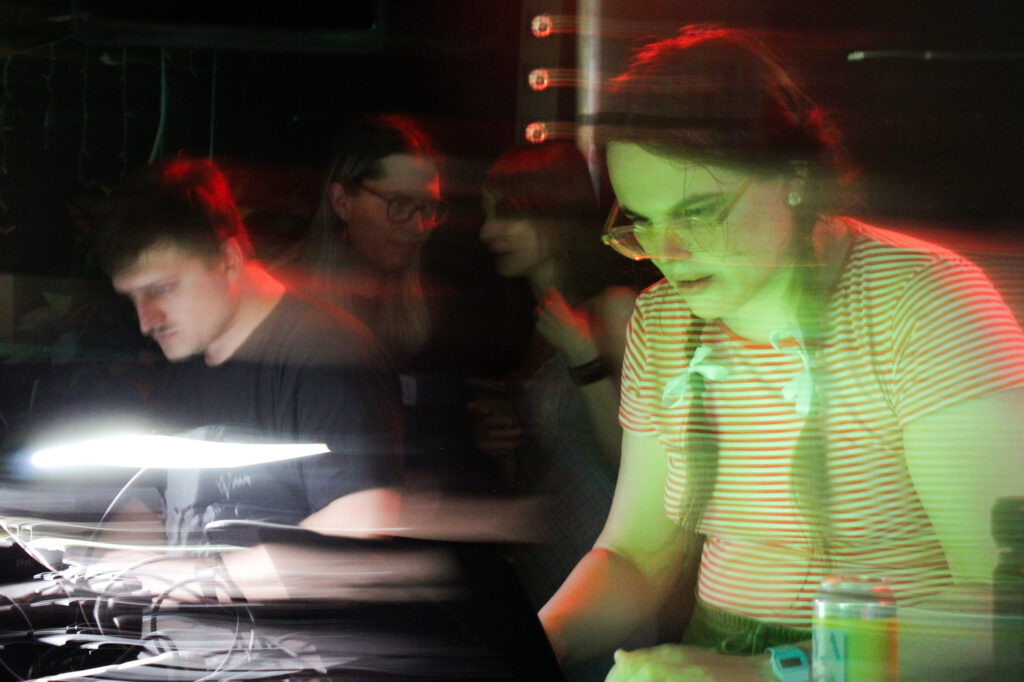
Photos by Nadezhda Khalid.
Musicians with zombie-technologies affixed to their wrists, necks, fingers and hips; the most expressive lengths of one's body.
I’ve heard something like that before, adjacent to an algorave: “I have an almost religious belief that life is made only from signals.” Analogue signals are continuous and infinite. Nothing can be seen or measured if it is not a signal. Digital signals are discrete, sampling the world (the analogue) at fixed intervals to create an approximation so similar as to be imperceptible. But there is a philosophical difference, for some, hence some people gravitate to circuitry, hardware and raw electricity (the analogue) and some to digital instruments, audio samplers, etcetera.
Code is neither analogue nor digital, it is linguistic. It describes the performer's intentions and then enacts them. Code is not like glue, which dries and sets in place, it’s the thing which is glued together. It is hard to escape code. Each person has their own relationship with the code, as one has a voice when writing. Live-coding exposes this, whichever technology the performers use or whatever the sounds.
You may think of computer people as insular, hiding in dark rooms, obsessed with something that is frankly ordinary. They met online, like everyone else. Is it fair to call them a community, when we are all computer people?
It’s the age of computer people. Behind the code, and inside it, and in all machines, there are simply these little mechanisms of cause and effect. But they are all authored, like words.
At algoraves, the live-coder shapes signals and moves the mechanisms that make the computer people move their feet, bob heads and chat around.
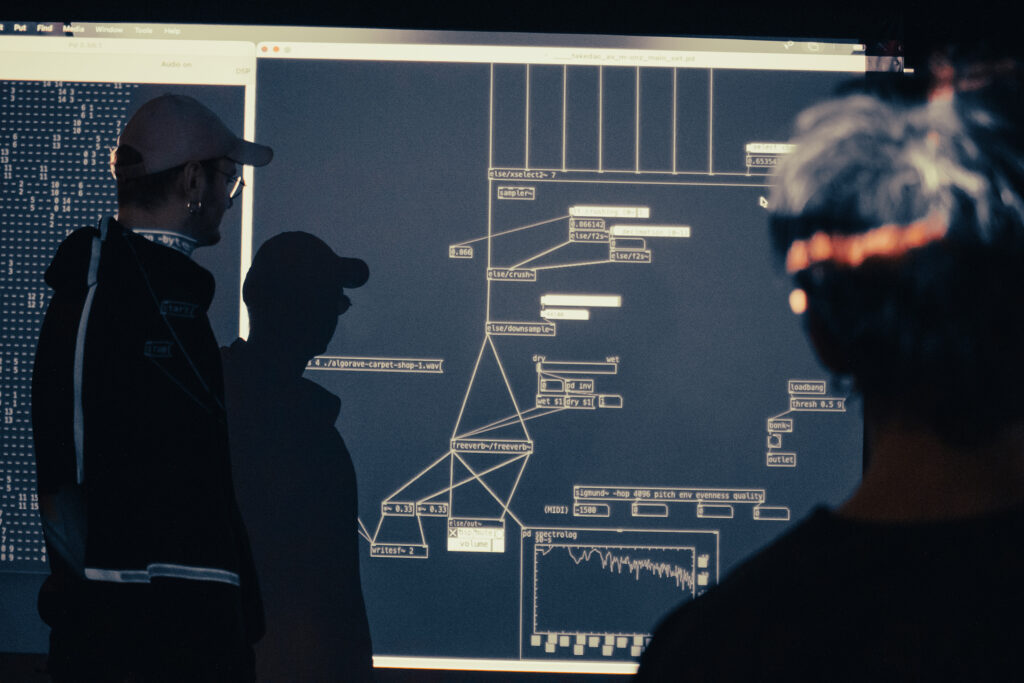
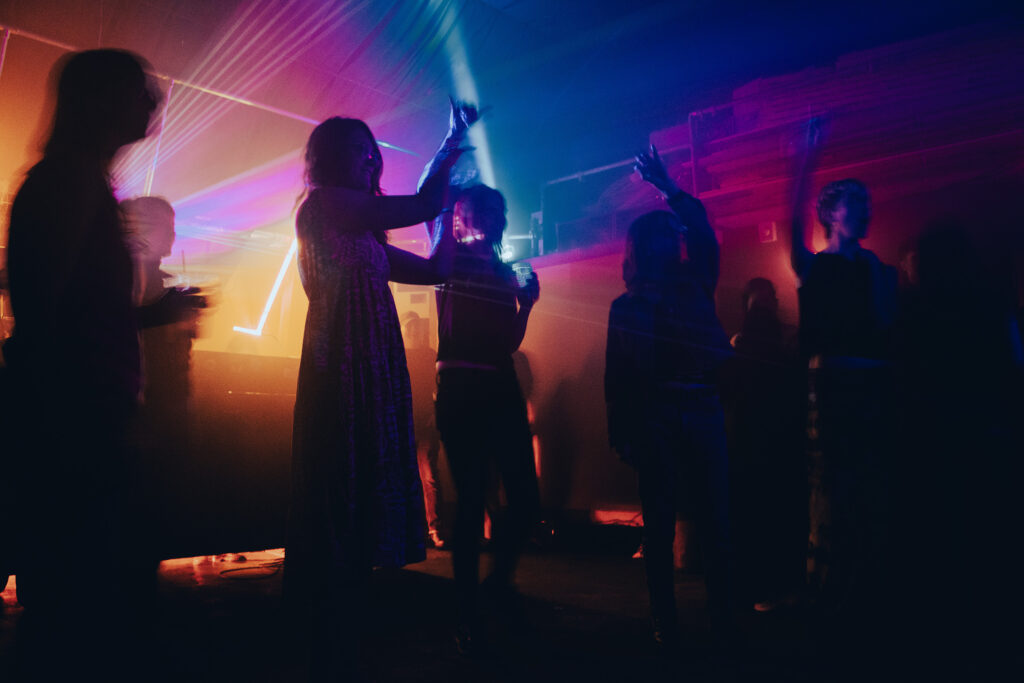
Photos by Mike Cook.