Where the Drums Clear the Air
On a full-moon night in Jamaica, Nyabinghi, one of the most ancient Rastafari ceremonial practices, unfolds as a living ritual in which drums, chants, and fire gather bodies into a shared field of clarity. “Tonight we a chant,” a young Rasta tells German Iraki, author of the book 'Get Nuff Nuff Data'. “We a do the opposite of what the evil man a do. We use the moon for prosperity and to fight evil spells.” Nyabinghi uses rhythm to cleanse; it is a kind of spiritual technology, transforming communal presence into a practice of grounding, healing, and collective awareness.
The key innovation of Jamaica’s dub music lies in the practice of subtracting elements from a song rather than adding or manipulating them. A studio engineer would have a fully recorded song with drums, bass, keys, and vocals, each living on a separate mixer channel. In dub, the track is reinterpreted during a live session, with instruments fading in and out of the mix. Anyone who dives into dub can feel its ghostly atmosphere, where the absence of the subtracted layers carries a massive presence. This Ghost of Dub is a useful way to look at the entirety of Jamaica’s music culture.
The music scene in Jamaica is fast-paced, in top gear, in constant competition and collaboration; the two often operating as one. From its early days, its geographical location as a gateway to the Americas, in the shadow of the slave trade, played a key role in shaping musical technologies and traditions. African string instruments evolved into what we know as the banjo, and mento music inspired the rise of ska, then reggae, dub, dembow, and dancehall. Many of its sound innovations took root across the globe, including New York’s early hip-hop links to the sound system culture, dembow spreading across South America to become the global phenomenon of reggaeton, and the UK’s endless Jamaican-influenced genre fractals. In this rapid motion of creative inventiveness, there’s little place for nostalgic sentiment. The sound system is sustained by movement, aligning itself with the current and the new. Bound to shapeshifting. Similar to the elements that faded out of that dub, memories have a ghostly presence in Jamaican music, some unspoken, yet they are embedded in every step of its evolution.
This Ghost of Dub is a useful way to look at the entirety of Jamaica’s music culture.
During my visit to Jamaica, it took me some time to wrap my head around the presence of music on the Island. Sound cuts through the fabrics of existence, as life arranges itself around it. On dark, hot nights, over the loud buzz of crickets, I would hear sound systems playing, blasting bass that vibrated through the heat. Always on. Music didn’t need consolidation or an official platform to exist; it was more flexible. All that music was looking for was a human encounter to spark up its melodies once again. This shook me to the core, redefining my understanding of folk—music rooted in people’s relations.
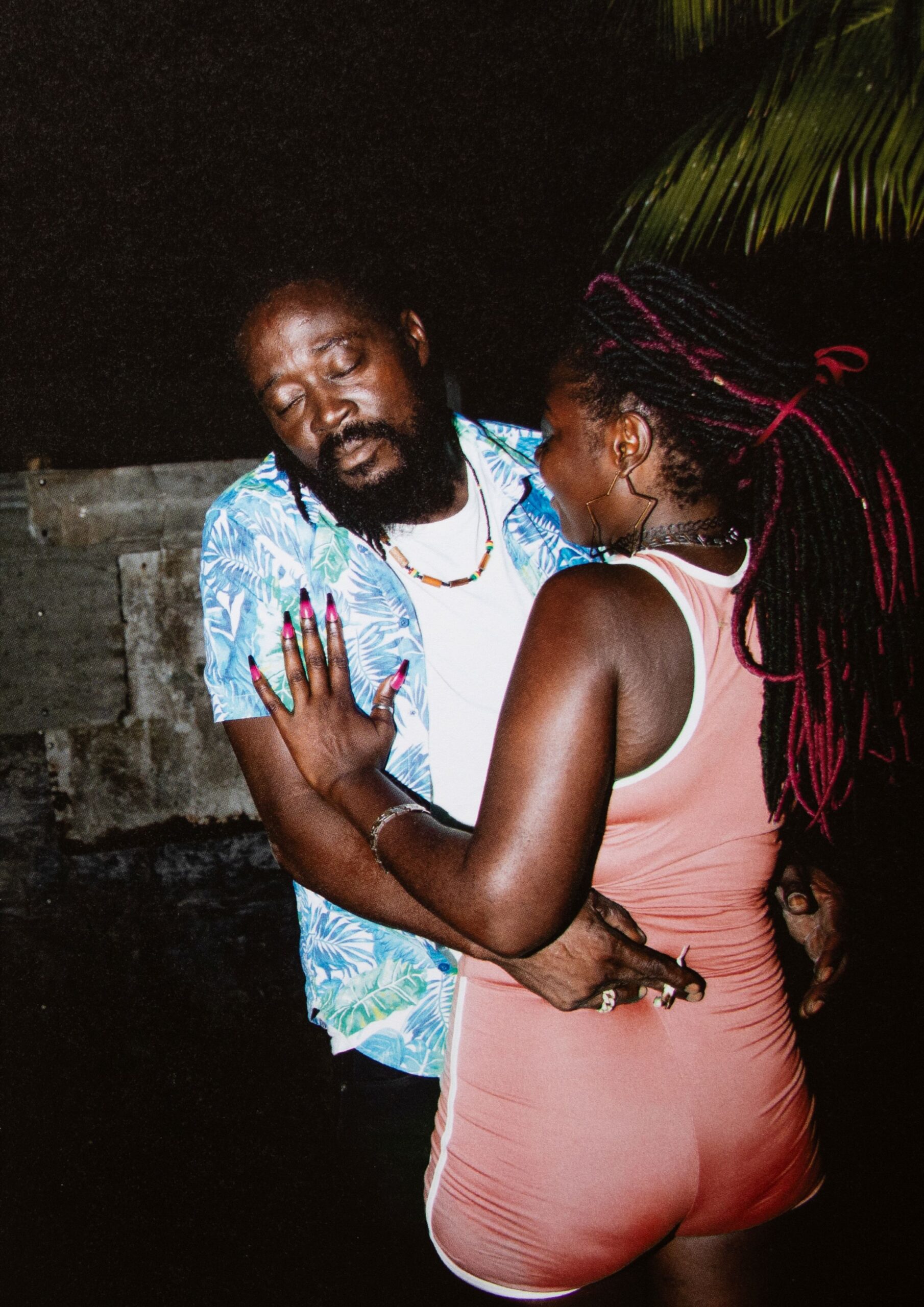
I spent 3 weeks on the outskirts of Spanish Town with I Jahbar, musician and ambassador to the ‘Duppy Gun’ label. He introduced me to Jamaica, as we moved through different musical spaces, documenting what was documentable.
On a full-moon night, I Jahbar told me there was a Rasta ceremony taking place at the riverside. He was excited to take me there and was imagining with his good friend Oki, how I would capture the whole thing on camera. I didn’t know what to expect, but I was prepared to be surprised. I packed up my camera, clipped a small Lavaliere mic to I Jah’s shirt, and we left the yard.
After some walking in the dark, we arrived at a party on a dirt road. People were hanging out, relaxed, with big speakers blasting an old Jamaican love song. The DJ was roughly shouting into the microphone, cutting out the music.
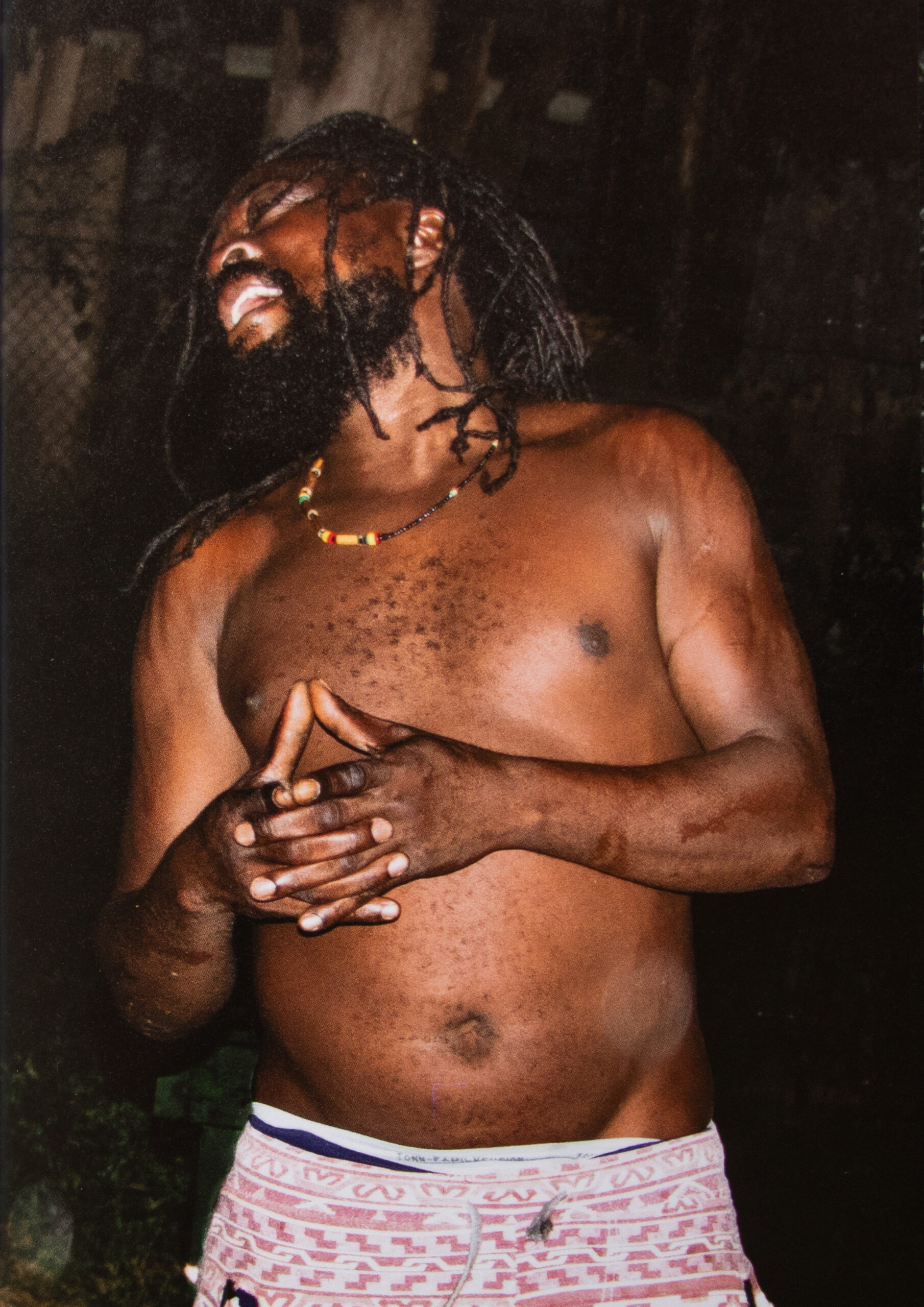
A desire came over me to stay there and blend into that strange gathering. I saw a youth nicknamed Country, whom I befriended during my visit, hopping around joyfully. He seemed to be enjoying himself, talking with everyone around him.
We passed right through the party, carrying the bass frequencies with us.
A new sound joined the mix and grew more dominant as we approached a small river channel. A slow, repetitive drum rhythm; vocals patiently intertwining with it, always as a soft guide to a dominant beat. It was the sound of the Nyabinghi rhythm, a Rasta ritual music that felt like it had direct access into my body. An orange fire lit up a little gathering across the channel, revealing two young Rastas sitting on wooden stems, drumming and chanting. One of them had his eyes fixed on the dark sky, waiting for the moon to rise. We could still vaguely hear the sounds of the party, but they weren’t relevant anymore; the chants, drums, and firelight took over my attention, and I sat down on the ground.
Later on, Country joined us as well. He was usually all hyped up and full of energy, but at that moment, he stood quietly. I knew the youth had a hard time, leaving his mother’s home to work with his uncle in construction. I realised the ceremonial fire was a place to simply come and relax in good company, to clear your head and heart.
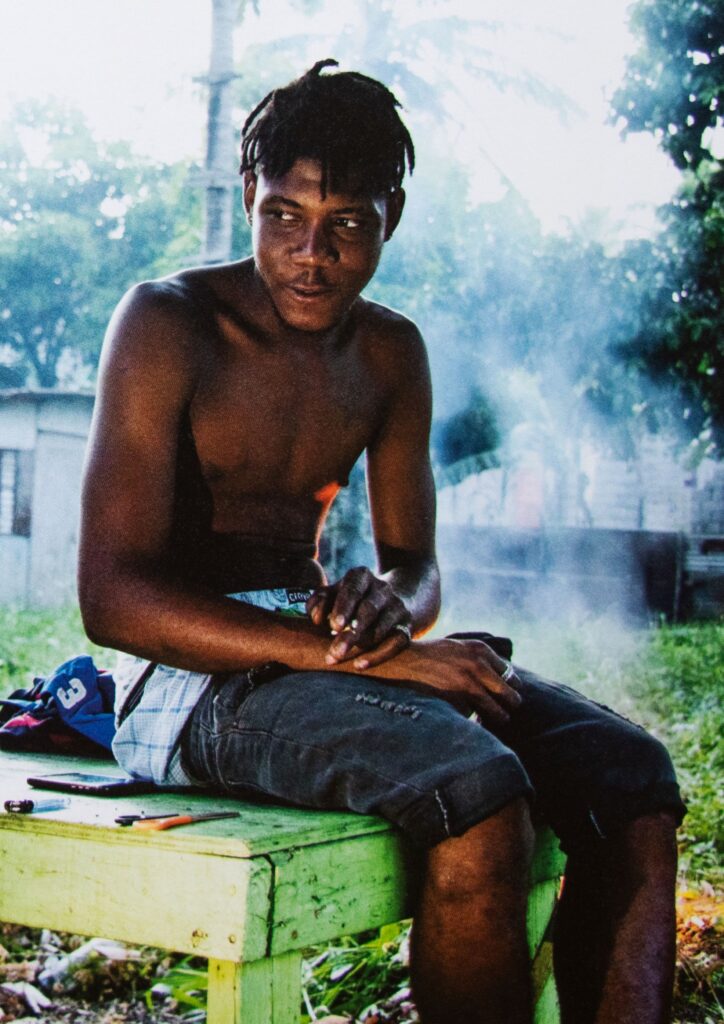
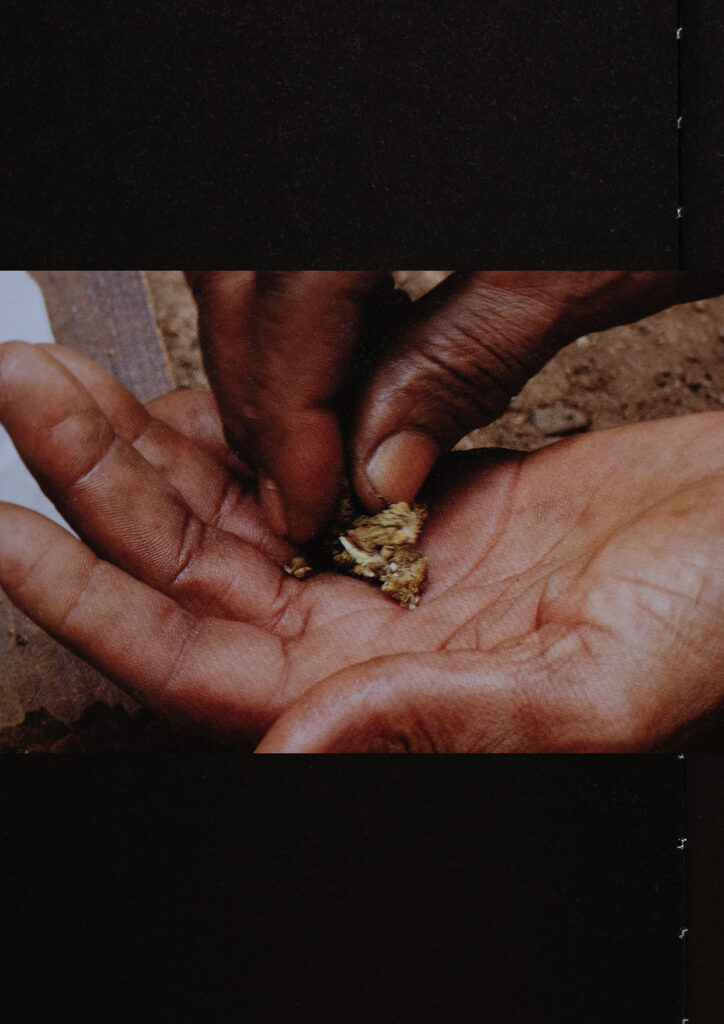
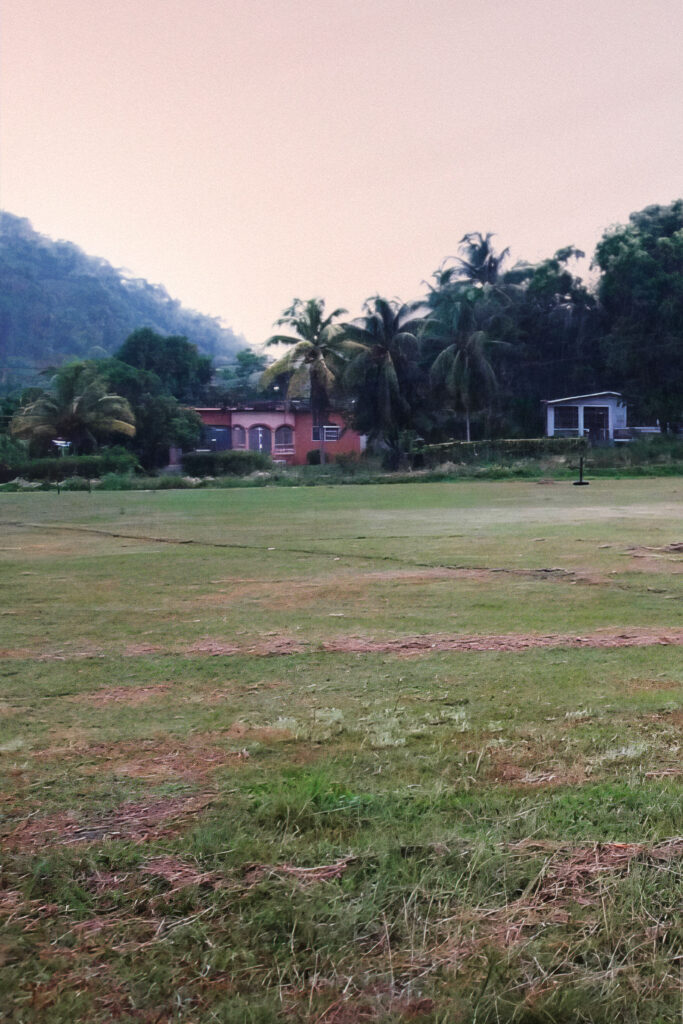
My camera was blind in the dark, and my microphone was dead, but the little mic on I Jah’s shirt picked up some audio. Here are some of the things the young Rasta said that night:
‘I will give some explanation, so everyone can have more clarity a wa happening right now. Right now, dem no want you to cross over that bridge deh, and they close your eyes. You a go search and nothing too clear, you know? We want to clear up, that’s what we a do right now. Clear up. So, the full-moon and this full-moon fiya, have a certain energy with It, which… we no really overstand. You see, what the moon do, when the moon a the fullest, earth, everything rises. The ocean rise up. 70 precent a your body a wata, so your capabilities dem rise up. Thing we are good at, you get better at. Notice, a man wa mad, at this time him get more mad. Right?’ laughs ‘No, seriously. Clarity me a talk ‘bout. Overstanding, zeen? A man who lovin’, get more lovin’ dem time ya. A man wa angry, get more angry dem time ya. zeen? If you want bad thing, it will give you bad things, you zee me? So we go back to the purpose of why we’re here tonight.
We here a chant. because… at this time while we deh yah so, you have people pon earth they use the moon for evil. You see the moon tonight at its fullest, is a power source. You understand me? You got some people right now pon earth, bredas and sistas, where dem a send out big evil pon earth tonight as we speak. Them use the moon to worship satan and send out war. Some youth Just have dem gun, some spirit just take over them.
Tonight we a chant, we a do the opposite a wa the evil man a do. We use the moon for prosperity and to fight the evil spell.’
Sound of a rattle shake, slow and rhythmic.
"You understand me breda? Get inna your Avatar mode. Clarity."
‘That a one level of what we a do. So when we do this, it may seem like a mockery to some people, but remember mi bredas and sistas, you see, inna you right now what keeps you standing, one thing called your soul that. The soul breda, if it move out a you, your body a drop a ground. The soul never die. It never die. It no new, it get a new flesh. The same people who light up them thing, and send evil spell right now, them do everything inna them power to keep you from knowing anything about that soul that’s inna you. The soul inna you, It GREAT. You understand me?’
Adding more wood to the fire.
‘You know the Cartoon Avatar? When Aang tap inna him avatar mode and him eyes get white? Dem soul that and him remember all a him past life. We are sleeping now and Babylon do everything fi keep we a sleep. You understand me breda? Get inna your Avatar mode. Clarity’
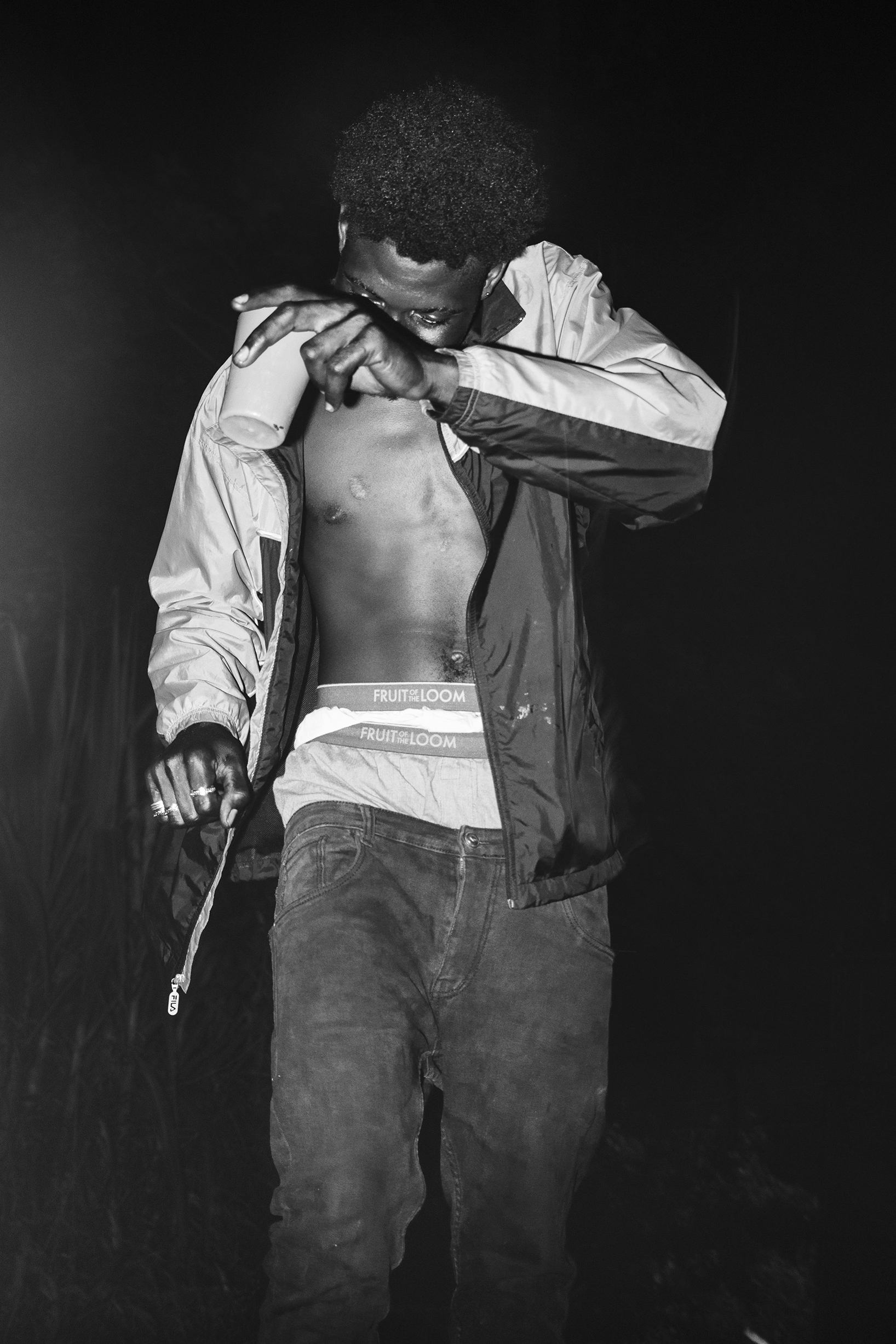
The second part of this text is an excerpt from Get Nuff Nuff Data Vol. 1 by German Iraki and I Jahbar.