Messages from the Traffic
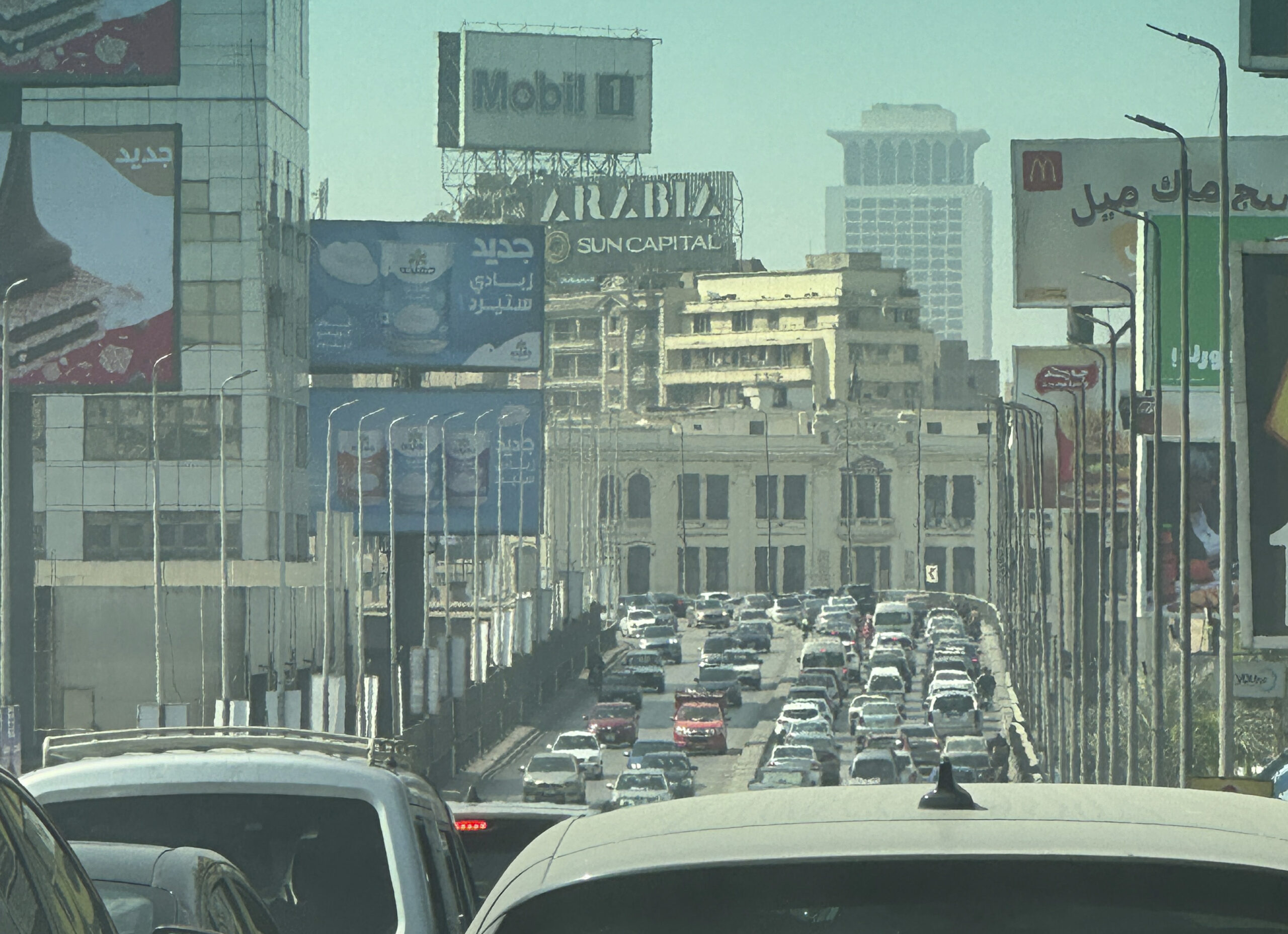
Finding himself stuck in Cairo’s traffic for 8,320 hours over the past sixteen years, Omar Mobarek started finding solace in the stickers adorning passing trucks: the Michelin Man, the evil eye, images of Sheikh Shaarawy, full-window stickers of women’s eyes, and various messages of devotion. For those who spend their lives on the road, stickers become a reflection of their values, their sense of humour, their beliefs, and their personality. Over time, these stickers have become one of the most recognisable parts of Cairo’s contemporary visual identity.
I remember one day, sitting in classic deadlock Cairo traffic, surrounded by an endless loop of honking; different pitches harmonising together into a never-ending soundtrack.
Beyond the noise, cars were squeezing themselves into spaces you couldn’t imagine they would fit into, defying all the laws of physics, but somehow it all worked, like Lego pieces. In a city where everyone is always late, I find it ironic that people will reach for that extra centimetre to save a fraction of a second. Time truly becomes relative in these moments. You couldn’t tell where it started or ended, and your mind starts to wander. Who are all these people? Where are they all going? Am I going to be stuck here forever? Where is that smell coming from? I hope it’s not from inside the car. It wasn’t. But that was the least of my problems. I was almost an hour late for a meeting, and at that point I don’t think it really mattered. No amount of charisma can make up for an hour of waiting. And I wasn’t alone in this. You turn to the car next to you, and the person sitting there has exactly the same look on their face. Nothing brings people together more than collective suffering. Naguib Mahfouz said this. Not sure exactly what the context was, but it really worked in this one.
I looked around, drifting into the abyss of cars and static chaos, and saw a sticker of a smiling tubular man running towards me. The Michelin Man. Seeing him smile in the middle of all this was too good a frame, so I took a photo. I looked in another direction, and there he was again, smiling and waving. Another photo. A few minutes later, a truck pulled up to my right, and there he was again, smiling with his arms folded. I later learned about the frequency illusion, a cognitive bias where something you’ve just noticed suddenly seems to appear everywhere around you. That’s when it all began.
I moved to Cairo 16 years ago from Southern California, and it almost felt like a different planet. When you land on a new planet, you can’t help but notice everything: the things people living there overlook because they’ve been part of their backdrop day in, day out, for years. It’s all new; it’s all loud, colourful, strange, and beautiful. With time, observing your environment becomes second nature, because you constantly need to adjust, and part of that adjustment is familiarising yourself with every little detail to understand how this whole place is put together. Or at least that’s how my mind works. There’s a specific kind of chaos in Cairo. For someone experiencing it for the first time, it feels like a shuffle of motion, sound and scents all at once, but once you sit in it long enough, it becomes predictable. You start to pick up on people’s habits, the patterns in the movement of the cars, motorcycles and microbuses that swerve and move through the streets like a contemporary dance.
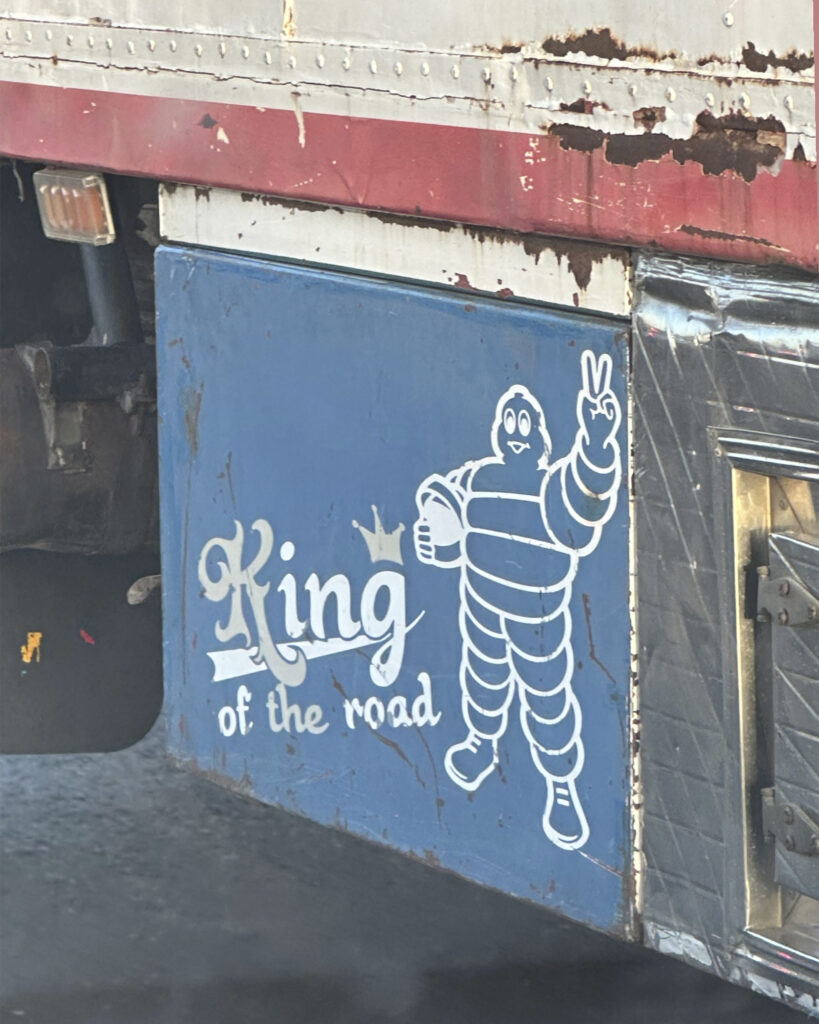
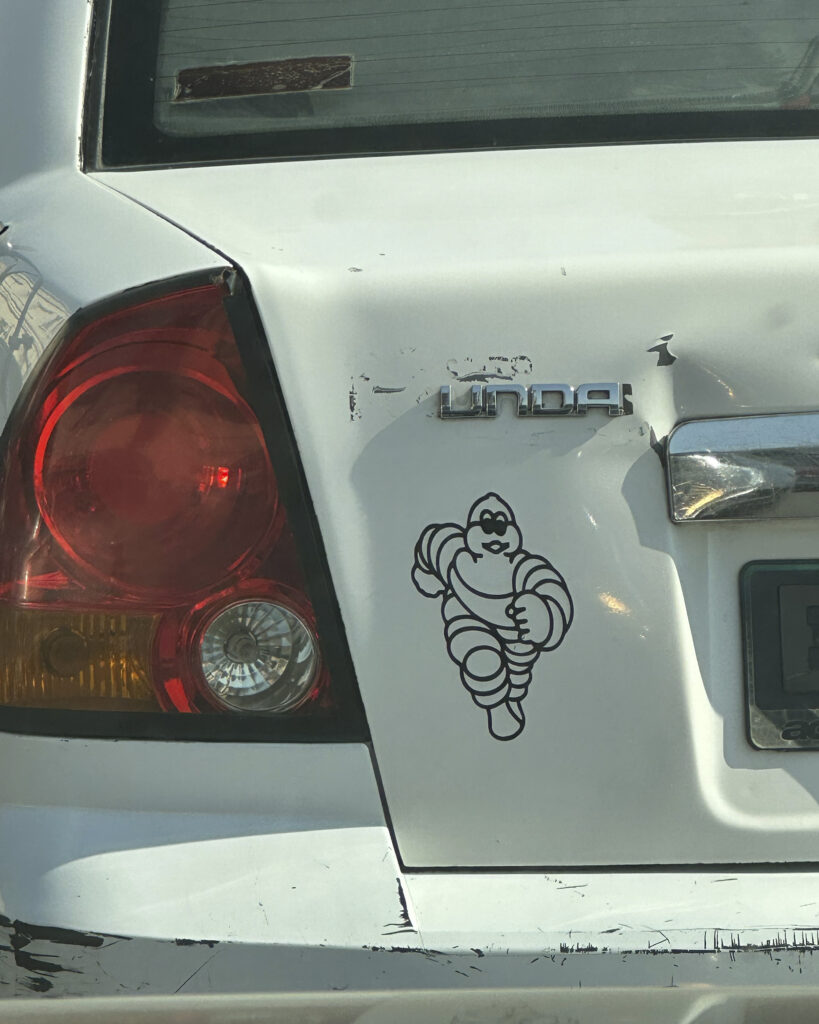
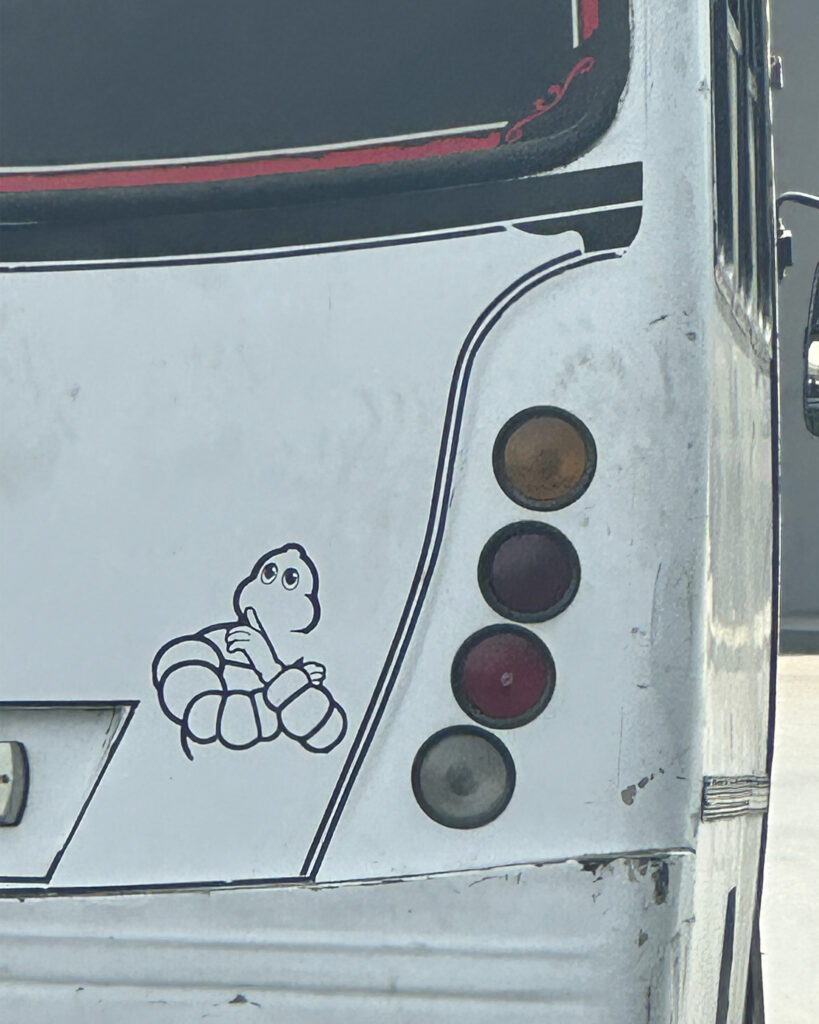
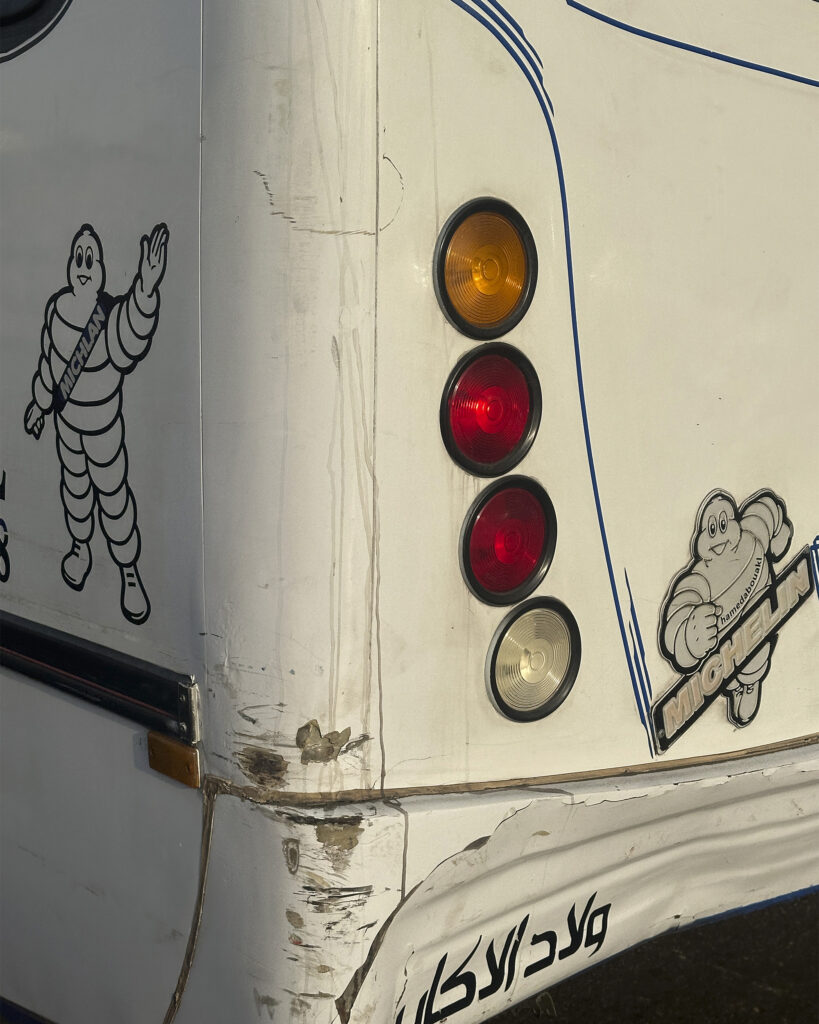
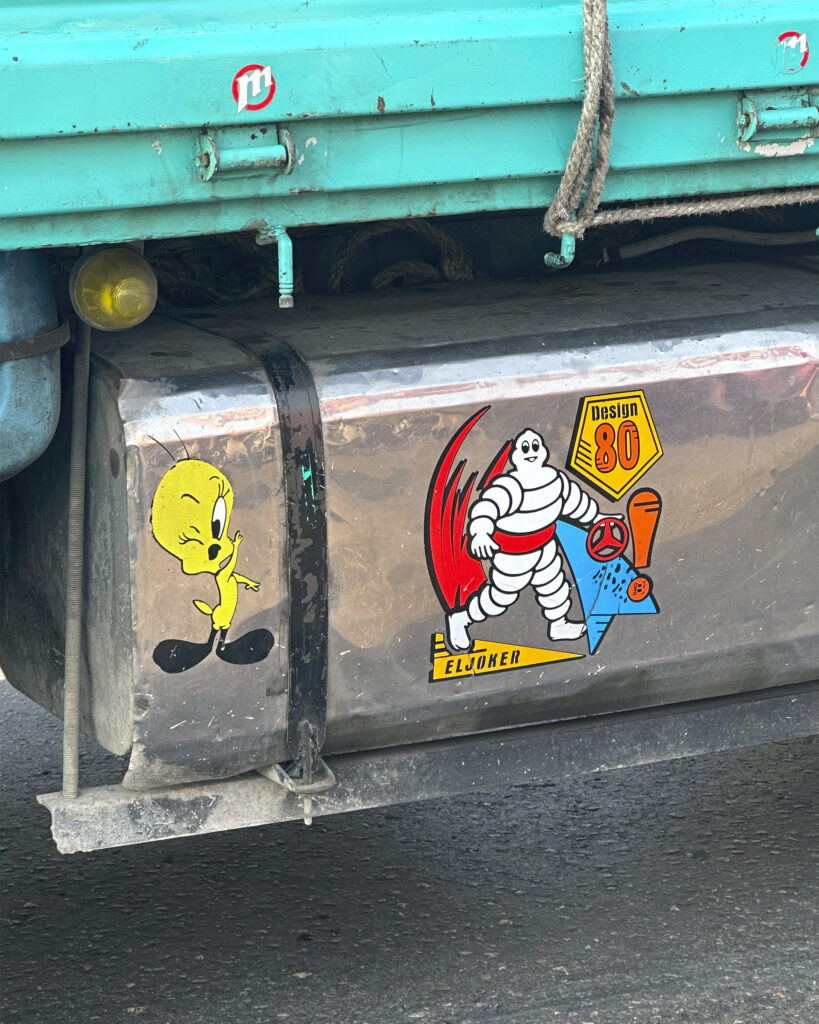
A big part of my job is going to suppliers for different types of production and sourcing every little part that goes into making the apparel I create for UNTY. Through that, I spend a lot of time in my car, driving across the city. For the last 16 years, on average I’ve spent about two hours a day in traffic, five days a week. That’s 10 hours a week, 520 hours a year, and 8,320 hours over 16 years. A collective eleven and a half months spent driving through the highways, side roads, and alleys of Cairo. Throughout all those hours, one of the things that has kept my commutes entertaining and inspiring is the stickers.
At first glance, just like the chaos of the city, they feel random, unorganised, and sporadic, with no particular system or intention. With time, you start to pick up on patterns: recurring stickers, images, and characters like the Michelin Man, the evil eye, images of Sheikh Shaarawy, full-window stickers of women’s eyes, and messages expressing devotion to God, friends, mothers, and kids. Sometimes all at once. Most of these cars are the drivers’ actual bread and butter, meaning they spend most of their days on these roads, way more than the thousands of hours I’ve spent. These stickers are a reflection of their identity, their values, their sense of humour, their beliefs, and their personality.
For the last 16 years, on average, I’ve spent about two hours a day in Cairo’s traffic, five days a week. Throughout all those hours, stickers have kept my commutes entertaining and inspiring.
Over the years, I’ve got into the habit of taking pictures of them, sometimes focusing on specific ones more than others. Every few months, a new recurring sticker becomes my focus, and without really meaning to, this has grown into an extensive archive of all the types of stickers on the road, one that is now on its way to becoming a book. This process of collecting also allowed me to see all the different personalities on the streets.
Predominantly, you have faith, mentions of God and praise to Him, all very reflective of our culture. This could be as simple as the word God, “praise be to God,” “pray to God,” or one of the many proverbs about Islam’s virtues, such as patience and forgiveness, or simply a reminder of God’s grace and the importance of being grateful for it. On Christian drivers’ cars, it’s a cross or an image of the Virgin Mary. On almost every car, you will find at least one sticker that speaks of God. The second most common mention is their mothers. In a way, it’s an extension of religion, since being grateful and loving towards your mother is a very important virtue in Islam. With those two being the most featured, the rest is all fair play.
You have the romantics, speaking of love, or rather the lessons learned through it, how love hurt or tricked them. They’re usually just a couple of words, but they always reveal so much about the person that’s behind the wheel. You have humour, sometimes light, sometimes dark, sometimes very dark. The literal translation of one reads: “Why carry tomorrow’s burdens when God can kill you at any moment?” Some will see it as wisdom;, personally, I couldn’t stop laughing. There was a bus I used to catch every day on its route, with a giant sticker that said “leave me alone,” and another one that said “the prince of tenderness.” They clearly have something to say, and just a couple of words leave an impression, enough to know the type of person driving that car.
Over time, these stickers have become one of the most recognisable parts of Cairo’s contemporary visual identity. Almost every taxi, microbus and truck in the city carries them, and most come from one place: Tawfikiya, a single street in Downtown Cairo between Ramses and Orabi. It started as a fruit market in the 1920s, and around 2000, car parts traders took it over and turned it into the city’s best-known market for car parts and accessories, stickers included. While much of downtown has been renovated and polished, Tawfikiya still looks and operates much as it always has, because it serves one audience: the drivers.
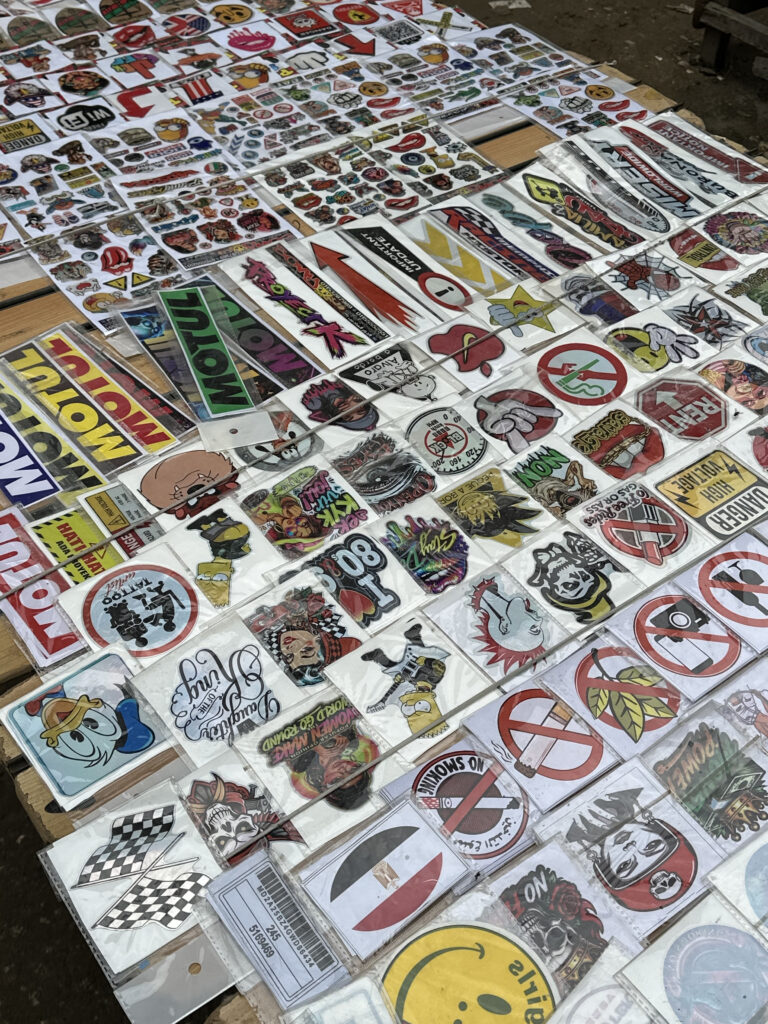
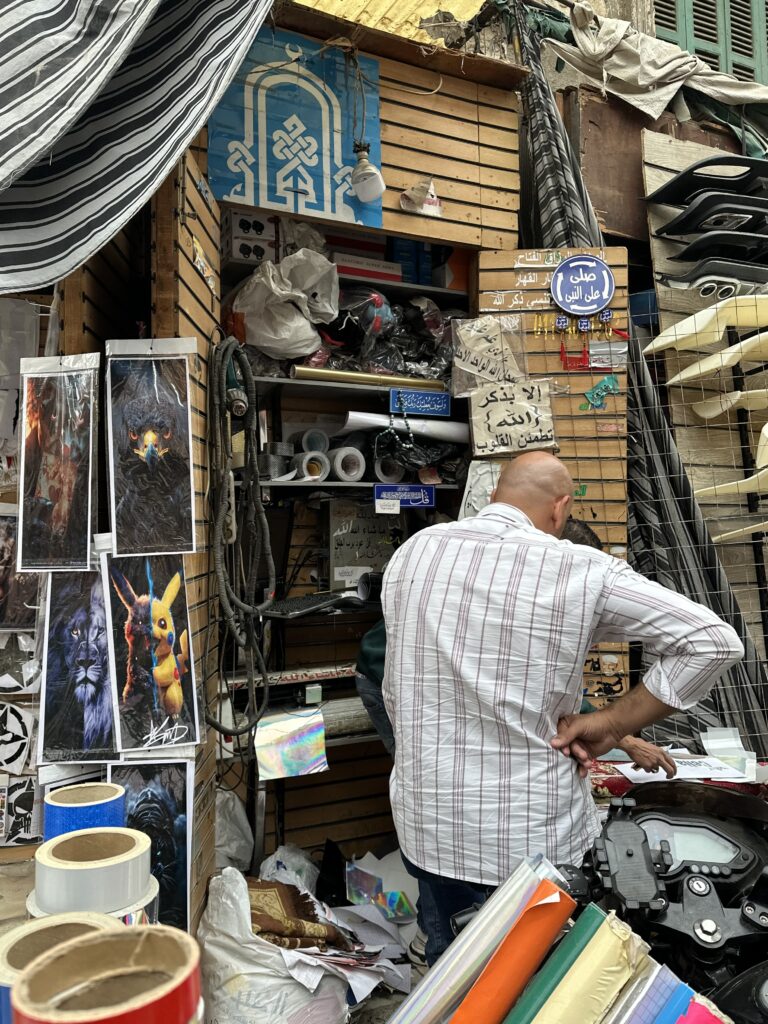
Nobody designed this language from the top down. It was built by the drivers, the printers and the shop owners, borrowing from religion, slang, cartoons and bootleg logos of global brands.
Whenever I’m in Tawfikiya, I ask the sellers about the stickers. It’s usually met with enthusiasm, since the normal interaction between seller and driver is just point and buy, nothing about the design or the sentiment behind the message. Without me even explaining what I’m doing, they walk me straight to the best sellers and the popular ones. They know the brief better than I do. A mother would pass by asking for stickers about mothers, a gift for her son’s car and a small reminder of her affection for him. An older gentleman would point at a fiery eagle overlaid with the Egyptian flag, either an Ahly fan, one of the biggest football clubs in Egypt, or just really patriotic, since the eagle is on the flag too. The second option is highly unlikely. Then you have the ones who come with an idea, a quote or a symbol of their own, head to one of the custom sticker printers, now an option in Tawfikiya, and get it printed on the spot. Every sticker on the road starts with one of these small exchanges, a few seconds at a stall that end up riding around the city for years.
Nobody designed this language from the top down. It was built by the drivers, the printers, and the shop owners, borrowing from religion, slang, cartoons, and bootleg logos of global brands, and mixing it all into something that could only come from here. Over several visits to Tawfikiya in the past few years, I started collecting the actual stickers. Alongside the photos I’ve taken from behind the wheel, chasing a microbus through traffic with one hand on my phone, often at the cost of a daily near-death experience, they make up the archive that is now being turned into a book. I believe it’s an important record of a specific part of Cairo’s visual language during this decade.
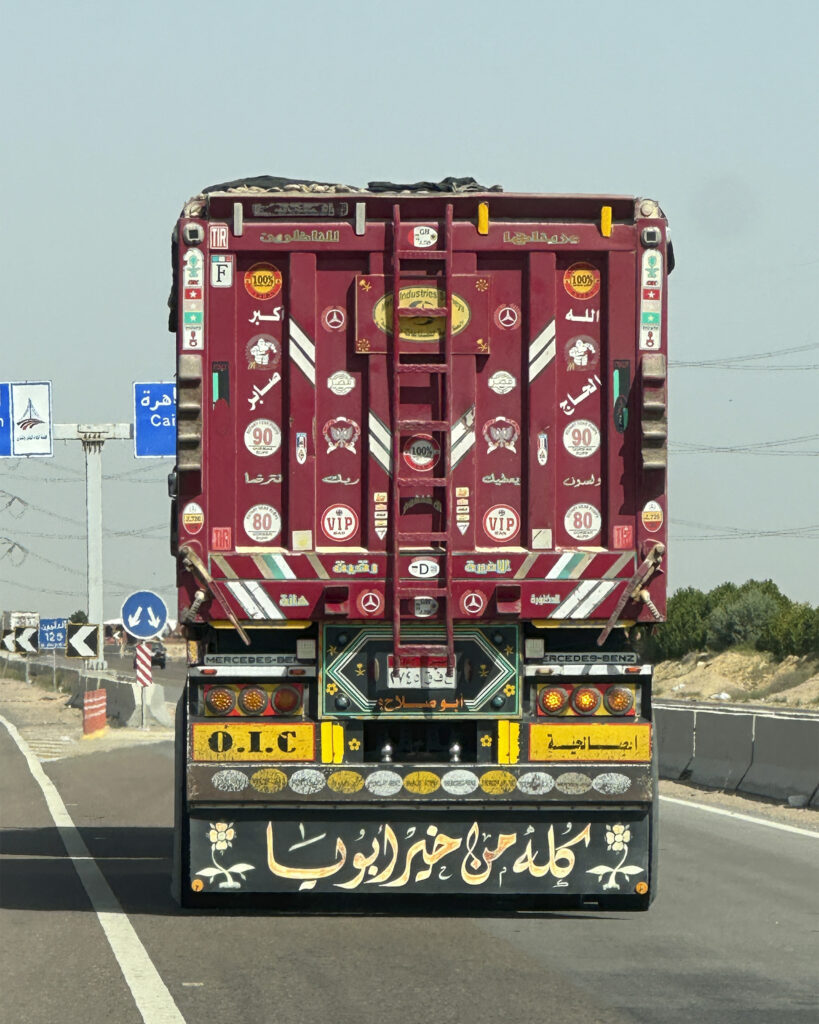
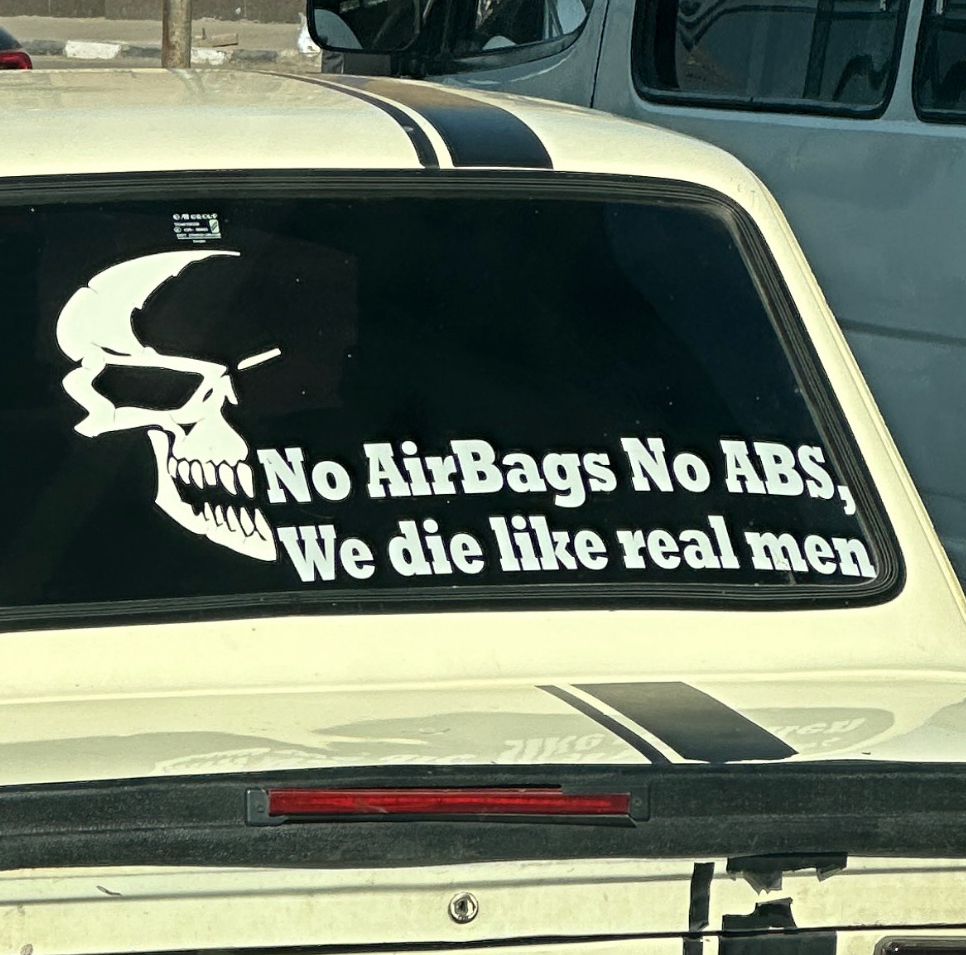
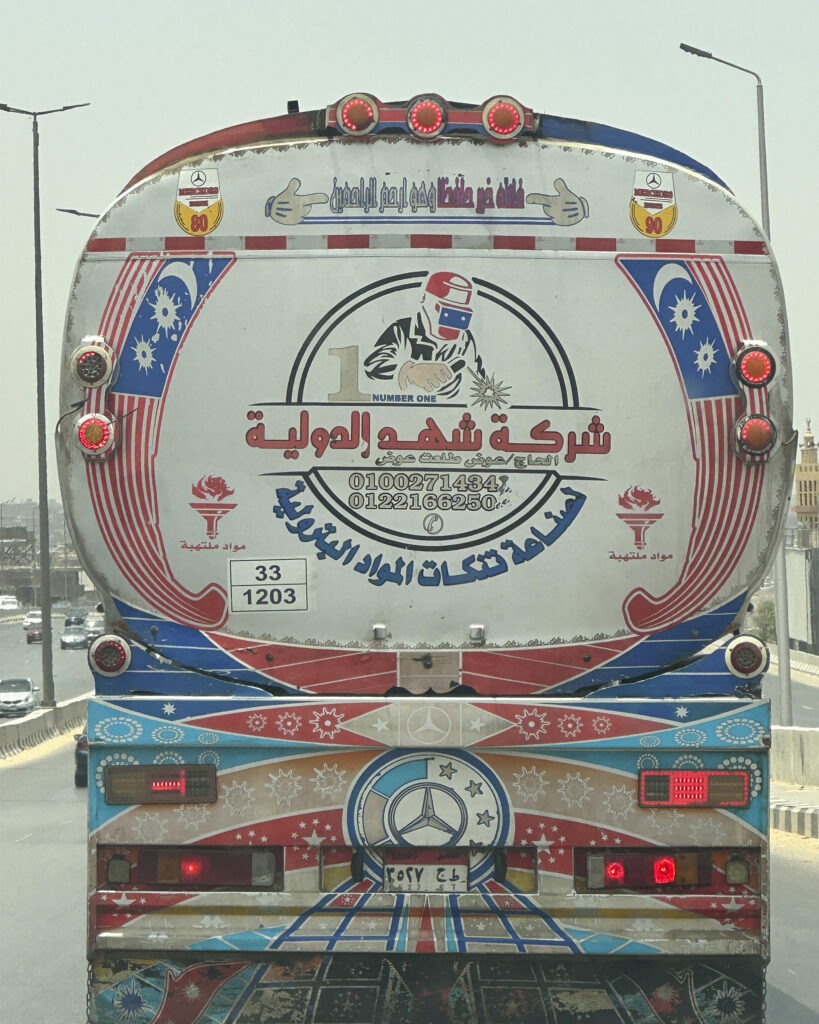
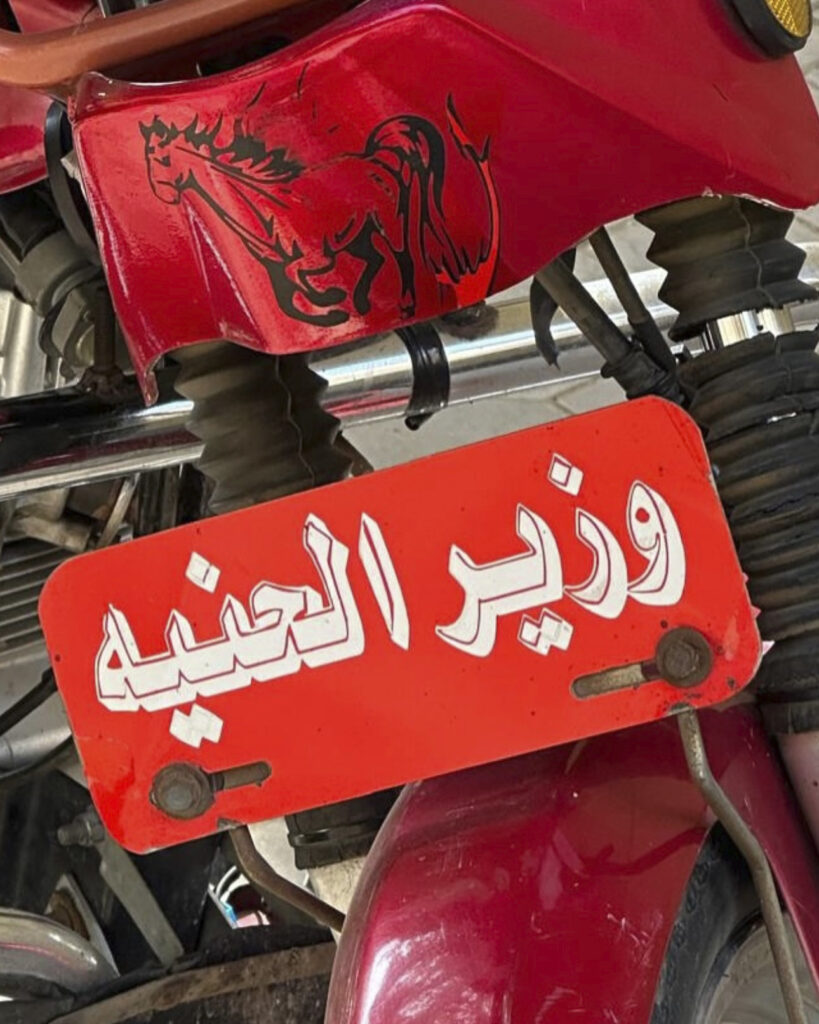
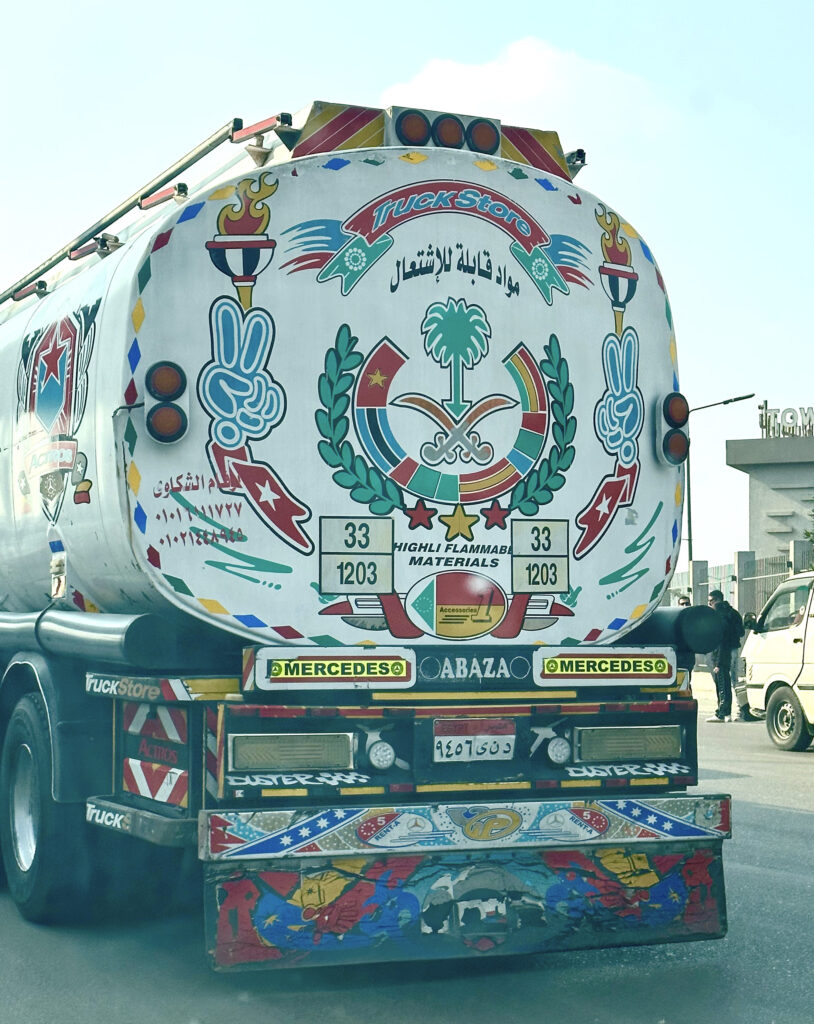
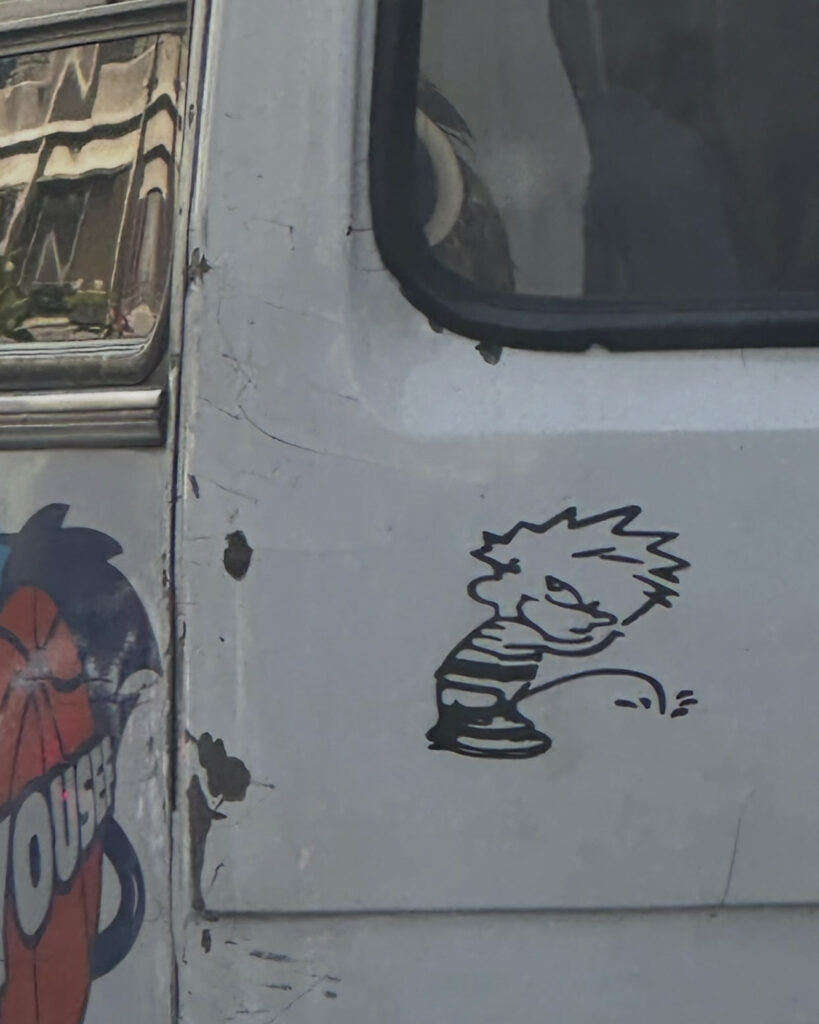
In a city of over 25 million people, it’s easy to blend into the chaos, to almost not exist. These stickers give these drivers the chance to say something, to engage with the people around them, to be somebody. And Cairo isn’t alone in this. In Pakistan, trucks are hand-painted from bumper to roof with flowers, peacocks, mirrors, and lines of poetry. In Manila, the jeepneys carry chrome horses, airbrushed scenes, and the names of the owners’ families. In Bangkok, trucks and taxis are dressed in painted panels, chrome, and Buddhist blessings for protection on the road, and in Beirut, the back of cars or trucks are where you’ll find a proverb, a joke or a nod to faith. Each city has its own style, its own colours and its own way of putting it all together, but the impulse is the same. The drivers want you to know who they are, what they believe in, and what they’ve been through.
It reminds me a lot of the way people pick what to wear. Some like to blend in, some like to make a statement, loud or subtle. Car to car, t-shirt to t-shirt, city to city, it’s all the same. We pick things that show a glimpse of our identity throughout our lives, creating a silent yet universal language of connection.
That’s how streetwear started everywhere. It grew out of local streets, taking their signs, their logos, and their slang and turning them into something people could wear. UNTY is a brand rooted in contemporary Cairo, and the city has always been our main reference. The sticker language is probably the most honest version of it. It isn’t made for tourists or galleries; it’s made by people speaking to each other on the road.
***


This shared interest in local culture is also at the heart of our new collection with L863, a record store in Rome. Like Tawfikiya brings together Cairo’s visual culture through stickers, record stores are places where a city’s musical influences are collected and shared. The collaboration brings these two worlds together, taking the images and messages found on Cairo’s microbuses/trucks and giving them a new life through streetwear. From the streets of Cairo to a record store in Rome, it’s another way for these everyday expressions to travel beyond the places where they began.