Kadıköy Outwards: Karga, Antipode, and Maps of Punk Solidarity
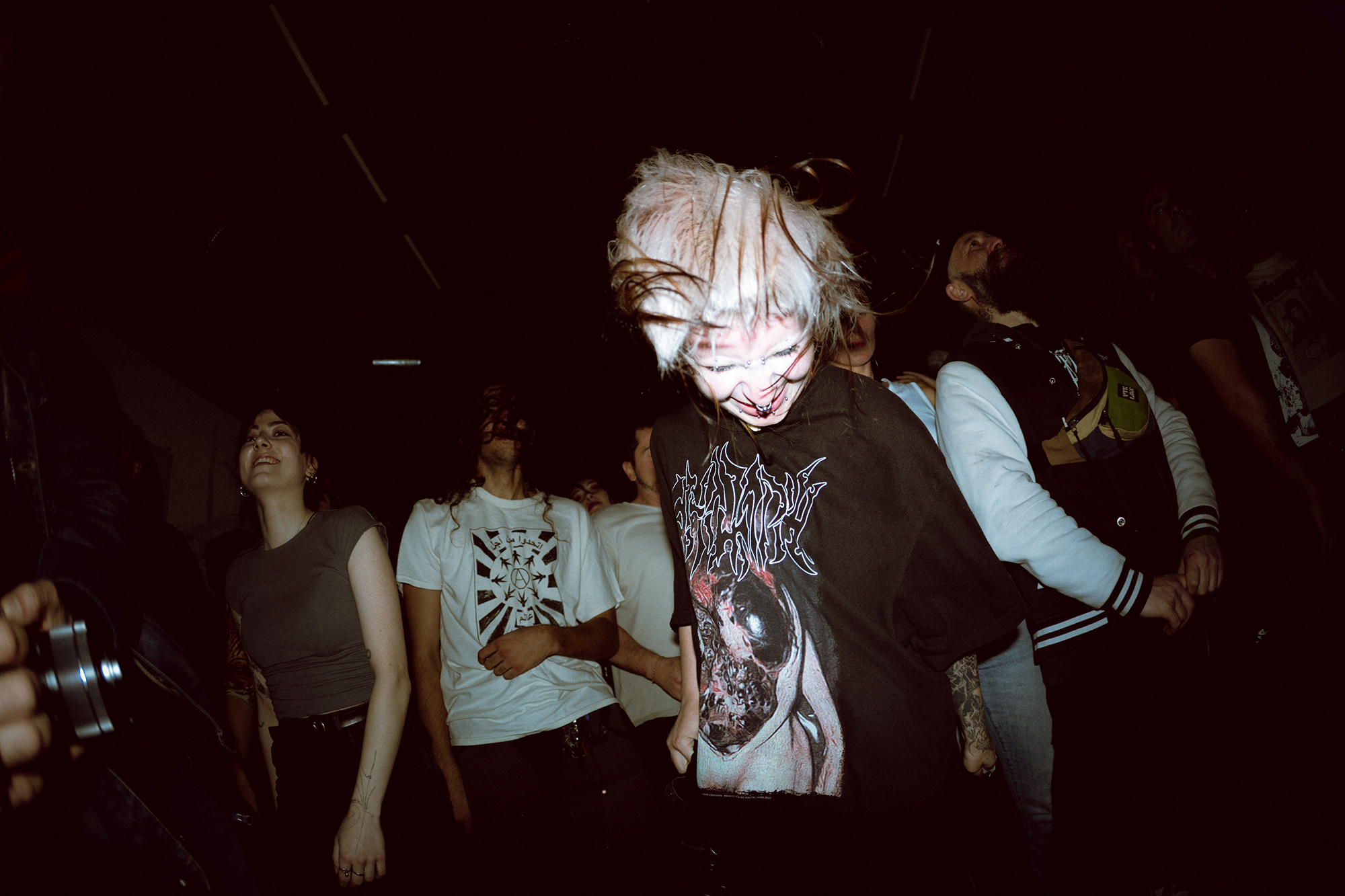
Since the late 1990s, Karga, a bar on Kadıköy’s Kadife Sokak, has been a second home for Istanbul’s underground: a place where bands form, zines get made, and solidarity networks take shape to fight against inflation, visa problems, and imaginative forms of censorship. When resources are scarce, DIY means building infrastructure and lending a hand so others can create, too, and it was in Karga’s small ground-floor garden that Doğa Sultan’s Antipode began: a project that maps DIY punk and hardcore scenes from Southwest Asia and North Africa to South and Southeast Asia, building a horizontal bridge and a shared language outside Western coordinates.
One of the most pressing challenges facing Istanbul’s independent and underground music scene is the steady disappearance of physical spaces. Rising rents, severe economic pressures, censorship, and a relentless wave of gentrification are shrinking the room for alternative production year after year. As for venues that prioritise independent bands and collectives over commercial profit, you can count them on one hand.
Over the past decade, the centre of gravity for Istanbul’s independent culture has shifted across the Bosphorus to Kadıköy on the Asian side, pushed out of the historic city centre by political pressure and unchecked commercialisation. With ferry terminals, old arcades, independent record shops, and small backstreet art studios all within walking distance of one another, the neighbourhood operates like a self-contained refuge with its own micro-economy.
Against this backdrop of spatial scarcity, Karga, tucked away on Kadıköy’s Kadife Sokak, has functioned since the late 1990s as far more than a concert hall or late-night bar; for many of us, it has been a second home. It is the starting point for countless projects, bands, printed zines, and grassroots solidarity networks across the city’s underground. It is a hub where people cross paths, ideas take shape around tables, and DIY practices are organised against the odds. Antipode itself made the leap from an idea on paper to a physical gathering space right there, in the small garden on Karga’s ground floor.
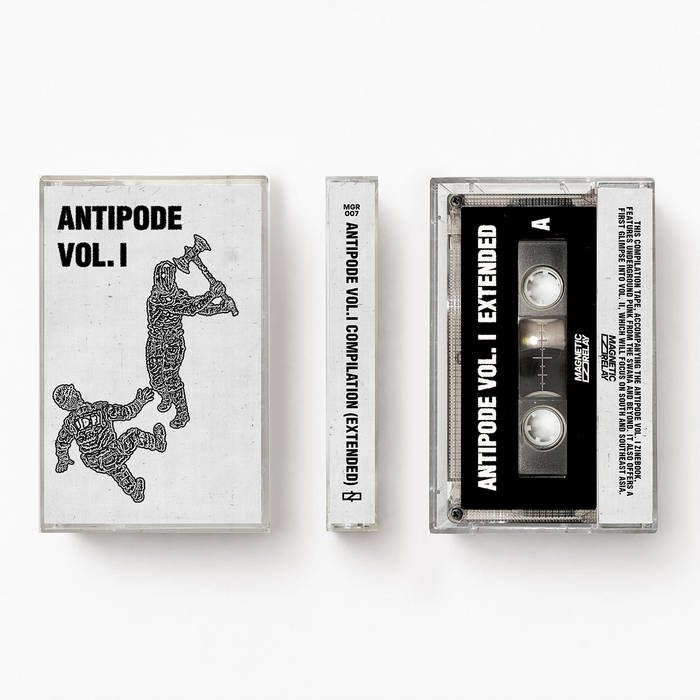
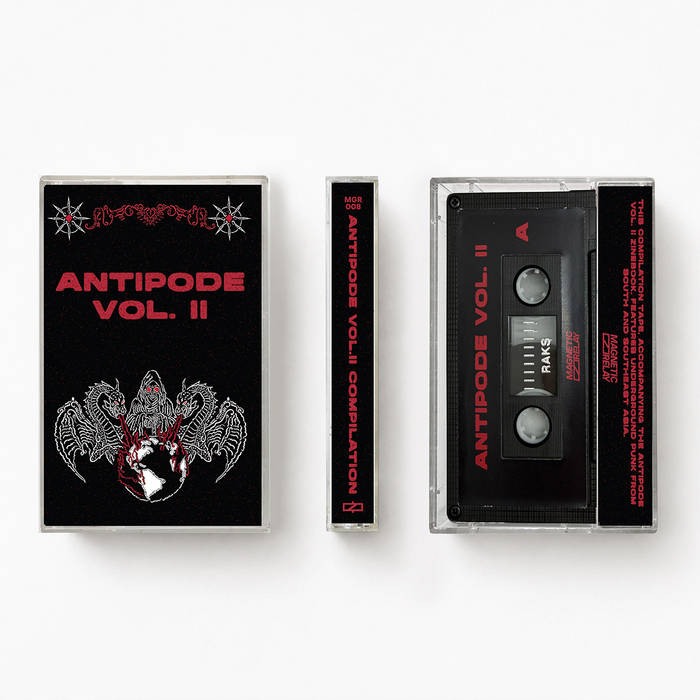
Antipode Vol. I Compilation Tape (Extended Version) on the left and Antipode Vol. II Compilation Tape on the right,
released by Magnetic Relay.
Put simply, Antipode is a multi-layered DIY punk and hardcore solidarity project bringing together independent publishing, compilation tapes, exhibitions, and international tours. When I started Antipode in Istanbul, the goal was never to step into the role of an archivist, a curator, or a publisher. Living in Istanbul, my connection to punk and hardcore was shaped more by a political stance: the need to carve out autonomous spaces as the city closes in around you.
With ferry terminals, old arcades, record shops, and small backstreet art studios all within walking distance, the neighbourhood operates like a self-contained refuge with its own micro-economy.
For decades, the global history of punk has been written around a narrow set of Western coordinates. Meanwhile, underground scenes across Southwest Asia and North Africa (SWANA), as well as South and Southeast Asia, have been either left out of that narrative altogether or framed as exotic exceptions in Western-centric accounts. I wanted to see what would happen if we drew our own map, not to build a new centre of authority, but to create a horizontal bridge where our scenes could speak in our own words, without needing others’ definitions to validate our existence.
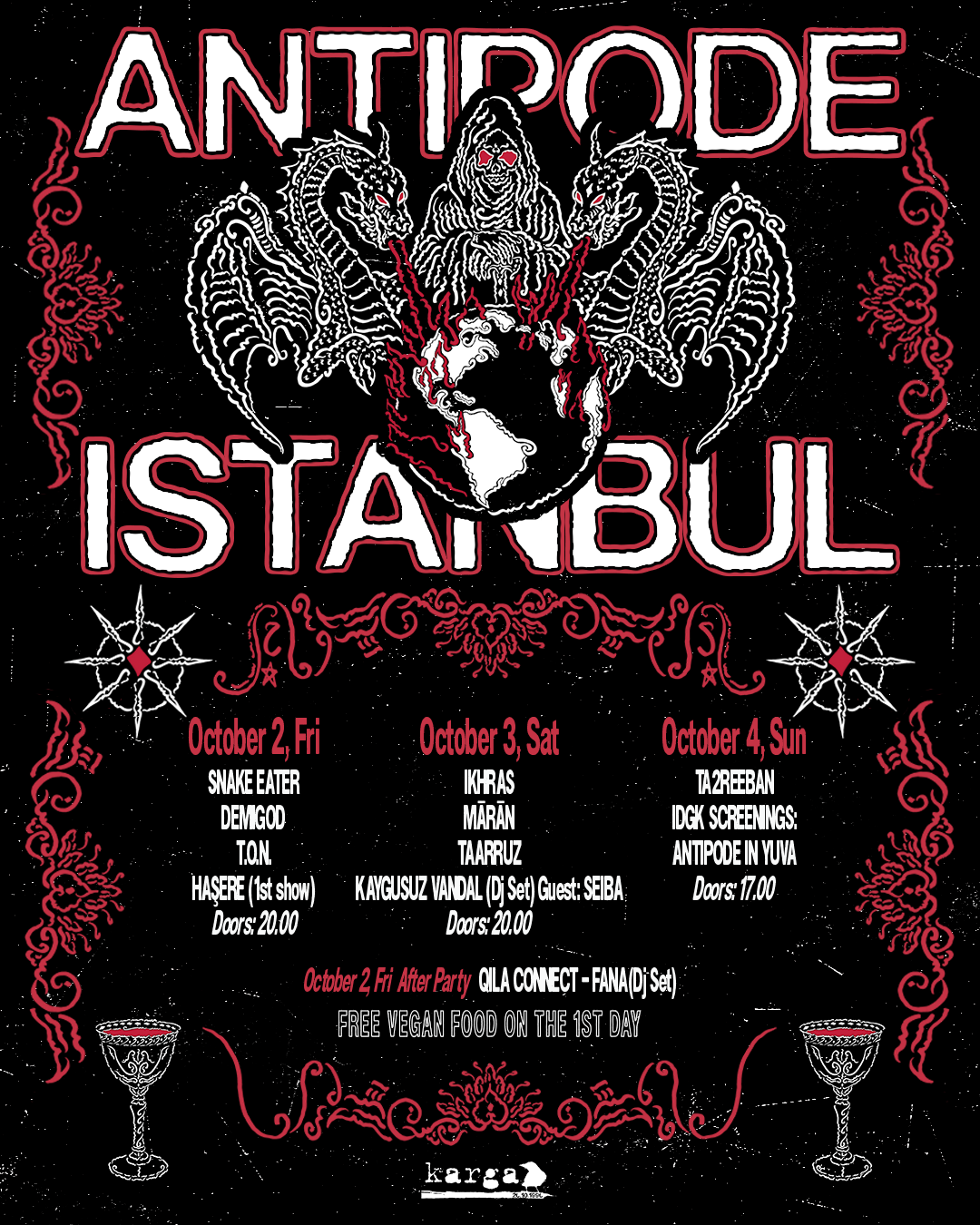
In geography, antipodes are two points on directly opposite sides of the Earth. What draws me most to the concept is its relativity: who gets to decide what is ‘opposite’ and what is the ‘centre? Antipode began with a first volume, a zine-book gathering texts, flyers, and visuals from underground punk and hardcore scenes across the SWANA region and its diasporas. As the second volume expanded into South and Southeast Asia, taking in Jakarta, Bandung, Lahore, and Mumbai, it became clear that geographies don’t exist in isolation. They are tangled networks bound together by stories of migration, shared political grief, friendship, and stubborn survival.
Of course, this impulse to preserve memory didn’t emerge in a vacuum in Istanbul; it is a continuation of the city’s own underground publishing lineage. Anyone looking to understand the roots of Istanbul’s punk and zine culture has essential groundwork to turn to. Archival efforts like Yerin Dibi!, which meticulously documents the memory of punk and subcultural life in Turkey, and landmark books like Türkiye’de Punk ve Yeraltı Kaynaklarının Kesintili Tarihi 1978–1999 (An Interrupted History of Punk and Underground Sources in Turkey, 1978–1999), which chronicled the underground punk, have laid the foundation for what we do today. Ultimately, zines are the most unvarnished records of what a scene thinks of itself, what it argues over, and the real conditions under which it survives.
Still, a book or a zine on its own is never enough. In cities like Istanbul, DIY is a survival mechanism forged in economic crises, inflation, venue closures, visa problems, and censorship. When resources are scarce, DIY means building infrastructure and lending a hand so others can create, too.
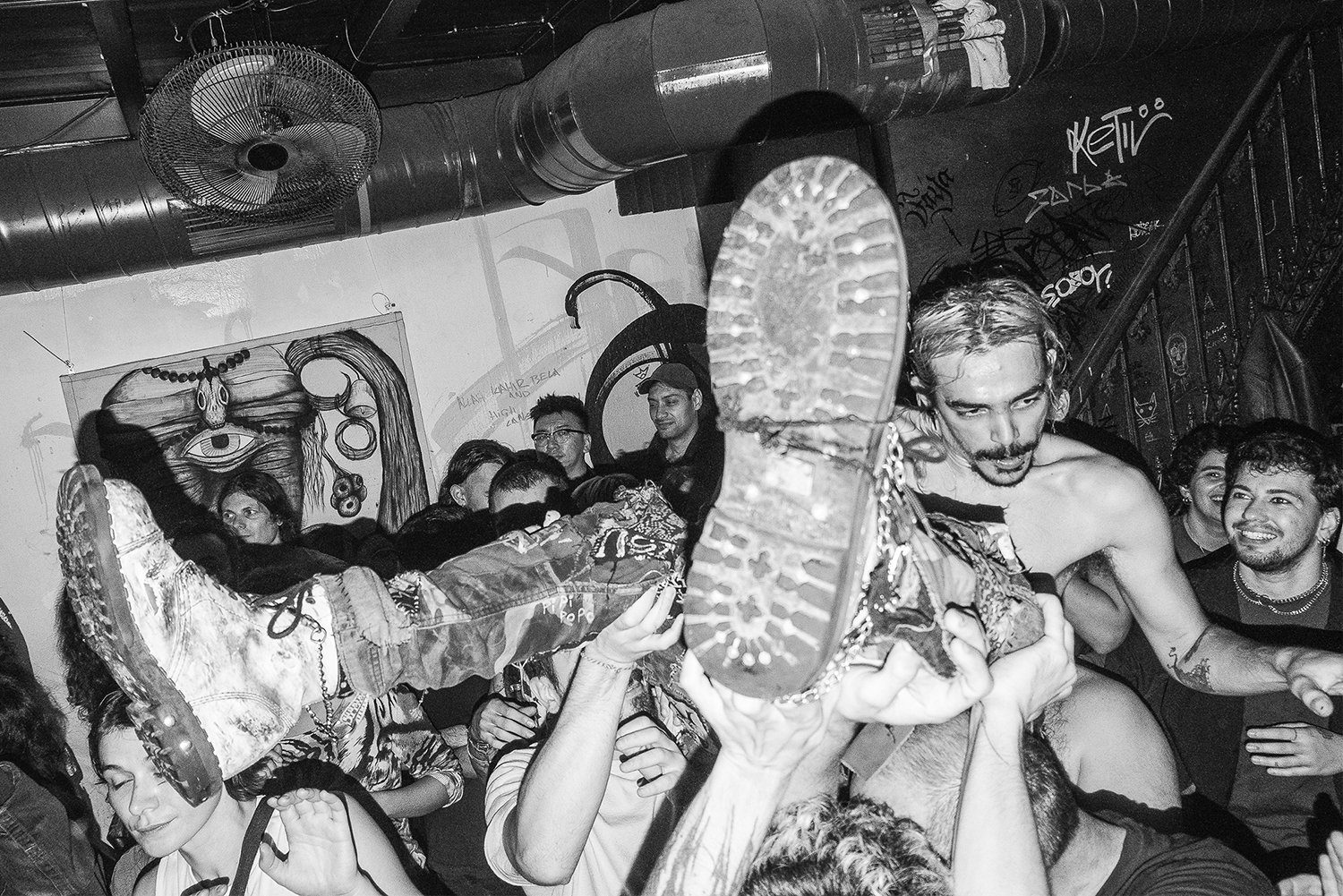
Geographies don’t exist in isolation: they are tangled networks bound together by stories of migration, shared political grief, friendship, and stubborn survival.
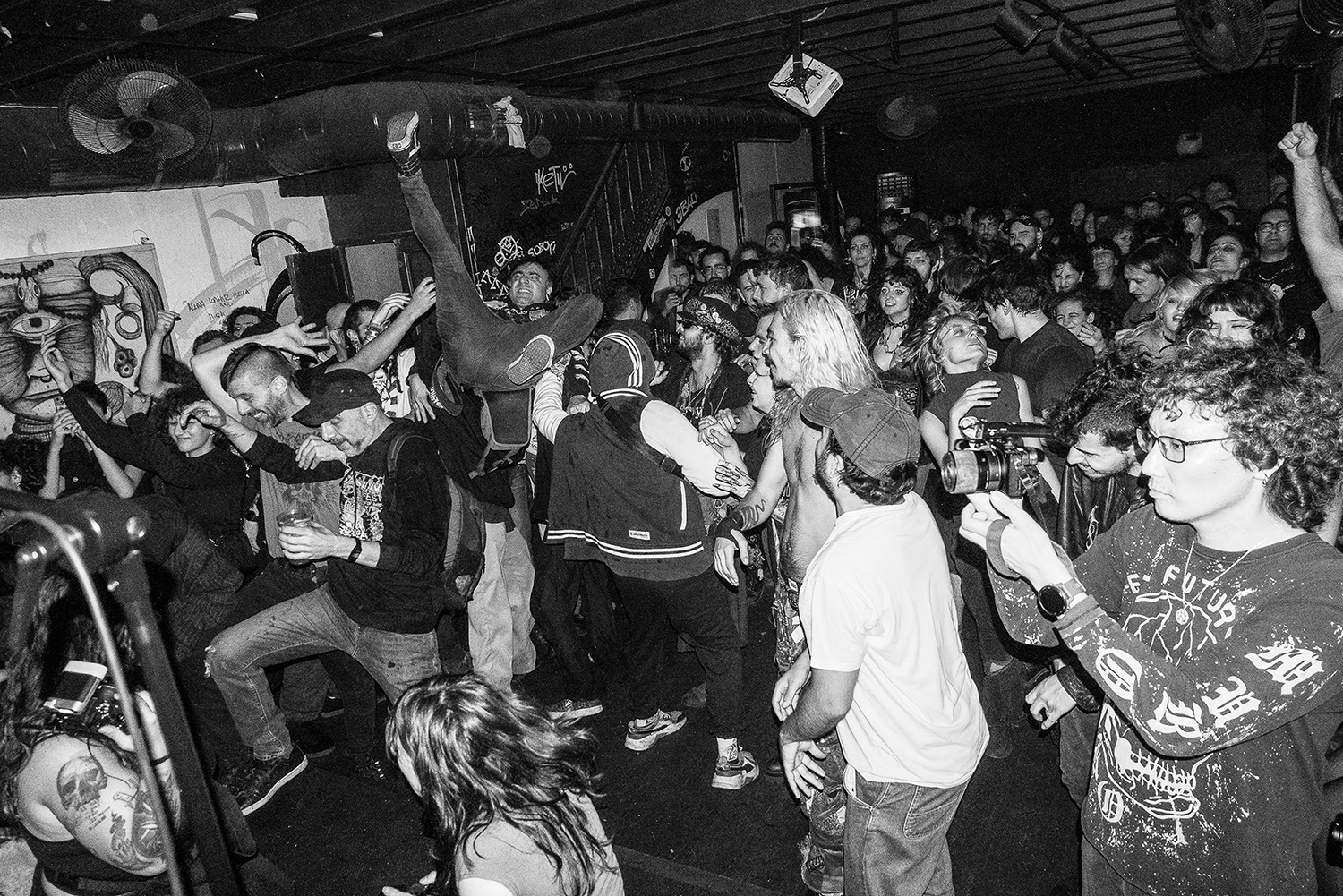
This is why Kadıköy’s solidarity spaces matter so much. In a city with so few venues left, keeping places like Karga open is vital. You cannot separate a scene from the neighbourhood that sustains it, or from the people who inhabit it. This year’s four-day Antipode in Istanbul was a clear example of how this works: “Antipode: Yeraltı Punk Kültürü Üzerine bir Karşı-Haritalama”, an exhibition of tour photography and archival material at BiNA, alongside film screenings and packed shows upstairs at Karga that brought together local collectives, friends, and bands travelling in from various countries.
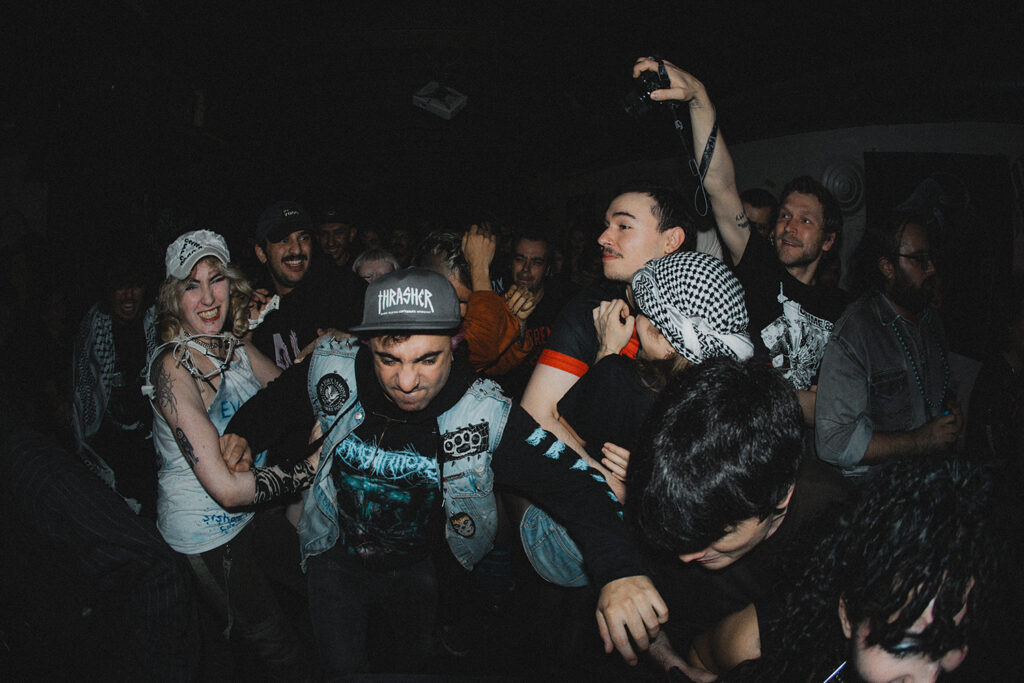
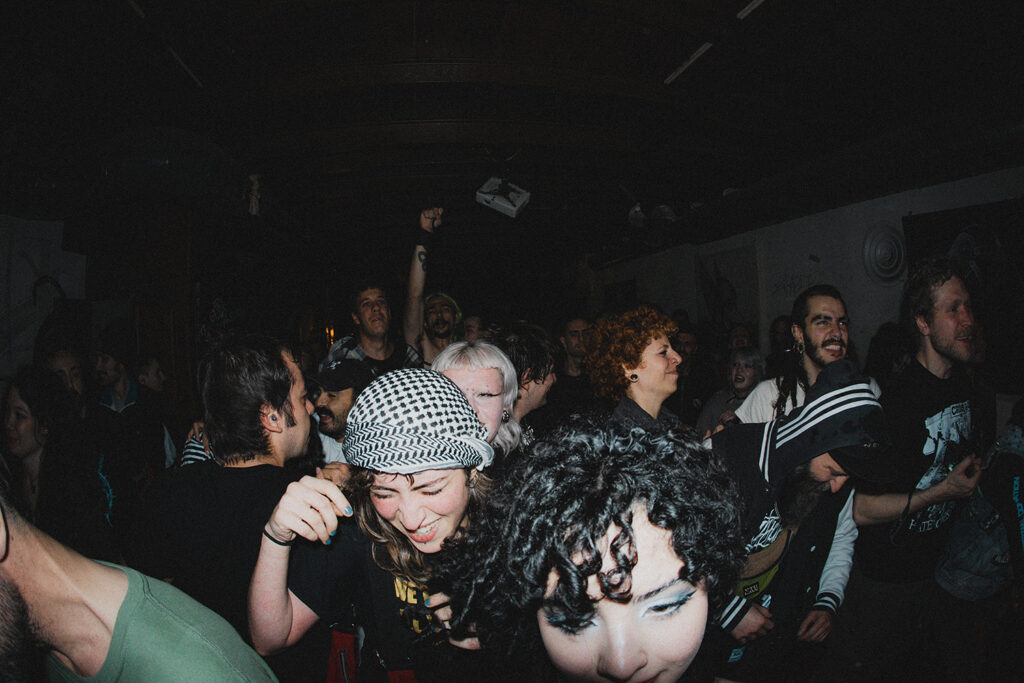
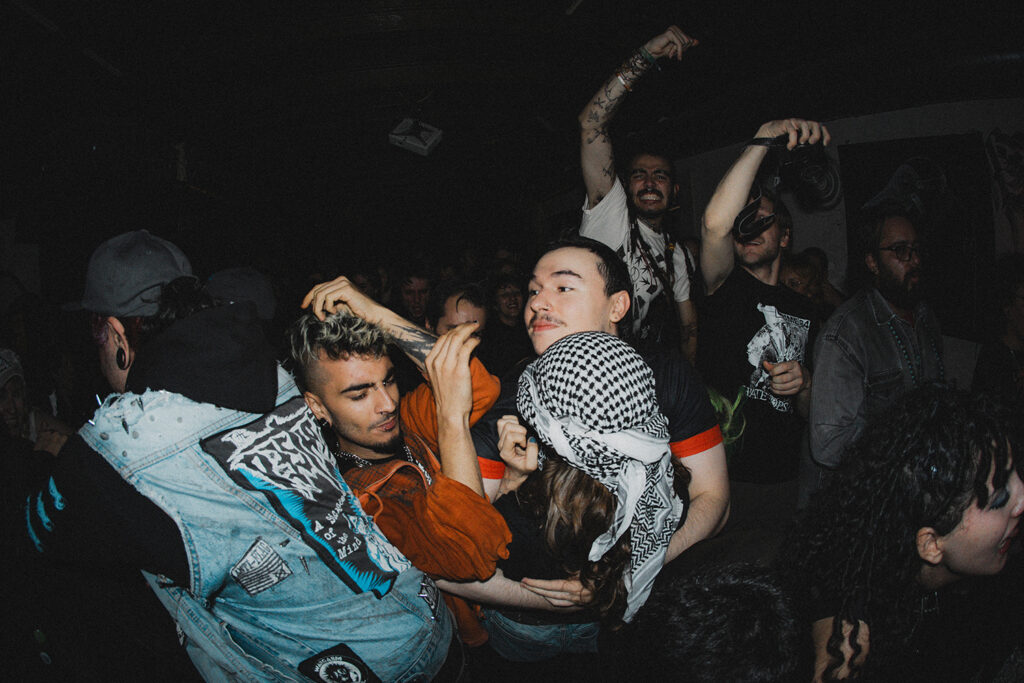
Antipode 2025, Karga, Photo by Murkycharade.
None of this runs on corporate sponsorship or institutional grants. It happens because someone stays up late into the night laying out the book design, someone else dubs compilation tapes one by one at home, local screen-printers pull prints for merch in their studios, and Karga keeps hosting this scene. Even the live sessions filmed at Karga, like the Yuva series shot by local video collective IDGK, become part of this shared memory, capturing bands in the moment before financial or political realities force another change or shutdown.
As Antipode travels out of Kadıköy into rooms in Sofia, Barcelona, Nijmegen, Trento, Brussels, Antwerp, Utrecht, Berlin, and Milan, I keep seeing how central Karga remains to this entire web. When you start documenting underground scenes honestly, the conversation inevitably moves past music. It becomes about how we hold space for one another and keep building pockets of solidarity despite everything the city throws at us.
An antipode isn’t just a geographical opposite; it’s the realisation that you aren’t doing this alone. From a backstreet in Kadıköy outwards, the network stays alive simply because we keep showing up for each other.