Nowhere to Hide: Ambient Music Won’t Land You Safely But It Won’t Let You Fall Alone
From the sweat-drenched chill-out rooms of early-90s Brixton to the algorithmic sprawl of contemporary ambient rave: how a music born to hold bodies through altered states became a survival grammar for the dissociative drift of digital capitalism in a world that never quite comes down.
It’s tomorrow already
When you're not working, time gets strange. Days hang loose on you, out of sync with society’s master clock, and your mind starts to wander through some rather weird places. Dreams sometimes feel as real as life. A spliff can last an hour if you pace it right, nursing it through the dead afternoon when the sky presses down, and nothing happens—the same amorphous pattern that might go on forever. The employment office landscape is always unchanging: same faces every month or so, same script delivered through reinforced glass, the same little box ticked to confirm you're still looking for work that probably never even existed in the first place. A few quid a month keeps you from falling completely outside an economy that has already excluded you. The 159 rattles down Brixton Road past the Academy and stops at the terminus, where the Tube exhales crowds into the open air just before market arcades tunnel into shadow. Coldharbour Lane veers east toward the estates. Electric Avenue's Victorian ironwork hangs overhead like the ribcage of something that died standing up. Before anyone had ever heard the word gentrification, here they are in all their splendour: Victorian houses carved into twelve bedsits that were never meant to contain twelve separate lives. The ceilings are lowered, the original rooms partitioned into narrow compartments with doors that don’t quite close. Shared bathrooms line the hall, pipes singing all night through the thinned walls. The lobby smells of old carpet and junk.
But Railton Road is different. Three-storey speaker stacks outside basement dancehalls, dubplates ricocheting off brickwork alongside classics from the vault: The Mighty Diamonds, The Upsetters, Joe Gibbs, Gregory Isaacs, King Tubby, Augustus Pablo. The whole neighbourhood spills into the street, moving to the heavy shuffle of nyabinghi drums on Saturday afternoons. The Windrush generation had brought the sound system tradition from Kingston and set the streets on fire. The flames from the '81 riots were still smouldering and the police moved in pairs or avoided certain areas entirely. By the turn of the decade, Jah Shaka had already been delivering heavyweight spiritual riddims for more than ten years. Mad Professor was based in South London as well, alongside a plethora of other “warriors,” “sirs,” “doctors,” each with their respective crews. The line-up for the “Dancehall Clash of the Century” held at Brixton Academy in April 1989, gives some sense of the scale of that scene: Unity Sound System, Sir Coxsone Sound System, Duke Alloy Sound System, Exodus Sound System, King Tubbys Sound System, Viking Sound System, Fatman Sound System, Jah Shaka Sound System, and the list goes on.
Rastafarians, punks, art school freaks—anyone who needed somewhere cheap or free—found a home in the rising squat scene, which offered shelter to almost anyone in need. Whole sections of council flats had been sealed off in apocalyptic modernist blocks, surrendering to the gentle erosion of the British weather. Old factories stood empty, their windows smashed, graffiti layering up over time. The CoolTan factory on Effra Road, for example, had been shuttered for years, slowly getting filled with rain and pigeons. Sitting in The George as the afternoon fades into evening, someone mentions a warehouse party that might be worth checking out. A few hours later the N3 threading home through empty streets at 6am, head full of echoes and smoke and the vague yet persistent feeling that something even more special is about to happen. Punk culture had already taught a certain refusal of the establishment, and art schools had permitted experimentation with form, squatters knew how to pick locks and wire up electricity without asking for permission: these different streams started to mix up in pub back rooms and basement parties, and new sonic languages emerged. When acid house exploded in ’88, people in Brixton already knew how to throw illegal parties. Networks could mobilise hundreds with a few phone calls; squats could absorb the aftermath when official venues kicked everyone out at 2am. The music that would later be called “ambient house” was already there, concealed in the pressure and sweat of sound system parties, teaching a generation of white kids that volume could be sacred, that music is about bodies and ritual and collective space before anything else.
3 a.m. Eternal
Alex Paterson, founder of The Orb as well as one of the originators of the ambient house scene, knew Brixton intimately since his teens, when he lived there with Martin Glover (Youth from Killing Joke), immersed in the area's reggae culture as it blasted from the sound systems on Railton Road and Coldharbour Lane. That dub influence became fundamental to The Orb's sound, which evolved into a kaleidoscopic blend of heavy basslines and the spatial dimension of Jamaican sound system culture, channelled into psychedelia, ambient and house music. So when The Orb played their official live debut at The Fridge in Brixton in May 1991, they were, in fact, returning home.
But let’s go back for a moment. It’s 1989, London—the dawn of what would later be called the Second Summer of Love, though nobody knows it yet. In Thatcher's Britain, poll tax riots, warehouse parties and temporary autonomous zones flourish in the ruins of deindustrialisation. There are also clubs like Heaven, where Paul Oakenfold’s Spectrum night hosts The Land of Oz sessions, and Shoom, operating in legal grey areas, hovering at the edge of what's permitted. The music played in these spaces is mostly house from Chicago and Detroit, filtered through Brixton’s sprawling sound system culture, breakbeat and jungle, accelerated and hardened into what would eventually become rave. MDMA is synthesised in clandestine labs, but the pills are still relatively pure, circulating through networks that treat the substance with near-religious reverence as a chemical sacrament to banish Thatcher’s evil spell. The term “ambient house” emerges around this time, describing what Alex Paterson had been doing with The Orb and The Land of Oz nights; what The KLF would crystallise on Chill Out in 1990; and what would later expand further at the Spacetime and the Telepathic Fish through Mixmaster Morris. The Fridge had already pioneered something similar, claiming to be the first British club with video screens and a dedicated chill-out lounge.
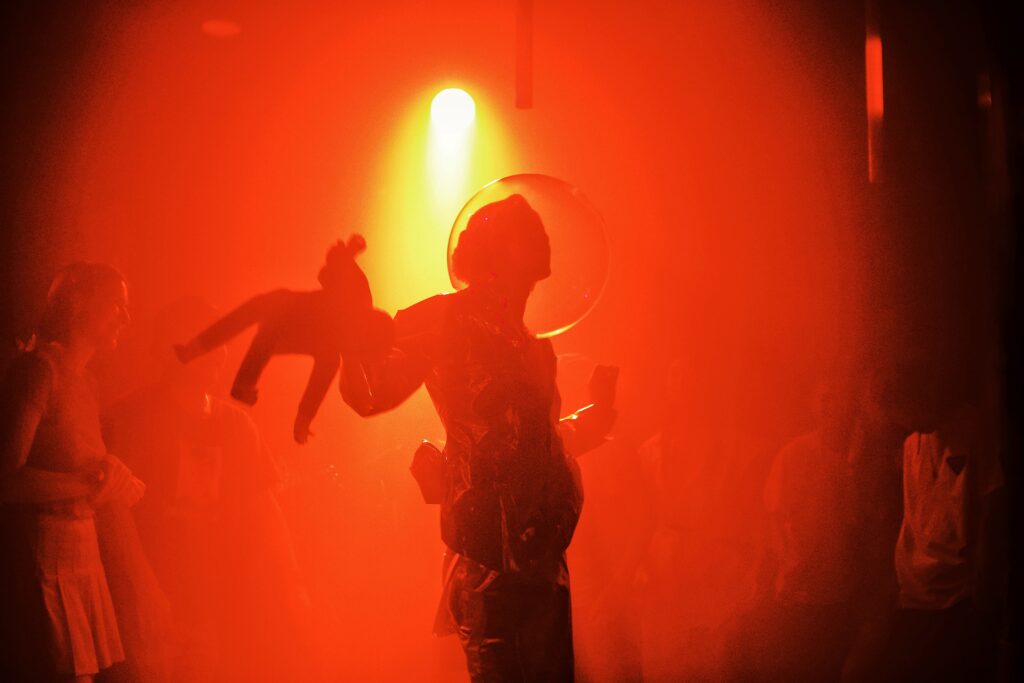
Indigo and blue lights move like deep-sea bioluminescence across white plaster, coral in slow bloom, fractal patterns collapsing like dying stars through a thick layer of swirling smoke.
The bass drops deeper now, nearly a dense, looming presence. Indigo and blue lights move like deep-sea bioluminescence across white plaster, coral in slow bloom, fractal patterns collapsing like dying stars through a thick layer of swirling smoke: “youuu ou-ou-ou are-r-r-r-rrrr the suuunset…” A disembodied voice of a ‘50s soul singer bounces from speaker to speaker, up the walls, high and low, through the floor and beyond the ceiling. Spectral graffiti tracing the paths of the cosmos. Someone has scattered pillows across the concrete. Bodies lie horizontally now: once monuments to physical endurance, they turn into soft clay surrendered to gravity. Through the speakers, sounds stretched beyond recognition begin to merge until dissolving their molecular structure: dubplates of house records melt into spring reverb; vocals multiplied by delay lines twist and ripple through the thickened air—weather mutations originating from an alien atmosphere.
Ambient—but not Eno's airport music, though Eno is on everyone's mind. "Music for Airports" is over a decade old now, an established frame of reference for music that could function while being ignored, extending an idea dating back to Erik Satie and John Cage. The Blue Room begins from that principle but applies it to highly charged bodies, transforming ambient’s soothing qualities into a form of harm reduction for altered states. Music that stems from the metabolic demands of extended dancefloor experiences as well as from the chemical realities of early rave culture. It emerged organically within the scene itself from a simple recognition: that bodies in extremis need somewhere to land, a space designed for human needs arising from specific material conditions.
Adventures beyond the Ultraworld
The Criminal Justice Act of 1994 criminalised repetitive beats, effectively outlawing raves. A culture that had long operated in legal grey areas was pushed fully underground or sanitised into superclubs. By the mid-90s, the context had already shifted. Ministry of Sound opened in 1991—a legal, fully licensed version of what had once been wild and autonomous. As the market got flooded with adulterants and dissociative like methamphetamine and ketamine, the neurochemistry of the dancefloor changed as well, becoming less predictable, more chaotic, and dark.
While The Orb represented the visible, legitimate face of the culture, something rawer was brewing in South London's squats. The same deindustrialisation that had created warehouse spaces for raves had left Brixton scattered with abandoned buildings that became temporary autonomous zones in the truest sense. The CoolTan Arts collective formed in June 1991, taking its name from the once-abandoned CoolTan Suntan Lotion factory on Effra Road. After eviction in February 1992, they moved to offices above Brixton Cycles, and then, in September 1992, squatted the old Unemployment Benefit Office on Coldharbour Lane, the infamous "Old Dolehouse." The building became a countercultural hub: a thriving café with local jazz bands at night, accommodation for Reclaim the Streets, Freedom Network, Earth First!, the Green Party, London Friends and Families of Travellers. By that point, a full anarchist community was operating in the ruins of Thatcherism.
In December 1992, four friends—Kevin Foakes (DJ Food), Chantal Passamonte (later Mira Calix), Mario Aguera, and David Vallade—threw their first party under the name Telepathic Fish. The name came from a bizarre encounter in a Brixton flat, where a natty-dread Rasta, surrounded by the speakers of a custom-built sound system, rambled about a telepathic fish that would unite humanity. This surreal moment captures something essential about the ’89 and ‘91 zeitgeist: the collision of sound system culture, squat politics, psychedelic exploration and utopian yearning. Their first party had techno and house downstairs, while upstairs was pure chill-out bliss: UV fish swimming across the walls, chequered ceilings painted to resemble upside-down kitchen floors. By May 1993, they had outgrown house parties and moved onto the squat circuit, first in Tunstall Road, then at Cool Tan.
The Criminal Justice Act struck like an earthquake in ‘94, its aftershocks rippling across the scene. Many events that couldn't be licensed disappeared, while events that could be licensed became corporate. By the time New Labour swept into power in 1997, the idea of rave as a mass political-cultural force capable of challenging the establishment had already begun to crumble: what remained of its radical impulse was absorbed into smaller, more militant fringes—see Fringeli's breakcore nights, Reclaim the Streets, the Carnival Against Capital—while its mainstream face was absorbed and neutralised by the entertainment industry, becoming de facto another export commodity under the “Cool Britannia” branding. Ambient house lingered for a while, but was severed from its original spirit. The Orb found chart success and took another kind of trip, although always musically coherent in their explorative instincts. The KLF, meanwhile, “burned a million quid” on Jura and dissolved the band. Spaces explicitly designed for those too damaged to continue slowly disappeared from the club culture’s map, surviving only as endangered species in the form of chill-out tents at psychedelic open-air festivals. Their very existence might have been read as an implicit admission that something unsafe was happening, while the market required the fiction that clubbing was safe, controlled entertainment. By then, it seemed as though the Blue Room had locked its doors forever.
Everywhere, an empty bliss
The financial crisis of 2008 gutted even more what remained of countercultural activity, and the austerity that followed made precarity the default condition for almost anyone trying to make culture outside market logics. The adverse psychic conditions that might call for a kind of sonic medicine were still everywhere, perhaps even more so: economic anxiety, social atomisation, the underlying sense of permanent crisis. This became the new normal. Yet the communal spaces where music could still function as a collective, shared resource became increasingly rare. The academic-experimental continuum kept on delivering new forms of mind-expanding sonic art, curated as installations in galleries and open studios. DIY micro-labels and collectives kept releasing limited-edition vinyl, colourful tapes, and hosting gatherings in squats and small bars, while proper clubs became universally recognised as churches of entertainment, with minimal house and then 4/4 techno as their gospel. All these streams kept flowing in their own ways but that strange, visionary chimaera of ambient house seemed to have turned into a gilded statue somewhere along memory lane.
The ‘10s saw ambient music fading back into the background of pop culture, morphing from productivity tool into streaming-playlist filter. Under tags like “deep focus,” it accumulated millions of new acolytes searching for ways to maintain concentration in the face of concentration’s constant disruption. Ambient music and meditative practices under the mindfulness banner, refracted through the thrift-shop diluted philosophy of some self-proclaimed prophet of the Aquarian Age, became a lubricant for corporate consciousness, smoothing the frictions of capitalism rather than addressing its damage. On the other hand, social media became the dominant infrastructure for cultural organisation, and the music scene was no exception. In this ambiguous ecology, platforms like Soundcloud, Bandcamp, and YouTube presented themselves as democratic tools of distribution, while subjecting everything to engagement metrics and the constant demand for new content. Music circulated faster but carried less meaning; context collapsed into the feed, and scenes reduced to aesthetics sortedin playlists. By the mid-’10s, a new young generation had grown up without ever experiencing the Blue Room, perhaps without ever encountering a space explicitly designed for collective care in moments of collective extremity. The conditions that had produced ambient house in the ruins of deindustrialisation had mutated into something else entirely.
Experiences LTD
Then something mutated again and another ripple emerged from a spontaneous adaptation to the present conditions. Labels, collectives, and parties giving their take on the ambient continuum appeared as fungi all over the old continent, as well as in the US: from earlier blossoms such as Where To Now?, Mana, sferic, West Mineral or Motion Ward to a whole landscape of newly born formations, including appendix.files, enmossed, INDEX:Records, A.R.X., Trascendanza, Riforma, Inner Most, 3XL, co:clear, outlines, Cong Burn, Balmat, Free Movements, Terra Obscura, Kwia and countless others. A new generation of producers started folding new kinds of rhythms back into ambient's textures, but not exactly like the breakbeats of the ‘90’s. The beats don’t strictly serve the dancefloor anymore; often, they’re too slow or too fast, too angular, too abstracted: 80/160 BPM processed through spiritual visions, gaming culture, post-internet gibberish, designer drugs, liminal and recursive spaces, AI hallucinations.
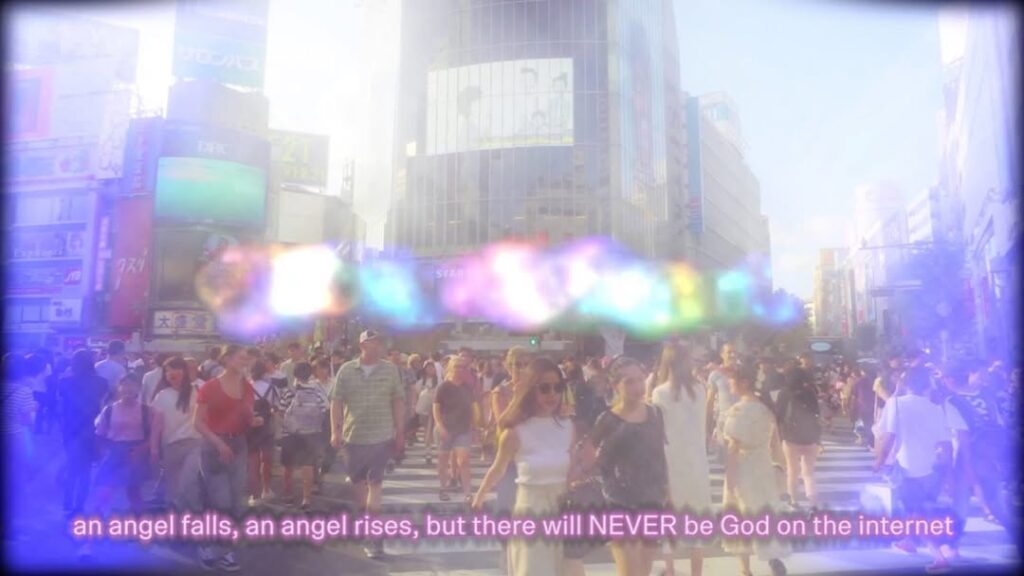
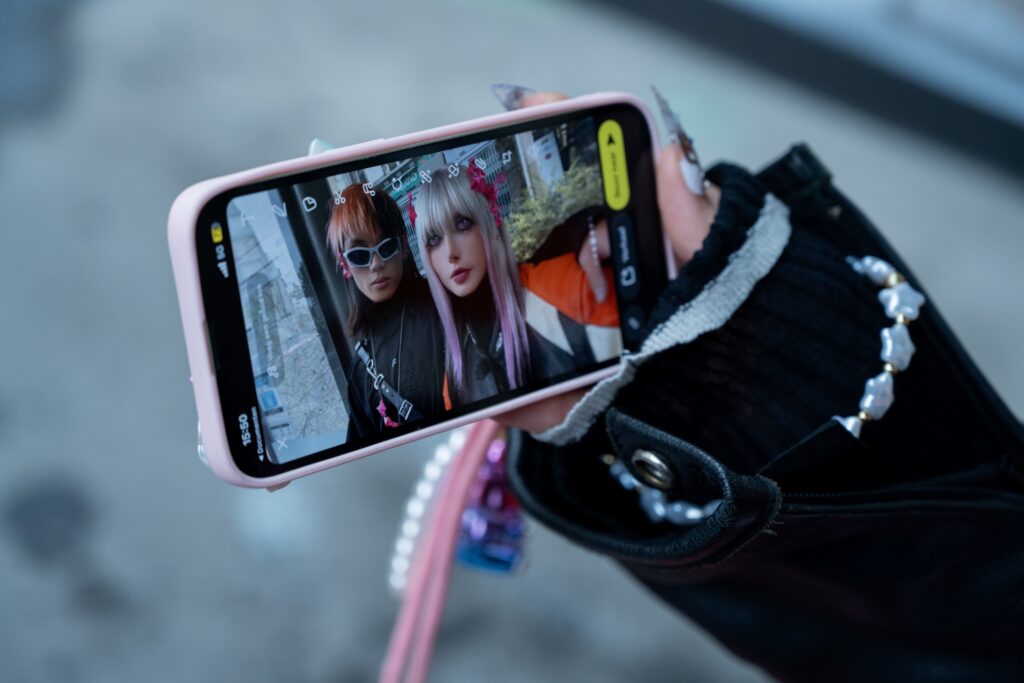
The context is once again the seed: a precognition of post-pandemic culture seen through the eyes of pre-lockdown consciousness. A new generation that spent their formative years mostly online—whose social lives migrated to Facebook groups and Telegram chats, and for whom IRL is a condition that needs to be specified—started incorporating the metabolic rhythm of TikTok, IG reels and stories, with their constant stimulation-induced perpetual doom-scroll anaesthesia. Dopamine hits are measured in seconds. The screen’s light projects a long shadow…
Contemporary ambient rave soundtracks a more diffuse, almost global crisis; a side effect of the slow-burning dissociation of digital capitalism.
The ambient house of '89 was designed to bring someone down safely from an ecstatic and mostly joyful peak experience, tested on a small scale in its early phase, eventually it expanded into an almost mainstream phenomenon. Contemporary ambient rave seems designed for a different state of mind: not only to accompany the aftermath of drugs and partying, but also the all-encompassing anxiety of being always online, always available, yet never quite present or in full emotional connection. Rather than the acute chemical emergence of the UK warehouse utopia, contemporary ambient rave soundtracks a more diffuse, almost global crisis; a side effect of the slow-burning dissociation of digital capitalism. This is music for people who've never left the club because the club is everywhere now and in four dimensions. The mental state it addresses isdopamine dysregulation from countless hours of screen light exposure, a damage that could get much more deeply rooted in the brain than the serotonin depletion from an eight-hour dance. The ambient house that emerged from the late-‘80s rave scene had a specific therapeutic function, to the point that one could say that Timothy Leary’s "set and setting" framework found practical application in those chill-out rooms, where the sonic environment worked in tandem with altered mental states to guide bodies through neurochemical transitions.
Contemporary ambient rave addresses something fundamentally different in scale and temporality, because the mental state requiring care now emerges from continuous rather than discrete events. Dopamine circuits shaped by timed notifications and reinforcement schedules embedded in social media platforms replace the straightforward neurochemical patterns of earlier experiences. Since reward systems now operate through software, the neurochemical micro-hits that structure daily experience create utterly different conditions. The music soundtracks what the new media researcher Wendy Chun describes as "crisis time," where emergency has become a permanent condition and the distinction between exception and norm has collapsed into ongoing low-level distributed semi-presence. Networks are inhabited environments, and this music has become part of the environmental conditions of digital life itself. While the warehouse utopia promised escape and transformation, however temporary that might have been, present possibilities might be described more aptly as “modulations within the system” that occur within persisting structures rather than departures from them. Actually, a form of persistence that shows no sign of ending.
Not All Who Wander Are Lost
The aesthetic tropes involved are pretty self-explanatory: vaporwave artefacts, early internet nostalgia, Y2K revival, anime soundtracks, trap music slowed to syrup, trance pads, and tech-house loops processed into smeared granular abstractions, infinite layers of sound effects blended into inhuman ecosystems, exponential rhythms and auto-tuned devotional chants. This new wave of producers grew up with YouTube's infinite archive, with the entire history of electronic music and, more in general, human culture available simultaneously, decontextualised, ready for recombination and mutation. They sample the culture that sampled the culture, hyperpop’s candy-coated maximalism fed through ambient’s multichannel diffusion, creating something that sounds like pop music heard through the lonely dreams of the isolated self.
Some of the artists deploy footwork or tekno’s beats but strip out the linearity designed for the dancefloor, leaving just the residual rhythmic ghosts as textural hallucinations organised in cubist arrays of quantum sonic events. Others combine ambient’s loose structures and crystal-clear FM synths with heavy 808 subs and pitched vocal chops, creating queer soundscapes for scrolling through feeds at 4 AM in a state of half-awakened dull euphoria. The music acknowledges total context collapse: the rave, the game, the screen, the street, the office, the museum are now the same continuous space, all mediated, all monetised, all producing the same low-level anxiety. Therefore, what is addressed here is a steady yet ever-evolving state, working to maintain liveable functioning within environments that have become ubiquitous and inescapable. Ambient rave exists now within this temporal structure: it recedes into imperceptibility yet loops endlessly.
Where ambient house emerged from illegal warehouse parties, ambient rave circulates primarily through Soundcloud and Spotify, through secret Telegram chat and cryptic IG stories. Leaning less on actual temporary autonomous zones and more dependent on digital corporate platforms, the music’s value doesn’t exist primarily in the physical space but in the algorithmic recommendation networks, spreading through the same attention economy it ostensibly refuses, a soundtrack for living room reveries of intimate circles formed more through screen connections rather than shared physical experiences.
Somewhere decent to live
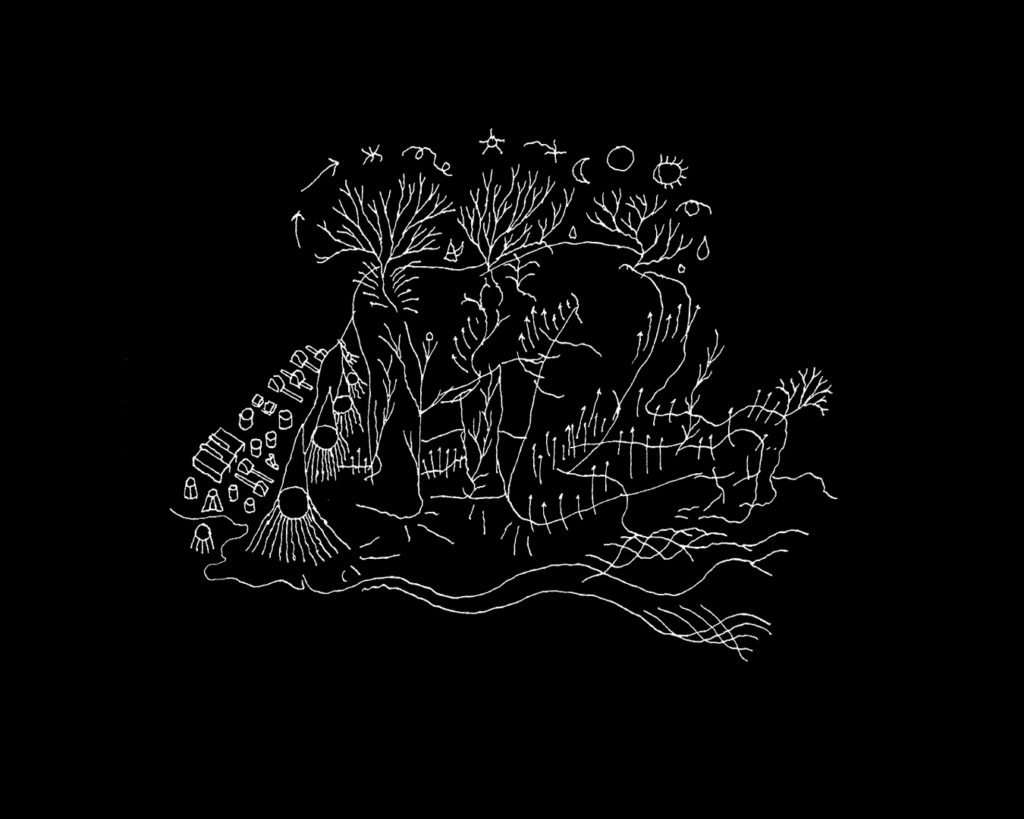
What initially appeared as a mirror image is now clearer. Both ambient house and ambient rave use beat-abstraction as a kind of therapeutic technology; both emerge from subcultures under attack, both soundtrack states of consciousness that the dominant culture can't quite fathom. Yet today the nature of the problem has essentially altered. While ambient house addressed a form of acute crisis stemming from specific material conditions (the sound system culture, the illegal spaces, the Thatcherism's dissolution, the birth of acid house, etc.) and by the body pushed beyond normal limits through specific chemical and sonic experiences, on the other hand, ambient rave addresses a more chronic disease: the psyche adapted to perpetual low-level overstimulation through algorithmic manipulation, attention fragmentation shaped by the metabolic rhythm of platform capitalism. It’s the soundtrack for the “slow cancellation of the future”, the wearing down of capacity through sustained exposure to conditions that aren't quite lethal but aren't quite liveable either.
As for the economic context, The Second Summer of Love happened in Thatcher's Britain, amid deindustrialisation and rising inequality, but also amid rising wages for those still employed and relatively affordable rent in city centres, so that one could work part-time and live cheaply while engaging in (counter)cultural participation. The 2020's scene emerged in the context of the housing crisis and stagnant wages, gig economy precarity, student debt, climate anxiety, political dysfunction spreading like a virus, Brexit, and the rise of the far-right spectre all over the Western world. Cultural production happens now in the gaps between work shifts, with the final residues of energy drained by the constant demands of economic survival. The artists making this music are often also doing graphic design, working in record shops or for fashion brands, teaching, whatever generates rent. Ironically, the music circulates through an infrastructure that directly profits from attention extraction: in most cases the tools of distribution and survival are also tools of exploitation and dependence.
There's no Blue Room to retreat to anymore because the conditions that required it are now permanent. The Blue Room may have locked its doors but everyone’s still inside…
Where ambient house existed in illegal spaces mostly (but not always, as in the case of The Orb and KLF) outside market logic, ambient rave was born inside the algorithm, competing in the same attention economy it ostensibly provides relief from. The artists working in this frame seem acutely aware of this paradox and express it openly, often channelled through a sort of self-aware brutal elegance. The music feels deliberately trapped in an endless recursion of subject and context, blurring one into the other, like making art about the cage from inside the cage using the cage's own materials. There's no Blue Room to retreat to anymore because the conditions that required it are now permanent. The Blue Room may have locked its doors but everyone’s still inside…
When a crisis becomes chronic, a state of emergency becomes everyday life, and the music evolves accordingly as a way to stay with it. While before it was assumed there still was a normal state of consciousness that the rave temporarily disrupted, the belief in a fundamental coherence to be re-established, now there is no baseline anymore, the disruption is permanent and here's how we exist within it. There’s no implicit promise of reconciliation in this perspective because there’s no acknowledgement of anything needing to be repaired. Instead, what we’re offered is an aesthetic framework for functioning while fragmented, for moving through the digital space and its double, “the real”, in a state of managed, conscious dissociation, transforming an almost unbearable condition into an open field of possibilities.
Our common past, our common future
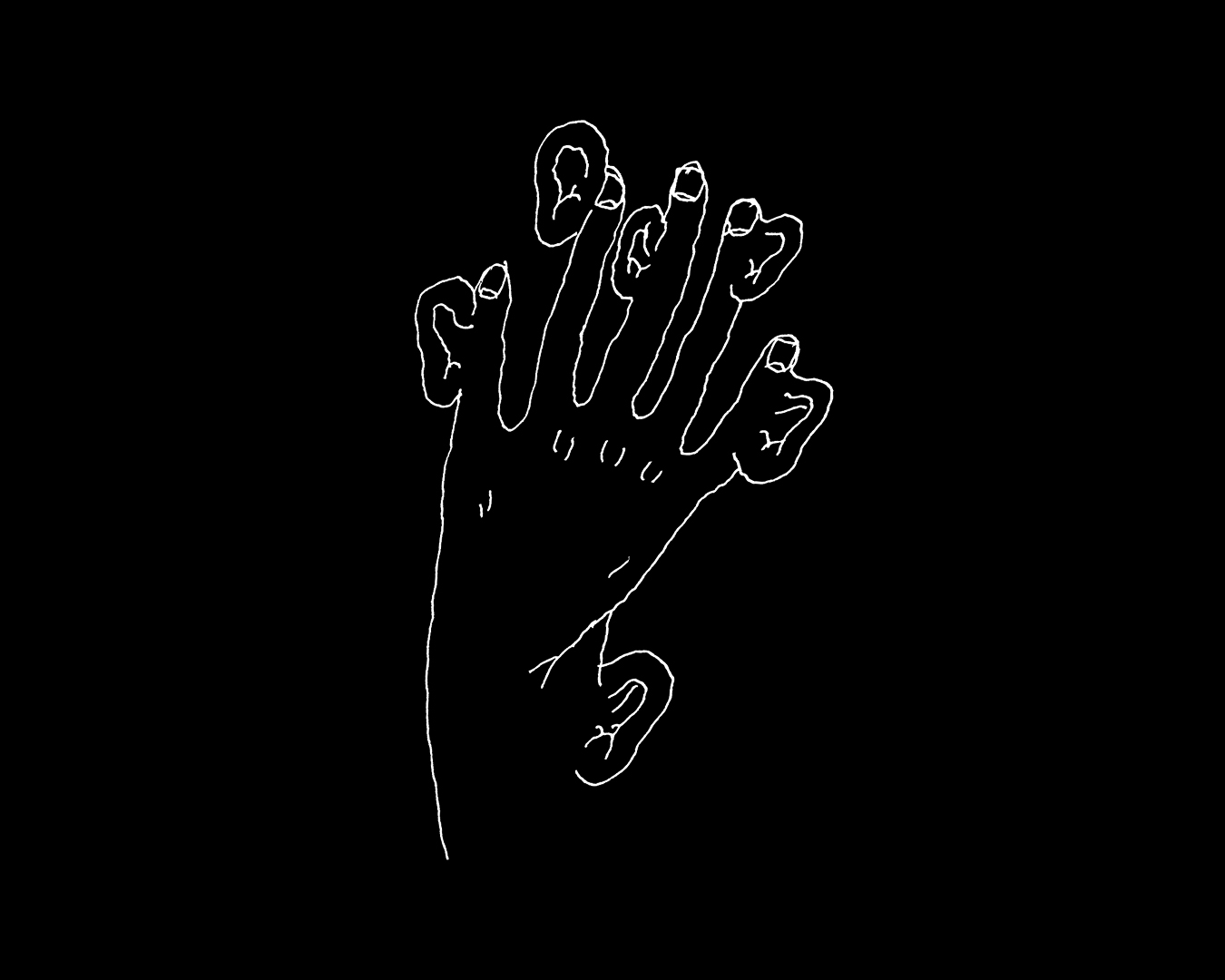
Chun's concept of "updating to remain the same" illuminates this matter in particular ways. While the original ambient house responded to temporary deviation from baseline consciousness, what Chun analyses as the normalised state of habitual new media use requires different sonic intervention altogether.
This state manifests as being caught in permanent liminality without resolution; distinctions between phases become impossible to maintain since there are no clear transitions to mark or manage. Earlier periods understood altered states as intentional explorations with clear boundaries and purposes, yet this framework no longer applies when an altered state has become the default condition. Where social life recedes, habit moves in to take its place, becoming the closest thing we have to a foundational relationship with the world. Yet the network is structurally incapable of staying still: it must perpetually refresh itself into newness, and in doing so produces recurring crises that force us to reorient. Each update resolves one crisis only to plant the seed of the next.
The Blue Room represented something that we’ve today in large part lost: the idea that culture could create spaces explicitly designed for collective care, that music could function as medicine in the shamanic sense, that communities could self-organise resources to survive their own extremity. What bloomed on its remnants isn't nothing though: an interconnected mesh of artists making hundreds of tracks and self-releasing them through the world wide web, building temporary intimacies of adult fantasies through Discord servers and subreddits, spare living rooms, micro-venues hidden in the suburban sprawl. This is also mutual aid and care work but it's more disembodied, atomised and mediated through corporate platforms that in most of the cases profit from the very conditions addressed.
Already in the downward phase of the 90's high, before the formula of networks and updates existed to name it, the music was beginning to register a world in which utopian longing and dystopian consciousness were no longer perceived as opposites but as relative phases of a single oscillating configuration: the feeling of a system that keeps promising resolution while structurally withholding it. Pressure of Speech’s 1996 album “Our Common Past, Our Common Future”, recently reissued by A.R.X. & Krisis Publishing, makes a perfect example. In this record, the London-based trio conveys a strong sense of discomfort and disillusionment, a layer of subtle paranoia and imminent collapse infuses the work and can be clearly perceived through the negative space of 90’s techno and breakbeat rhythms, bearing a strong resonance, as the title aptly puts it, with the psychic landscape we see before us now.
Considering how today these processes are more and more entangled, we cannot be sure if our efforts are actually healing or further damaging but we can use this ideas to trace a faithful sonic map of consciousness under current conditions and if those conditions are worse, more diffuse, more inescapable than before, then of course the music sounds different: less certain about the possibility of recovery, more willing to sublimate damage rather than promise repair. What once was the original emergency department for consciousness is archaeology now, in its place we find these new screwed breaks and superimposed dissociations, this new sonic language surfaced in a place left vacant that might form the emergency department for whatever consciousness has become under platform capitalism: a rather new “strange loop” where what once was a chill room has turned now into an overheated server and physical shared spaces continue to exist as algorithm-driven occurrences.
The meta-reflective prism of contemporary ambient rave multiplies the Blue Room’s sweat-drenched walls to infinity, while showing us that the need for spaces where it's possible to exist while coming apart hasn't disappeared; it just has to learn to live without clinging to the idea of an easy comeback. Or maybe the point is just to learn that coming apart is just another turn in history’s spiral, that fragmentation is a temporary condition to be inhabited with care and attention until it lasts. In the end, music does what it always has done: just teaching us how to live more gracefully, how to keep cool in spite of destruction. Ambient house promised a safe landing after temporary flight, ambient rave suggests we may never land at all, we just can learn how to drift.without clinging to the idea of an easy comeback. Or maybe the point is just to learn that coming apart is just another turn in history’s spiral, that fragmentation is a temporary condition to be inhabited with care and attention until it lasts. In the end, music does what it always has done: just teaching us how to live more gracefully, how to keep cool in spite of destruction. Ambient house promised a safe landing after temporary flight, ambient rave suggests we may never land at all, we just can learn how to drift.