When the Night Narrows. Queer Life and Rootless Communities in Chengdu’s Wuhou District
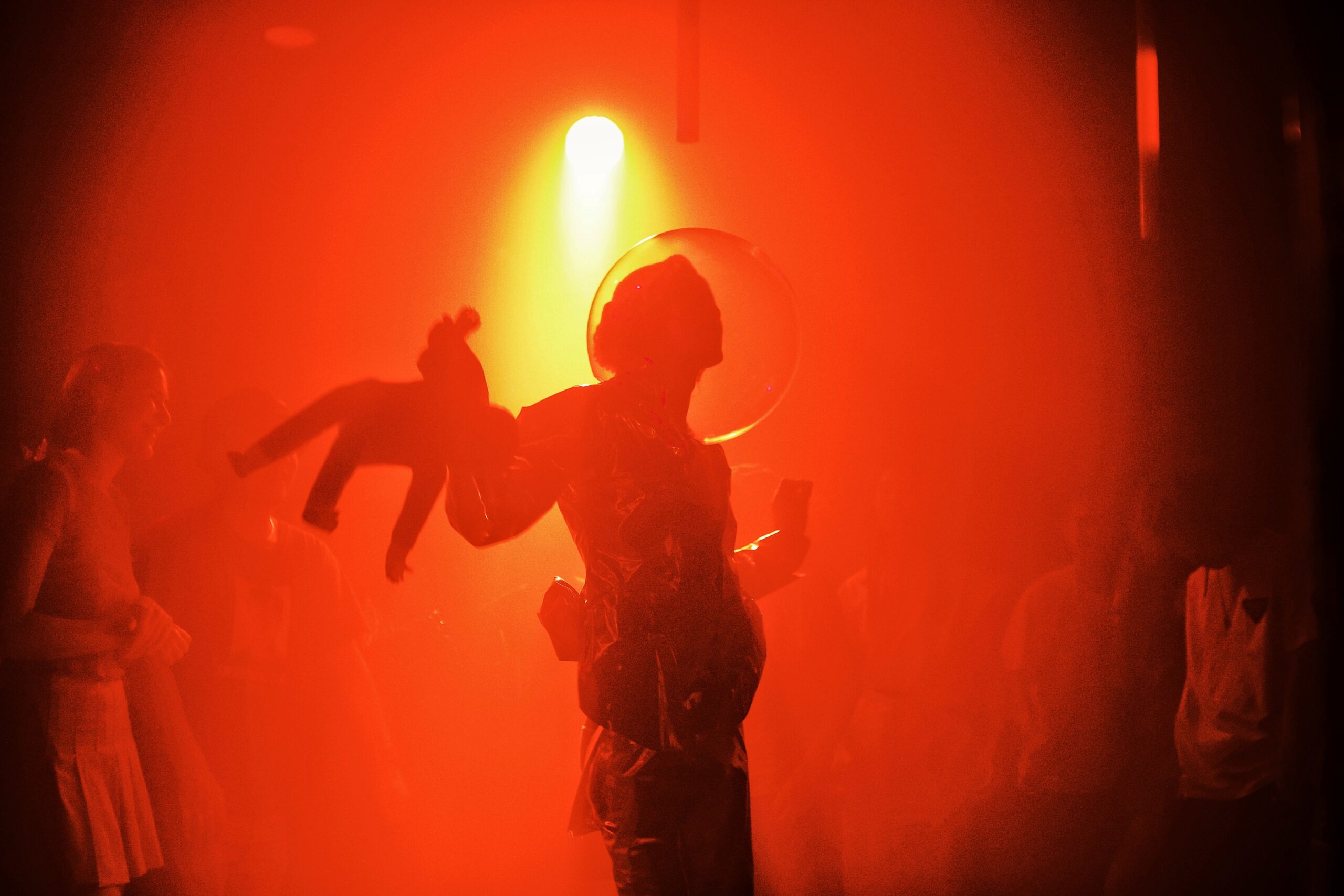
In Chengdu, queer communities navigate tightening control and fading digital openness, reshaping where and how connection can exist in China. Public celebration recedes, nightlife moderates itself, and intimacy slips into coded networks and overlooked daytime spaces. Through Xinke Lee’s returning gaze, nightlife, public encounters, and cruising grounds reveal a fundamental reckoning: an ongoing meditation on adaptation and loss, and a community that survives through floating identities.
Behind the Concrete Fan
“Walk through—follow me closely.”
I said it quietly to Adriano, almost casually, as if we were crossing an ordinary park path.
It was a Monday morning, just past ten. The light was already strong but still soft enough to flatten shadows into pale shapes on the ground. Chrysanthemum Garden (菊园) had that restrained public beauty typical of Chengdu parks: trimmed hedges, bamboo leaning in loose clusters, elderly men moving slowly through tai chi or sword dances; somewhere, a radio played traditional opera faintly, with groups of aunties doing their morning exercises.
Nothing suggested what was happening twenty metres away.
The concrete fan stood slightly north of the garden—a curved, decorative structure meant to resemble an unfolded hand fan. It was probably designed for photographs or shade. Behind it, the space narrowed, half-hidden by bamboo.
From a distance, it looked like nothing more than a forgotten corner. But as we walked closer, the smell reached us first. It was heavy—a dense, almost fermented mix of sweat, damp fabric, and something sour, protein-thick. It reminded me immediately of certain underground sex dungeons I had once visited in Berlin; except there, darkness justified the odour, whereas here, sunlight intensified it.
I slowed down.
Adriano didn’t understand yet. He seemed to assume there must be a toilet nearby, given the smell. Then we stepped around the curve of the concrete fan. There were at least six or seven men, all elderly or nearly so. Their bodies were thin, some with bellies, slightly stooped, with the ordinary faces of middle-aged or senior men. Their shirts were partially unbuttoned or lifted. Two were engaged in frottage, hips pressed together in small, urgent motions. One man was kneeling in front of another, performing a blow job with an intensity that felt both mechanical and concentrated. Another pair stood close, hands moving in ways that feigned discretion but were unmistakable.
It was not theatrical, nor even glamorous or playful.
It was direct.
The most shocking thing was not the sex itself—I’ve participated in public sex before, quite often. What startled me was that it was ten in the morning, behind a Chinese public park, and the oppressive feeling that hung in the air.
Behind them, just a few meters away, a man in a white shirt moved through slow tai chi gestures. A bird shrieked in its cage. A couple walked past the entrance of the garden, unaware.
Daylight did not soften anything. It exposed it.
I heard one of the men say, casually, “You’re late today. You’re usually here by eight.” The tone was familiar, almost affectionate—the way someone might greet a regular at a bar. Morning sex as a routine. Semen as part of a schedule.
That was when they noticed us.
It happened in layers. The first pair paused. Then the kneeling man turned his head slightly. Then all of them were looking at us, the silence thickening. I could feel Adriano tense beside me. His body stiffened without him fully understanding why. As a white man in that bamboo corner, he became immediately conspicuous—almost luminous. I suddenly saw the scene through their eyes: an outsider, foreign, younger, standing inside their enclosed ritual space.
One man released what he had been holding. Another stood upright, adjusting his shirt with deliberate slowness. They began walking toward us. Walking—not hurried, but with purpose. Their faces were not ashamed or embarrassed. What I saw instead was assessment—territorial calculation. Who are you? Why are you here? Are you observers? Participants? Threats?
For a brief second, something instinctive moved through me—not moral judgment, not disgust, but fear. Not even fear of sex. Fear of unpredictability. Of being in a space where rules felt suspended.
I leaned closer to Adriano and whispered again, “Walk.”
We didn’t rush. We didn’t look back immediately. We simply passed through the crowd and returned to the main path, where elderly men were still performing sword routines as if nothing behind the concrete fan existed.
Just after we exited the park, Adriano asked quietly, “What was that?”
I didn’t answer immediately; I wasn’t sure. I was wondering the nights, seeing through the days.
The Line Between Day and Night
The contradiction becomes temporal rather than spatial. Night carries aesthetic containment; day carries primitive overflow. The same city houses both rhythms simultaneously. And yet there is also a digital contradiction: In the early 2000s, online forums functioned openly. Dating apps flourished before censorship tightened. Conversations about LGBTQ rights appeared in universities. There was a brief but tangible sense of expansion: the first LGBTQ film festival at Peking University in 2001, and CCTV’s official recognition of sexual minority communities in the same year. For a moment, improvement felt possible. After 2015, cultural censorship intensified. Digital blocks reshaped communication. Apps disappeared or operated under stricter oversight. The infrastructure that once connected strangers became unstable. The well-known local club MC closed due to the “indecent behaviour in public places.” In 2022, the dating app BLUED was banned. Without digital visibility, physical spaces became more cautious. Without institutional recognition, communities once again relied on encrypted language and temporary networks.
The contradiction is not that nightlife has disappeared. It is that nightlife remains—but with edges.
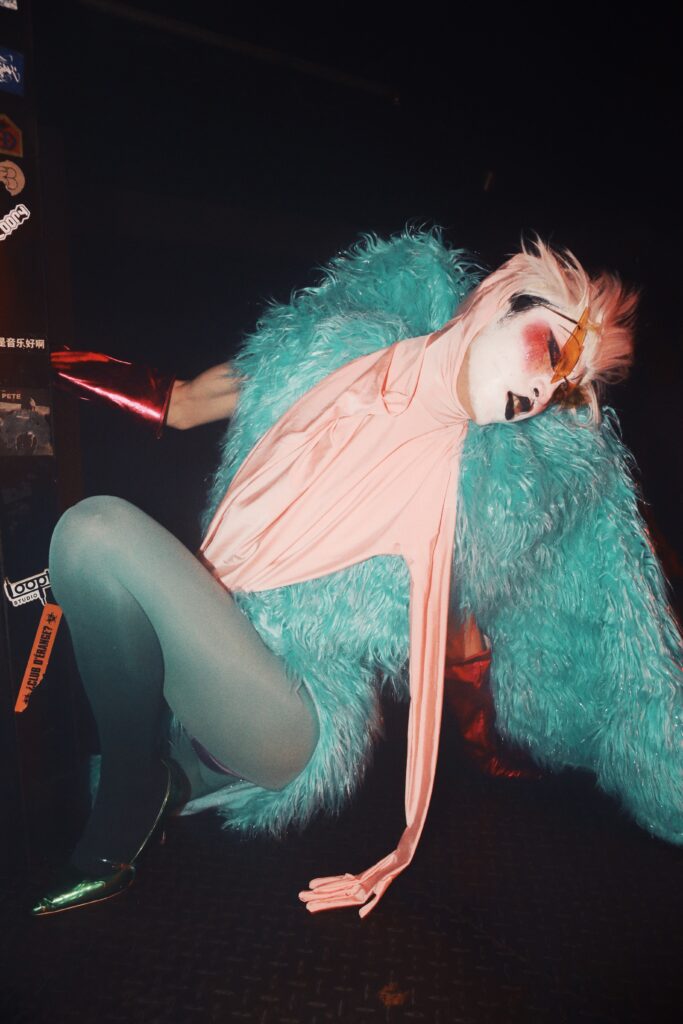
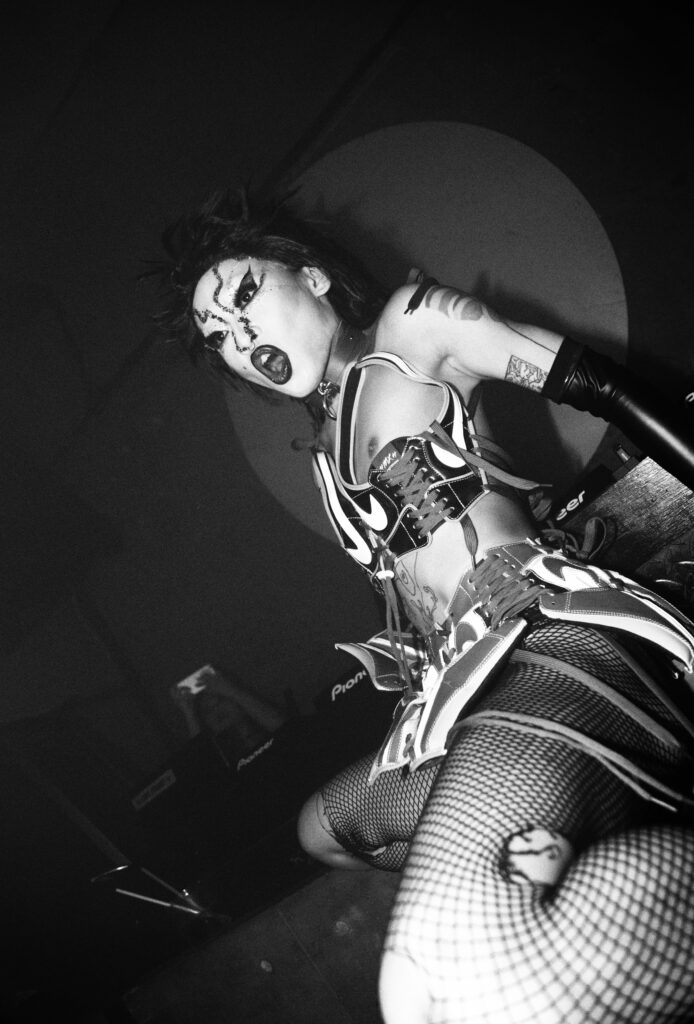
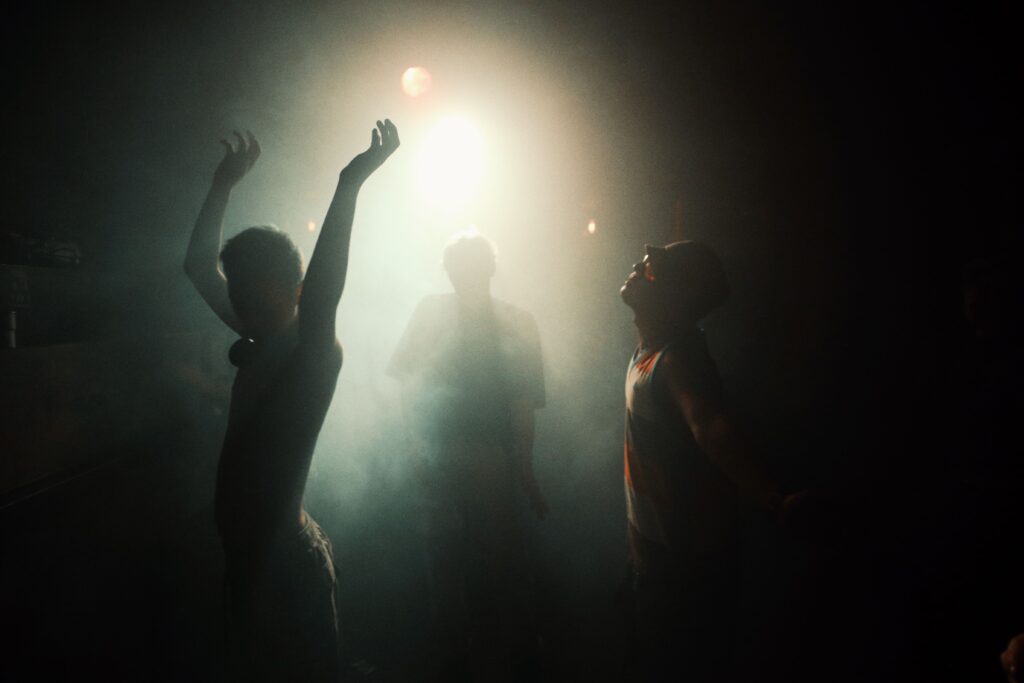
At first glance, nightlife in the WUHOU district appears unchanged. Clubs still operate. Butterfly Club still fills with bodies after 10 pm. Music still vibrates through the walls. Naked, muscular men still dance on stage, their torsos sculpted into globally recognisable forms—defined abs, carefully groomed facial hair, sharp jawlines. The aesthetic mirrors what one might see in Berlin, Madrid, or London. But the similarity stops at form; the boundary is now visible.
There is no performance as in Europe. No explicit grinding on stage, no spontaneous public sexual contact on the dance floor, no celebratory collision of bodies under strobe lights. The erotic is implied, never fully displayed. The choreography is stylised rather than released. Suggestion replaces eruption. As a gay man who found himself after fifteen years abroad, I sense that the night now has rules. Even drag shows are carefully framed. The term 反串—cross-gender performance in traditional opera—becomes a shield. It translates queerness into culture, into something historically anchored rather than politically assertive. It becomes legible to bureaucracy.
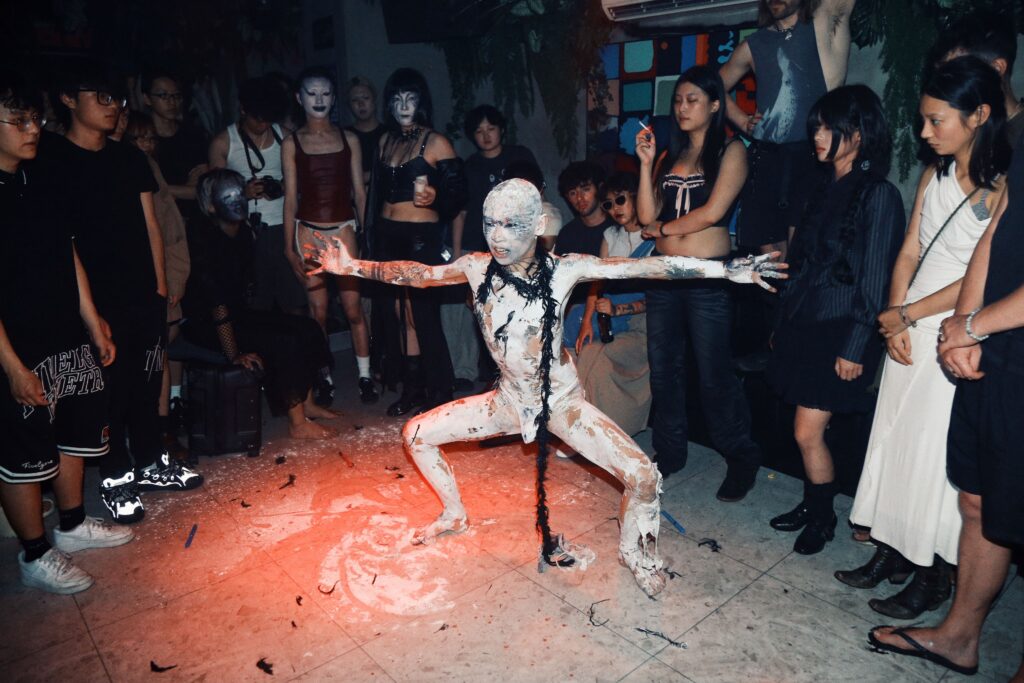
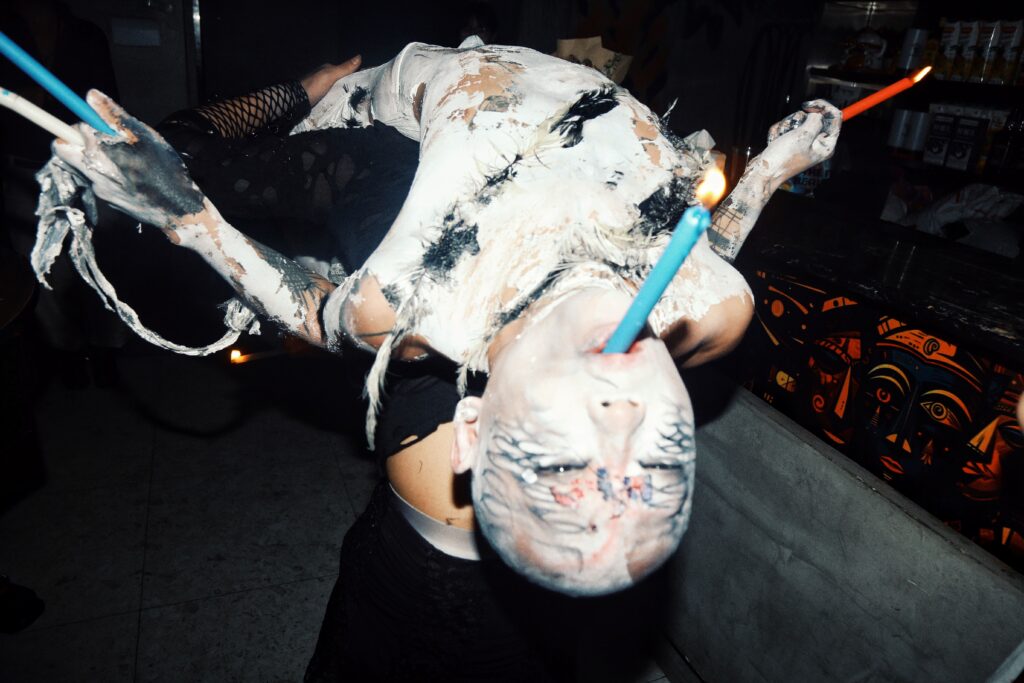
Everything is managed as nightlife survives through adjustment.
The club looks the same as before—lights, DJs, dancers, alcohol—but the energy feels different. Forty years ago, underground scenes in many European cities functioned through discretion and coded language. Chengdu now resembles that older rhythm. Divas change names. Ownership rotates. Publicity softens. Nothing pushes too far or claims too loudly.
There are no openly advertised gay saunas anymore. Those seeking such spaces must locate them through group chats on WeChat or QQ, in encrypted conversations or private forums. Information circulates quietly. A rainbow emoji placed in front of the word “sauna” becomes a coded signal. A message in a closed group reveals a temporary address: Junyue Sauna might operate only on Sundays between February and May. Another venue might exist for three months before vanishing. A new meeting place emerges as seasons shift. And then the contradiction sharpens: what is restrained at night reappears during the day.
Without structural protection, visibility becomes risk. So nightlife chooses containment. Desire is stylised. Bodies are sculpted and displayed, but not unleashed.
In Western cities, night is the time of transgression as darkness protects visibility and clubs create enclosed worlds where alternative behaviours become normalised. Pride parades occupy daylight. Rainbow flags flood streets. Identity becomes colour, sound, spectacle.
Here, there is no saturation of rainbow symbolism. No annual parade blocking traffic. No institutionalised celebration that fixes queer identity into public infrastructure. The culture is present—vividly present—but not anchored.
Without structural protection, visibility becomes risk. So nightlife chooses containment. Desire is stylised. Bodies are sculpted and displayed, but not unleashed. Music is loud, but not revolutionary. Performance exists, but within invisible lines.
The borderline is internalised, and yet desire does not shrink: it compresses.
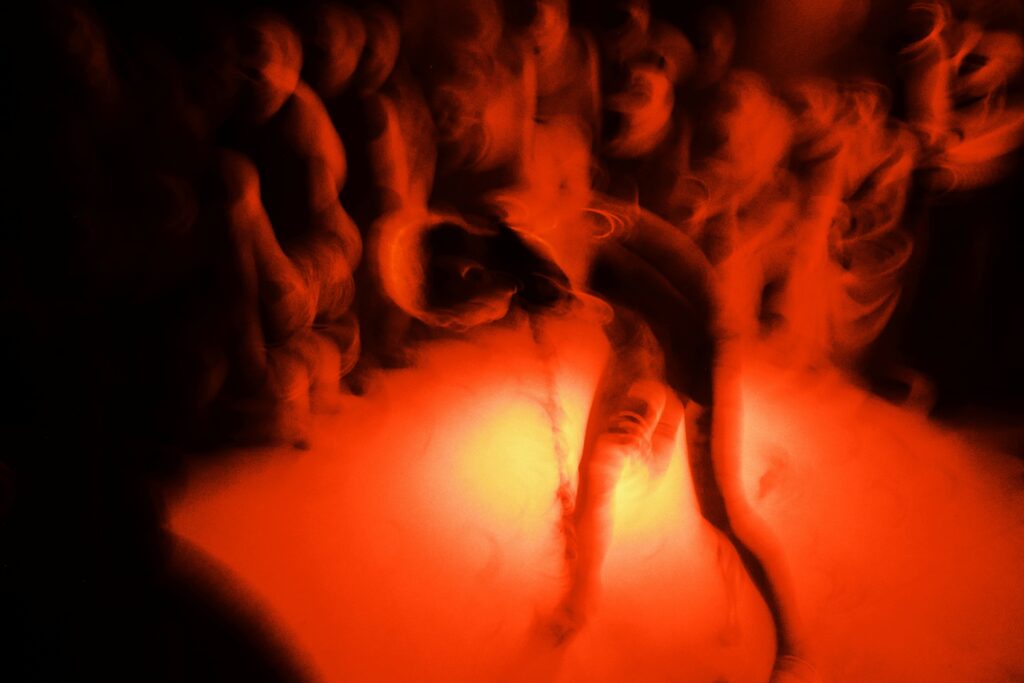
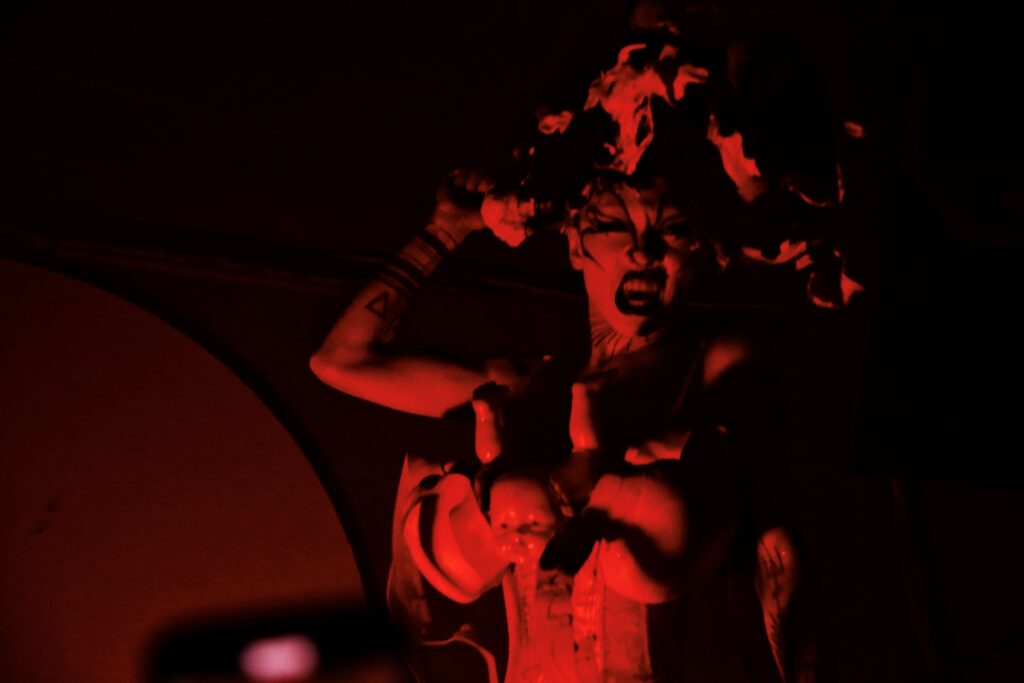
When night suppresses what cannot be shown, morning absorbs it. Parks become unofficial extensions of what clubs cannot allow. Concrete fans, bamboo corners, and shadowed edges host what stage lighting must soften.
Daylife and nightlife reverse roles. The men in parks are often older, married, retired, carrying decades of silence. They do not seek spectacle but immediacy.
Their movements are efficient, almost mechanical. There is no performance, since there is no audience. Morning sex is not a celebration, but pressure seeking an exit. Meanwhile, inside clubs at night, younger generations gather under the lights, inventing a new way of dancing: two people standing beside a table, drinks in one hand, shaking wrists with the other... It looks minimal, conservative—almost ecological, one might say: less tiring, less conspicuous, less risky. The body adapts to its environment.
Nightlife resembles its earlier underground phase. Saunas operate unofficially. Clubs rename themselves. Word of mouth replaces advertisement. Group chats substitute for public listings.
Everything functions—but quietly.
This quietness contrasts sharply with Western Pride culture, where identity seeks amplification.
In Chengdu, pride exists differently. It exists in persistence rather than proclamation; in floating networks rather than fixed institutions.
Rootless
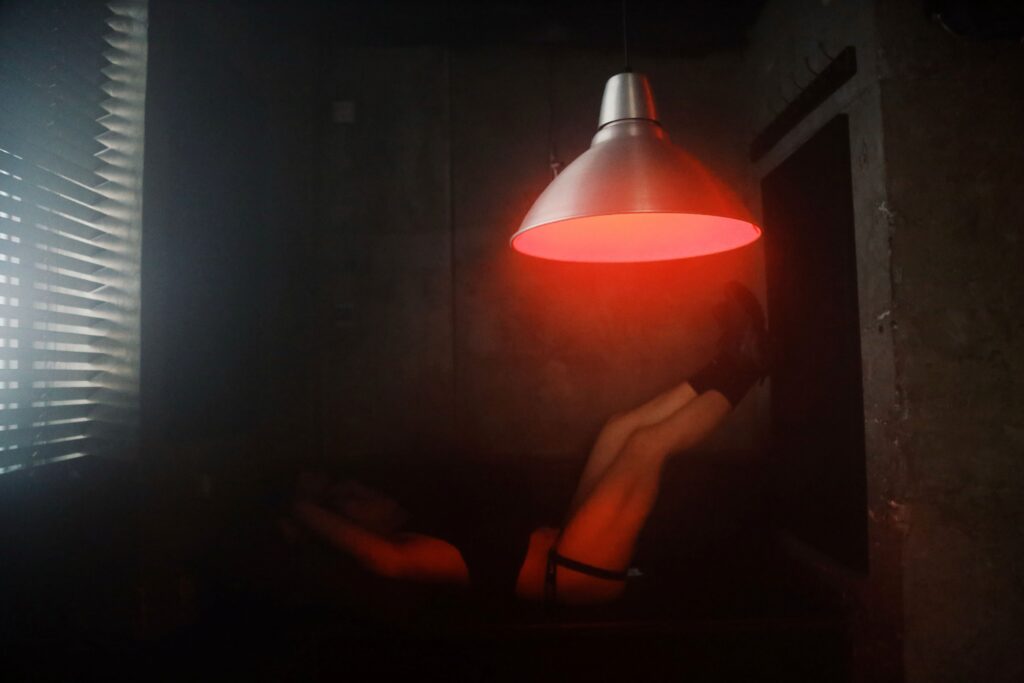
Locally, gay men are sometimes called 飘飘, a term that suggests “floating” or rootlessness. The word captures the condition precisely: a community without formal security, a nightlife that persists without institutional grounding, a culture that moves yet never roots itself.
Rootlessness produces caution: a floating community must remain adaptable. It survives by moving sideways rather than upward.
And yet, rootlessness creates tension. Without roots, there is no feeling of long-term security. Every location exists temporarily. Relationships form under an awareness of instability. Everything hangs lightly, as if prepared to relocate at any moment.
When performance cannot expand horizontally, desire expands temporally. When night closes its fist, morning opens its hand. When spectacle is monitored, instinct becomes private.
Chengdu’s gay nightlife remains outwardly the same—clubs, dancers, alcohol, coded language—but the line is clearer now. The freedom once felt in the early 2000s has narrowed. The infrastructure is thinner. The confidence is quieter. The community survives, but it floats. The night glows as the morning erupts. And beneath the nuance, there lie those intangible membranes: you don’t have to say it—we understand.
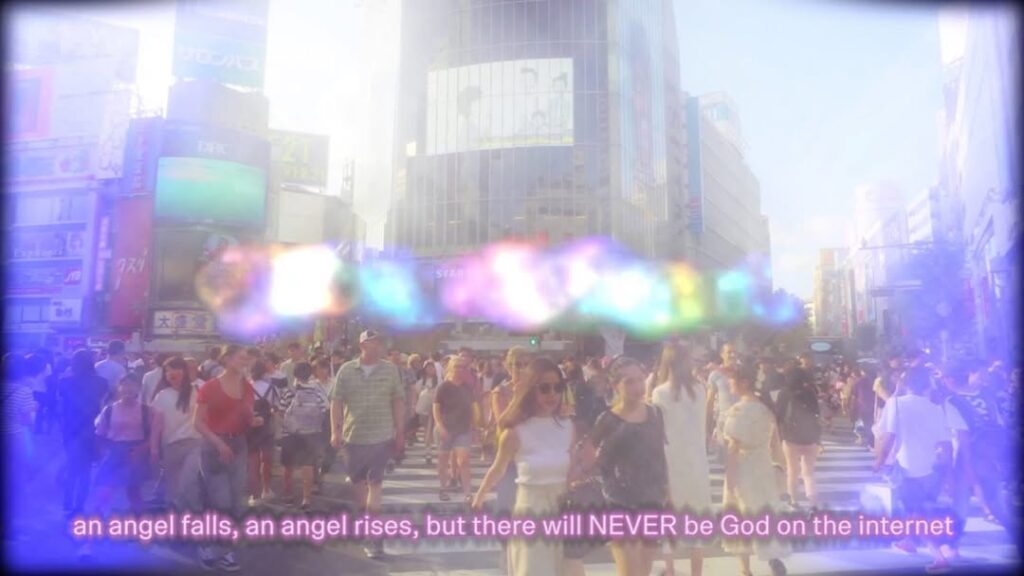
As I continue wondering where those familiar places of my youth have gone, I find myself returning to an old local forum—a kind of cyber ruin, where links have long since lost their connection to the offline world. It was once a place where older gay men used to say, “You can find everything here.” Screens flicker with outdated colours and clashing fonts. Beneath advertisements for Viagra, someone writes that he wants “accompaniment,” another says he is “just looking for a friend.” The last post is dated June 2015.
Did they ever find what they were looking for? Or did they remain rootless, floating endlessly in the looping current of desire?