At The Heart of the Heard
Masbate, one of the largest islands in the Philippine archipelago, revolves around cattle. Bulls, cows and pasture define its culture; ranches span the land, and labour has shaped a landscape marked by centuries of hoofprints. Lassoing, cattle wrestling and horse breaking are not just survival skills, but the basis of a singular public ritual: Southeast Asia’s largest rodeo.
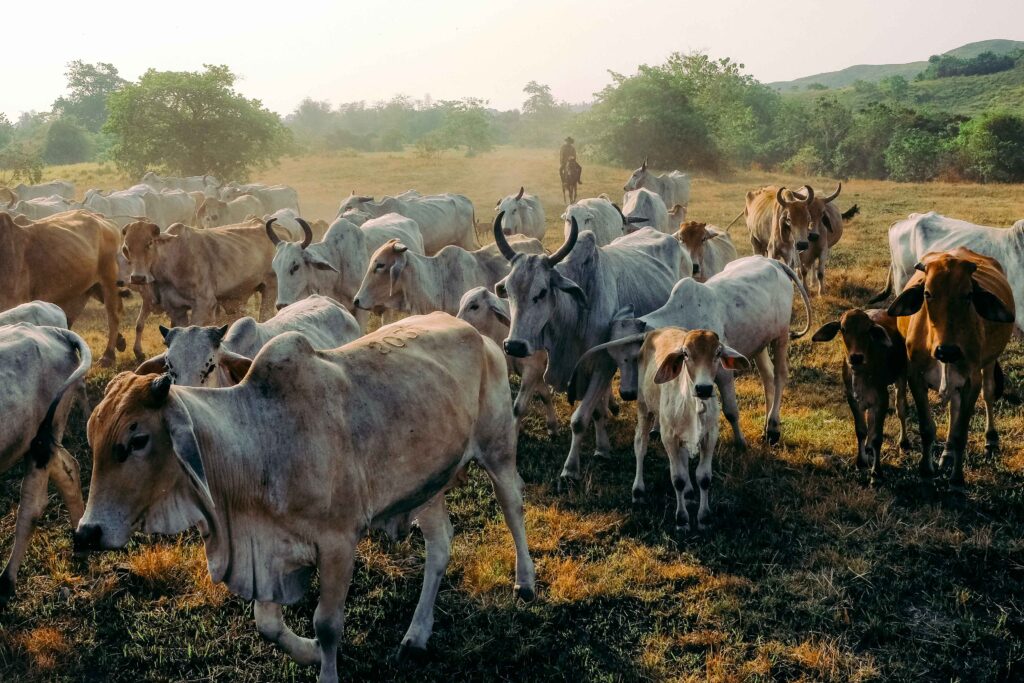
The first light of dawn spills over the vast grasslands of Mandaon, just southwest of Masbate City, in the island province of Masbate. A soft mist hangs low over the rolling terrain as horses paw the damp earth inside their corrals, while the cattle silhouettes stretch long across the plain. The air smells of grass and soil, and the only sounds are hooves, distant lowing—another day begins in the ranches across Masbate, the “Cattle Capital of the Philippines.”
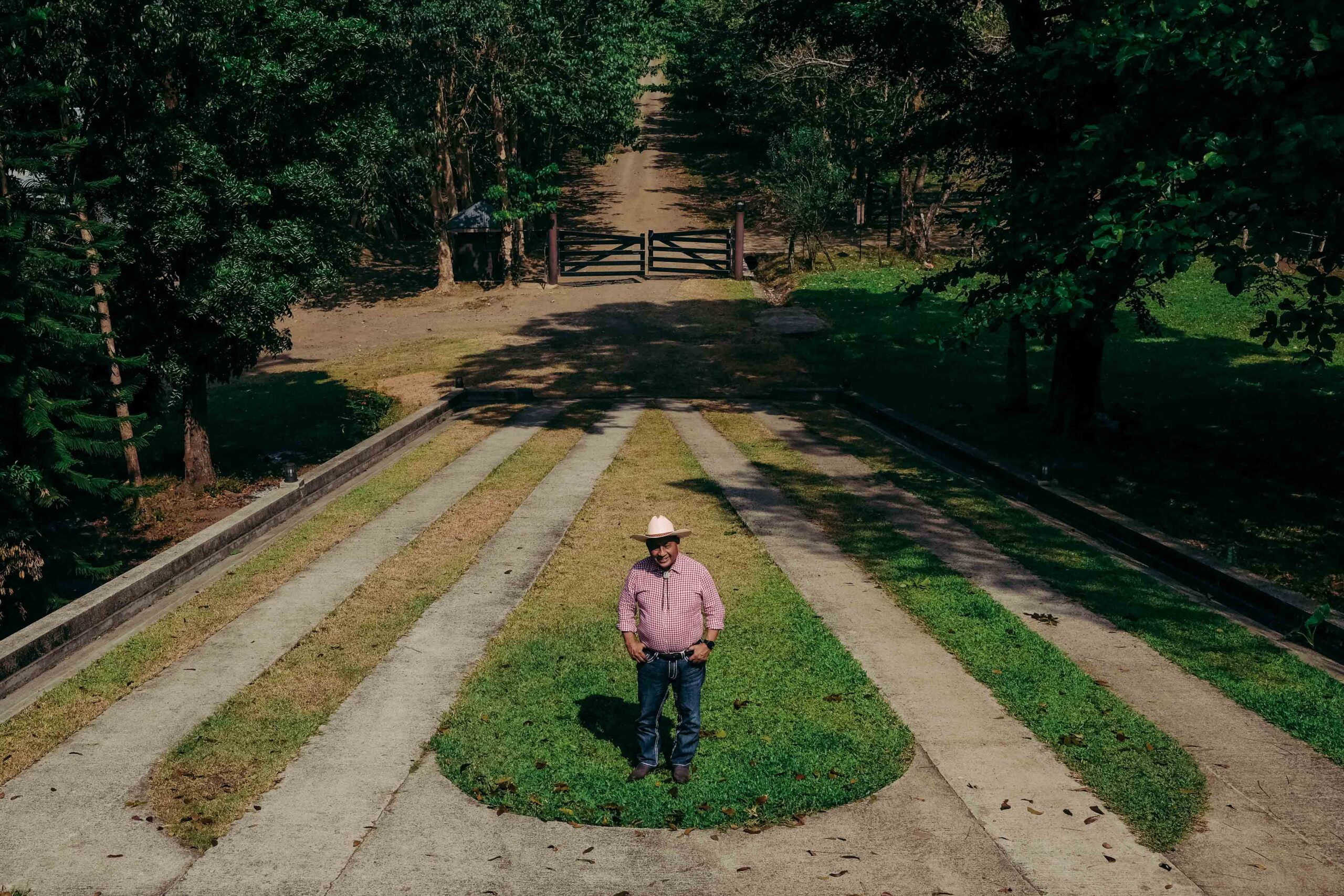
The province’s identity is inseparable from ranching, an activity that has shaped its landscape for centuries and has been passed down from generation to generation. For forty years, Roldan P. Ruga’s life has revolved around livestock, pasture, and weather at Sese Brahman Ranch. I see him walk slowly along the length of the corral as dawn light filters through the mist. Metal rails creak as the animals stir at his presence, El Toro horses, stallions, and quarter horses shifting against the fences, their warm breath rising into the cold morning air. One nudges forward, hooves pressing into the damp earth as if anticipating the day’s work, and Roldan pauses beside it, running a quiet, practised gaze along its legs and posture, searching for the smallest signs of fatigue or injury. Decades in the field have trained him to see even the most unnoticeable detail. He steps toward the paddocks, while cattle rise from the pasture grass, continuing to silently assess the animals, which approach him one by one. Every movement, for Roldan, tells a story of heath, readiness, or warning.
The inspection continues. Fences are checked, gates are secured, and water sources are examined carefully. In ranching, prevention is survival. A single broken enclosure can scatter cattle across kilometres of open land, and untreated illness can move silently through a herd; every loss is measured not only in numbers, but in months of labour, patience, and care. Such vigilance is the natural outcome of knowledge passed down from elders to younger hands and refined through centuries of observation.
I look at Roldan’s body, observing the marks of decades in the field: bruises, sprains, and scars. I imagine that a startled steer can kick with force, that a horse can bolt without warning. This job is physically demanding and often dangerous, and even if his body carries its signs, he remains unwavering. “It’s part of the job,” he says. “The hardships and risks come with this work, but I would never leave it. This is my life, and it is part of Masbate’s culture.”
Morning light settles gently over the main house of Sese Brahman Ranch. Saddles rest near the entrance, their worn leather is marked by years of use, and beyond the yard, cattle drift slowly across the grasslands under the gaze of rancheros beginning their day’s work. Manuel Sese, a retired judge and owner of the ranch, looks out from the wide veranda at the landscape his family has helped shape and sustain for generations. Those pastures are a vision kept alive by their choices and work, the result of a responsibility grounded in land care, animal welfare, and human livelihood.
What Sese sees is a generational commitment, the names of people and families planted in the ground. “This land holds stories,” he tells me. “We are only caretakers for a time—we must leave it stronger than we found it.”
“Ranching is not something you manage from a distance,” Sese tells me. “You have to walk the land, feel the soil, and understand the animals. Every decision we make affects livelihoods—our workers, their families, and the future of this ranch. Profits matter, yes, but sustainability matters more. If we don’t take care of the grasslands today, there will be nothing left to pass on tomorrow.” Holding his eyes on the pastures, moving them among ranchers and cattle, what Sese sees is a generational commitment, the names of people and families planted in the ground. “This land holds stories,” he tells me. “We are only caretakers for a time—we must leave it stronger than we found it.”
Later in the day, some visitors will arrive at the ranch, welcomed by rancheros who’ll guide them across the open fields where cattle graze freely on Masbate’s rolling hills. The recent ABS-CBN drama series A Family Affair was shot on these lands, bringing grasslands and ranching life into the national spotlight, and what began as a family enterprise now also serves as a window into Masbate’s cowboy culture, drawing travellers eager to experience ranch life firsthand.
***
Masbate’s identity has long been tied to these open ranges. Cattle roamed parts of the island even before Spanish colonisation formalised ranch systems. Breeding lines were shaped by livestock brought through trade routes linking Asia and Mexico. By the nineteenth century, when Moro piracy declined and safer territories were sought for large-scale rearing, Masbate’s wide grasslands became an ideal frontier. Ranching flourished, and cattle and horses were shipped to Manila and neighbouring provinces. Over decades, the landscape itself adjusted to the rhythm of hooves and grazing, gradually becoming a human-shaped environment where livelihood and ecology intertwined. Ranching endured epidemics, war, and economic shifts, passing from one generation to the next like an unwritten inheritance. Skills were taught not in classrooms but in fields, under the sun and rain, through repetition and correction.
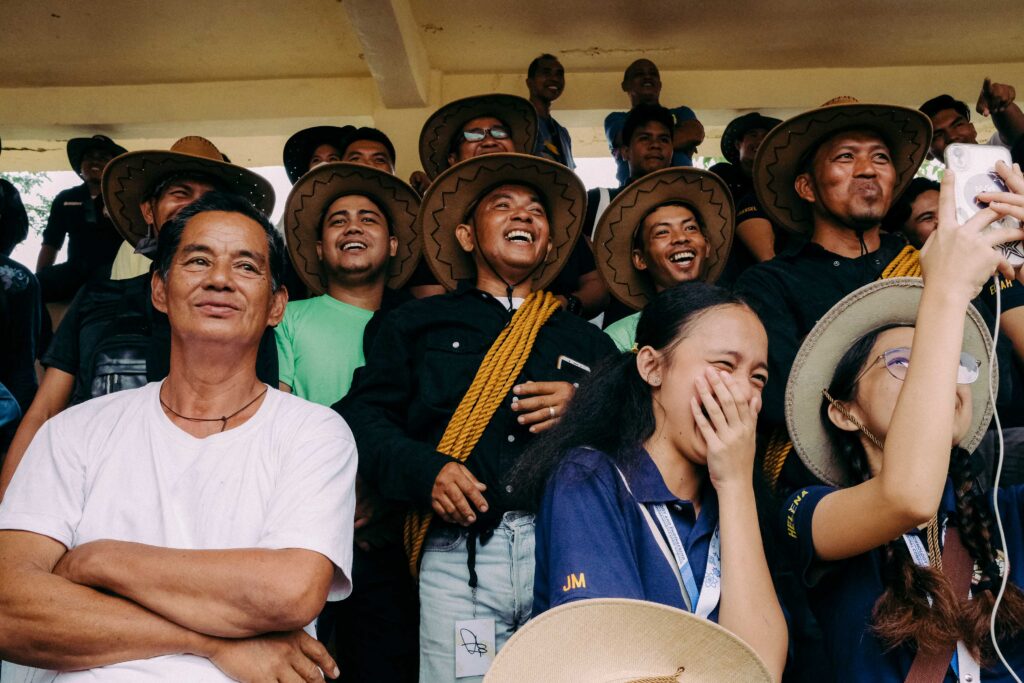
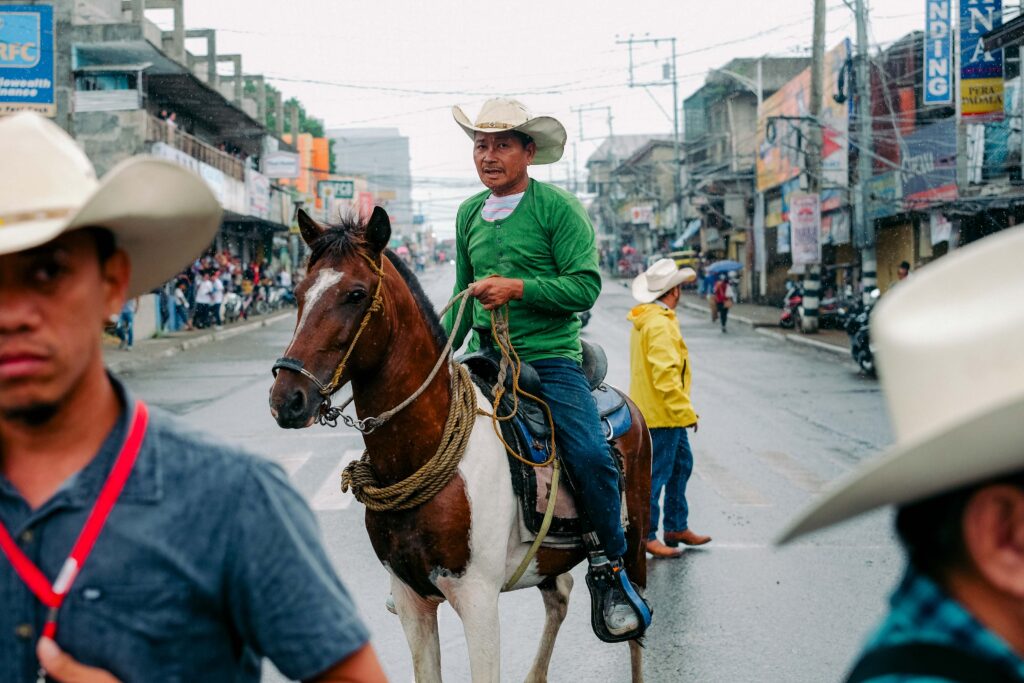
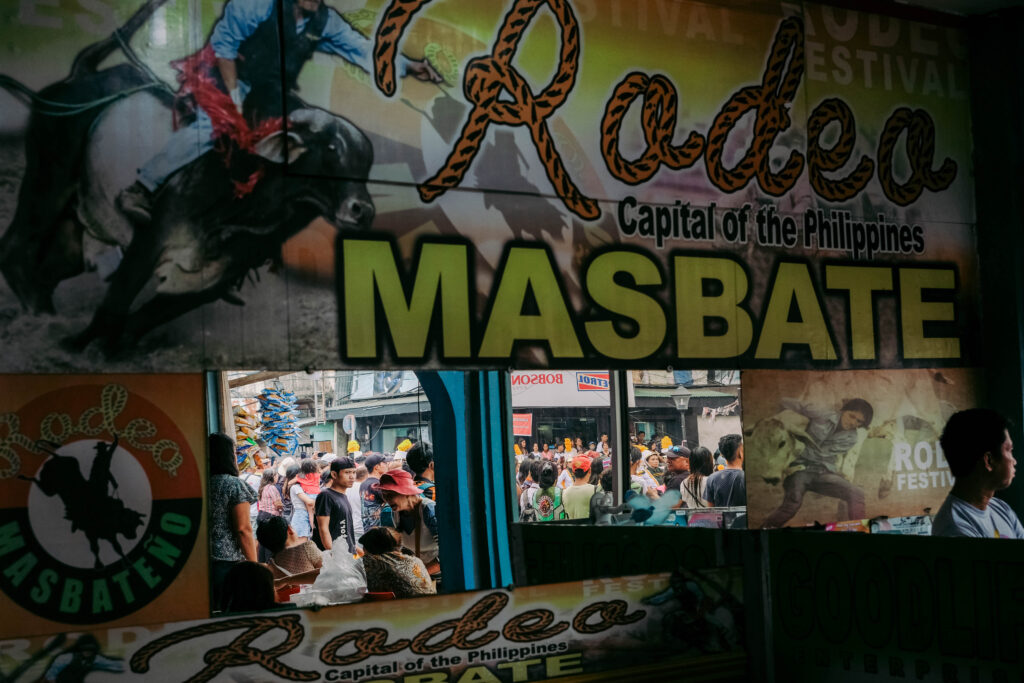
Over time, daily ranch skills evolved into a public display. What began as a practical necessity—lassoing, cattle wrestling, and horse breaking became a celebration. Each April, Masbate City transforms during the Rodeo Masbateño Festival, a tradition that has earned the island its reputation as the Rodeo Capital of the Philippines. Banners ripple above crowded streets. Boots strike pavement. Vendors fill the Masbate Grandstand alongside the carnival. Inside the arena, dust rises as competitors test their speed and control under a sun that refuses to soften. Across the arena, teams from different parts of the country wave their banners proudly as they compete in the rodeo finals, while spectators lean forward as riders burst from the gates. Hooves thunder, and a steer wrestled to the ground in seconds draws a roar from the crowd. Lasso loops flash against the sky as rancheros carry themselves with the quiet pride of people whose skills were shaped by necessity long before they became a spectacle. At night, music drifts through beer plazas, and stories are retold over shared meals—stories of legendary rides, near falls, and animals that would not yield.
What visitors see in the arena is not theatre. It is the distilled form of daily labour.
What visitors see in the arena is not theatre. It is the distilled form of daily labour. The same techniques used to manage cattle under the sun are performed before cheering crowds. For a week, the island’s working identity becomes visible, amplified, and shared. The rodeo becomes both memory and mirror—a reminder of where the island has been and a question about where it is headed.
***
Yet beyond the celebration, climate change has altered the rhythm ranchers once relied on. Dry seasons stretch longer, turning green pasture brittle. Water sources shrink. Cattle lose weight as feed grows scarce. Wells and rivers must be checked more often. Pastures must rest longer before hooves can return. Then comes the rain.
When Typhoon Opong, internationally known as Typhoon Bualoi, roared across Masbate in late September 2025, the wind bent trees and tore through fences. Rain hammered the grasslands until rivers swelled and swallowed low-lying pasture. Topsoil, slowly formed over the years, washed away in brown torrents. Calves shivered in drenched pens. Ranchers worked through mud and driving gusts, guiding herds toward higher ground, reinforcing shelters as the night felt heavy and loud. In the morning, the landscape looked familiar yet altered, as if a hand had rearranged its surface. Storms pass, but they leave marks. Fences must be rebuilt, and grass must regrow. The land must be adjusted, once again, by human hands. Each recovery becomes part of the island’s quiet memory.
There are other shifts, quieter but just as real. Some ranches have closed in recent years, their fields left untended as younger generations choose to work elsewhere. Grass grows tall where cattle once moved in steady lines. The knowledge of reading weather and soil is fading, spoken less often and practised even less.
And yet, during Rodeo week, the grandstands fill with young faces. Boys and girls watch riders in wide-brimmed hats and see more than sports; they see identity. They see possibilities. The imagery of the rodeo—dust lit gold at sunset, horses rearing against the sky—carries its own pull. Whether that pull is strong enough to bring them back to the pasture remains uncertain. But the story is not finished, and the land continues to wait, patient as it has always been.
***
As darkness deepens over the ranch, the sky turns from amber to indigo. The silhouettes of cattle blur into the hills, but the fences remain, faint lines holding order against open space. Sese keeps his gaze fixed on the pasture as if measuring not only distance but also time. “If the land thrives,” he says quietly, “the people will too.”
Standing beside him, I understand that what endures here is not only an industry but also a discipline of care, a belief that land responds to attention and neglect alike. The herd will move again at first light. Someone will rise before dawn to check the rails, to listen to unfamiliar sounds, and to read the sky for hints of weather. If hands are willing to mend, to guide, and to wait through dry months and violent storms, the rhythm will continue. In the steady crossing of cattle over open grass, in the patience of those who remain, the heart of Masbate keeps beating, measured not in headlines or spectacle but in hoofprints pressed quietly into the earth.